
Why is my old dog suddenly falling over?
It is every dog owner’s nightmare. You walk into the room, and your senior dog is stumbling, acting “drunk,” or leaning heavily against the wall. Maybe their head is tilted to one side, or their eyes are darting back and forth rapidly.
The first thought is almost always: “My dog is having a stroke.”
While strokes can happen in dogs, these terrifying symptoms are often caused by a much more common—and often fully recoverable—condition called Idiopathic Vestibular Disease (often called “Old Dog Vestibular Syndrome”).
The “Old Dog” Condition That Looks Like a Crisis
Vestibular disease affects the balance center in your dog’s brain or inner ear. To you, it looks like a catastrophic medical event. To a vet, it is a specific set of symptoms that usually clears up with nursing care and time.
But how do you know the difference?
Understanding the Signs
While only a veterinarian can provide a true diagnosis, there are specific “tells” that help differentiate a balance issue from a brain issue.
- The Eyes: Are they rolling side-to-side (common in Vestibular) or up-and-down (a red flag for central issues)?
- The Face: Is there drooping? Dogs with Vestibular disease usually keep control of their facial muscles.
- The Paws: Can they correct their footing if you flip a paw over?
Use the Interactive Triage Tool
We built the Golden Paws Checker to walk you through these specific symptoms step-by-step. It helps you check the “Red Flags” that require an emergency room visit versus the symptoms that suggest a balance disorder.
(Use the tool below to assess your dog’s current condition. You can print a report for your vet at the end.)
What should I do next?
1. Keep them safe. If the tool indicates Vestibular symptoms, your dog feels like the room is spinning. They are terrified. Confine them to a small, padded area (like a laundry room with yoga mats). Block off all stairs immediately.
2. Hydration is key. Nausea is common. If they cannot tolerate drinking, offer small amounts of water or ice chips by hand.
3. See your Vet. Even if the result says “Likely Vestibular,” you need a vet visit to rule out ear infections or other underlying causes. Use the “Email to Vet” or “Print Report” feature inside the tool above to give your doctor a clear log of exactly what happened and when.
Disclaimer: This tool is for educational triage purposes only and does not replace professional veterinary advice. If your dog is unconscious, having seizures, or has pale gums, please proceed to an emergency clinic immediately.
Frequently Asked Questions
Get the Ramp Calculator
Calculate safe slopes & get DIY blueprints
See Dr. Sarah’s Treat Swaps
Find low-calorie rewards for senior dogs
Is My Dog Having a Stroke? Free Symptom Checker (Vestibular vs. Stroke)
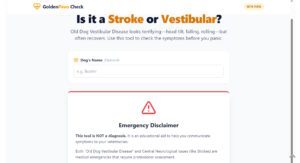
Panicking because your dog is falling, rolling, or has a head tilt? Use our free, vet-approved symptom checker to distinguish between Old Dog Vestibular Disease and a Stroke. Instant results.
Price: 0.00
Operating System: web
Application Category: UtilitiesApplication