It’s a sight familiar to many of us who share our lives with a senior dog: the slow, deliberate rise from a nap; the hesitation before jumping onto the couch; the stiff, almost painful, first few steps of a morning walk. Our hearts ache as we watch them grapple with the stiffness and discomfort that often comes with age. Just as in humans, the smooth, effortless movements of youth gradually give way to the creaks and aches of aging joints.
🐾 Why Senior Dog Joints Change
As dogs age, cartilage thins and synovial fluid — the “joint oil” that cushions movement — loses viscosity. This increases friction and inflammation, leading to stiffness, pain, and reduced mobility. Degenerative joint disease (DJD) affects over 80 % of dogs older than eight years, especially larger breeds and those with prior injuries.
Source: American College of Veterinary Surgeons (ACVS), 2022
The underlying culprit, more often than not, is osteoarthritis – a degenerative joint disease that erodes the protective cartilage in their joints. This leads to inflammation, pain, and reduced mobility. As dedicated pet parents, our immediate instinct is to seek relief for our furry friends. We want to restore their comfort, extend their active years, and help them chase squirrels (or at least dream about it) with a little more ease.
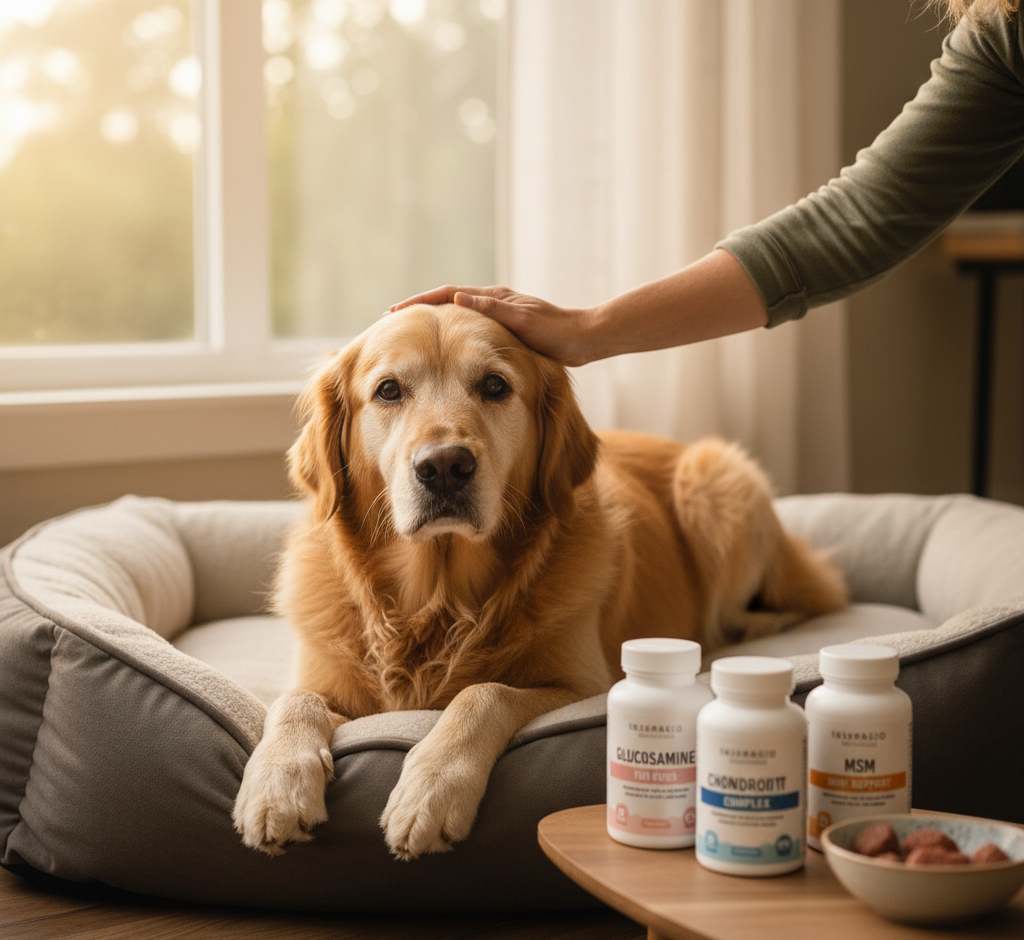
In this quest for relief, three names consistently rise to the top of almost every discussion about canine joint health: Glucosamine, Chondroitin, and MSM. These powerful supplements are often lauded as the holy trinity of joint support. But what exactly are they, how do they work, and most importantly, when it comes to glucosamine vs. chondroitin vs. MSM for senior dogs, which one, or which combination, offers the most benefit? Let’s dive deep into the science and the heart of caring for our aging companions.
In This Guide
The Foundation of Joint Health: Understanding Cartilage
Before we unpack each supplement, a quick primer on joint cartilage is helpful. Cartilage is the smooth, rubbery tissue that covers the ends of bones where they meet in a joint. Its primary jobs are to:
- Reduce Friction: Allows bones to glide smoothly over each other.
- Act as a Shock Absorber: Cushions the impact of movement.
In osteoarthritis, this cartilage begins to break down, thin, and fray. Without this protective layer, bones can rub directly against each other, leading to pain, inflammation, and further damage. This is why supplements that aim to support cartilage health are so vital for our senior dogs.
| Supplement | How It Works | Evidence Strength | Best For |
|---|---|---|---|
| Glucosamine | Supports cartilage repair, increases joint lubrication, and reduces stiffness. | ⭐⭐⭐⭐☆ (Multiple canine trials) | Arthritic or stiff senior dogs; early joint degeneration. |
| Chondroitin Sulfate | Blocks cartilage-destroying enzymes, aids elasticity and shock absorption. | ⭐⭐⭐☆☆ (Mixed study results but strong clinical use) | Moderate to advanced osteoarthritis cases. |
| MSM (Methylsulfonylmethane) | Provides bioavailable sulfur for connective tissue repair and anti-inflammatory action. | ⭐⭐⭐☆☆ (Good adjunct evidence) | Dogs needing additional pain and inflammation relief. |
| Omega-3 Fatty Acids | Reduces systemic inflammation and helps maintain joint fluid quality. | ⭐⭐⭐⭐☆ (Strong, multi-study support) | Dogs with joint inflammation or mobility decline. |
| Hyaluronic Acid | Improves joint lubrication and shock absorption; may aid tissue hydration. | ⭐⭐⭐☆☆ (Promising emerging data) | Dogs with dry joints or post-surgical recovery. |
📏 Typical Daily Ranges by Body Weight (Informational Only)
| Dog Weight | Glucosamine HCl | Chondroitin Sulfate | MSM |
|---|---|---|---|
| 10–25 lb | 250–500 mg | 100–200 mg | 200–400 mg |
| 26–50 lb | 500–1,000 mg | 200–400 mg | 400–800 mg |
| 51–90 lb | 1,000–1,500 mg | 400–600 mg | 800–1,200 mg |
| > 90 lb | 1,500–2,000 mg | 600–800 mg | 1,200–1,500 mg |
Educational guide based on typical label ranges used in veterinary-formulated products. Always follow your veterinarian’s advice and the specific product label. Many vets use a 4–6 week loading phase, then reduce to maintenance.
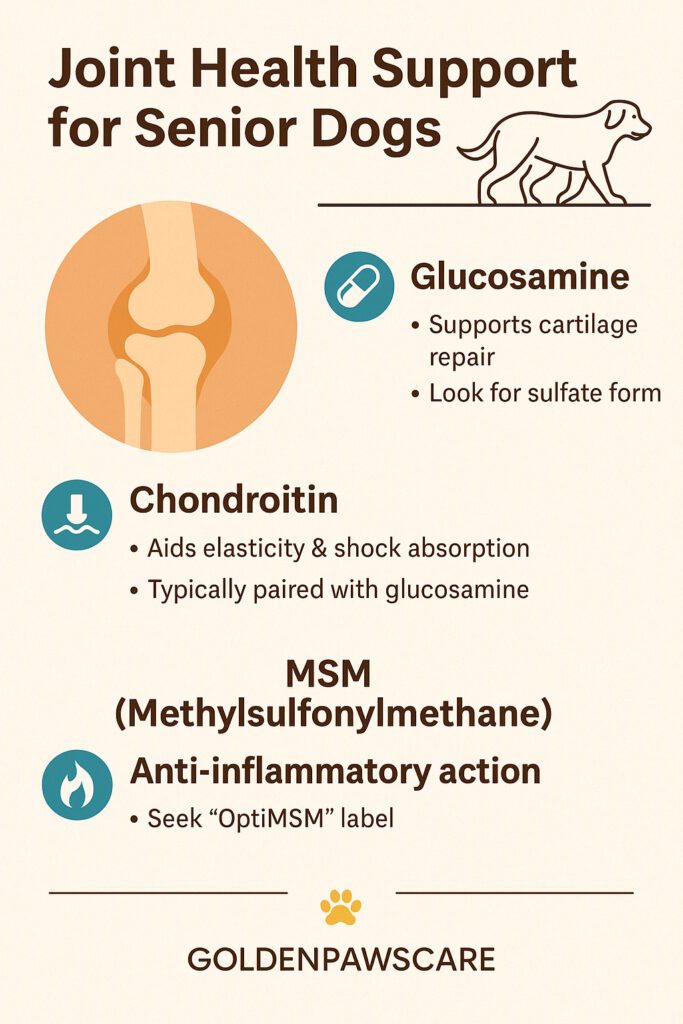
| Compound | Primary Role | Best Candidates | |
|---|---|---|---|
| Glucosamine | Cartilage building & repair; supports lubrication, reduces stiffness | Early joint wear, mild stiffness | Buy Glucosamine |
| Chondroitin | Preserves cartilage; adds shock absorption; slows breakdown enzymes | Dogs with existing joint stress/degeneration | Buy Chondroitin |
| MSM (Methylsulfonylmethane) | Adjunct anti-inflammatory; provides sulfur for connective tissue | Stiffness, swelling, mild pain (as add-on to core joint support) | Buy MSM |
Tip: Many seniors do best on a combo formula (glucosamine + chondroitin + MSM). Ask your veterinarian about dosing and drug interactions.
Disclosure: As an Amazon Associate, GoldenPawsCare may earn from qualifying purchases at no extra cost to you.
The Power Players: Glucosamine, Chondroitin, and MSM Explained
Let’s look at each of these joint support superstars individually.
1. Glucosamine: The Building Block
- What it is: Glucosamine is a naturally occurring amino sugar found in the body, primarily in healthy cartilage. It’s a fundamental building block for glycosaminoglycans (GAGs), which are key components of cartilage.
- How it works: Think of glucosamine as the raw material the body needs to repair and maintain cartilage. It helps stimulate the production of new cartilage cells (chondrocytes) and synovial fluid, the joint capsule’s lubricating fluid. By providing this essential nutrient, glucosamine helps the body rebuild and protect existing cartilage, potentially slowing down the degenerative process. It also has mild anti-inflammatory properties.
- Key Benefits for Senior Dogs:
- Cartilage Repair & Maintenance: Provides the necessary components for the body to synthesize and repair damaged cartilage.
- Synovial Fluid Production: This process lubricates joints, thereby improving mobility and reducing friction.
- Mild Anti-inflammatory Effect: Can help reduce pain and swelling associated with arthritis.
- Considerations: Glucosamine is often derived from shellfish, so if your dog has a shellfish allergy, look for plant-based alternatives. It typically takes 4-6 weeks to see noticeable results.
2. Chondroitin Sulfate: The Shock Absorber and Protector
- What it is: Chondroitin sulfate is another naturally occurring substance found in cartilage. It’s a complex carbohydrate (a GAG) that gives cartilage its elasticity and ability to absorb shock.
- How it works: Chondroitin acts like a “liquid magnet,” attracting water into the cartilage and keeping it hydrated and spongy. This is crucial for its shock-absorbing function. Beyond hydration, chondroitin helps inhibit enzymes that break down cartilage, essentially acting as a protective shield against further damage. It also enhances glucosamine’s anti-inflammatory effects.
- Key Benefits for Senior Dogs:
- Cartilage Hydration: Maintains cartilage elasticity and its ability to absorb impact.
- Enzyme Inhibition: Helps protect existing cartilage from degradation.
- Enhanced Synergistic Effects: Works synergistically with glucosamine, making both more effective.
- Considerations: Chondroitin is often sourced from bovine (cow) or porcine (pig) cartilage. Like glucosamine, it requires consistent use over several weeks to see benefits.
3. MSM (Methylsulfonylmethane): The Natural Anti-inflammatory
- What it is: MSM is an organic sulfur compound that occurs naturally in fruits, vegetables, grains, and even in the bodies of animals and humans. Sulfur is a vital component of connective tissue.
- How it works: MSM’s primary contribution to joint health is its potent anti-inflammatory and pain-relieving properties. It helps reduce nerve impulses that transmit pain and can improve blood flow, aiding in the healing process. Sulfur is also essential for the formation of collagen and keratin, which are crucial for healthy connective tissues, skin, and nails.
- Key Benefits for Senior Dogs:
- Pain Reduction: Directly helps alleviate pain and discomfort associated with inflammation.
- Anti-inflammatory: Reduces joint swelling and inflammation, improving comfort.
- Collagen Support: Provides essential sulfur for healthy connective tissues.
- Considerations: MSM is generally well-tolerated. It often works more quickly to reduce pain than glucosamine or chondroitin, which focus more on structural repair.
The Synergy: Why They’re Often Combined
While each of these supplements offers distinct benefits, their true power often lies in their combination. Think of them as a well-orchestrated team:
- Glucosamine: Provides the building materials.
- Chondroitin: Hydrates and protects the structure.
- MSM: Reduces the inflammation and pain that can make movement excruciating.
This synergistic approach enables them to address multiple facets of joint degeneration and discomfort, providing a more comprehensive solution than any single supplement alone. This is why most high-quality joint supplements for senior dogs will feature a blend of all three. You’re giving their body the best chance to repair, protect, and soothe their aching joints.
Which Helps Senior Dogs the Most? Making the Right Choice
So, when comparing glucosamine, chondroitin, and MSM for older dogs, which one is “best”?
In most cases, the answer isn’t one over the others, but a combination of all three. For a senior dog experiencing age-related joint stiffness or diagnosed with osteoarthritis, a supplement that contains a balanced blend of Glucosamine, Chondroitin, and MSM is generally the most effective approach.
- If your dog is showing early signs of stiffness (e.g., a little slower to get up, mild limping after exercise), starting with a combination supplement is a proactive step.
- If your dog has more advanced osteoarthritis and chronic pain, the triple combination is even more crucial to address both the structural degradation and the immediate pain.
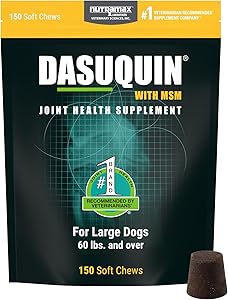
Editor’s Choice: Dasuquin® with MSM
A trusted senior-friendly formula combining glucosamine + chondroitin + MSM to support cartilage, reduce inflammation, and improve day-to-day mobility.
- Clinician-recommended for moderate to advanced joint needs
- Includes ASU/avocado-soybean unsaponifiables in many SKUs for added cartilage protection
- Chewable format; easy for seniors with dental sensitivity
Use daily for 4–6 weeks for best results before judging response. Confirm dosing with your veterinarian.
Disclosure: As an Amazon Associate, GoldenPawsCare may earn from qualifying purchases—at no extra cost to you.
Important Considerations When Choosing a Supplement:
- Consult Your Vet: Always discuss any new supplements with your veterinarian. They can provide a proper diagnosis, rule out other conditions, and recommend appropriate dosages, especially if your dog is on other medications.
- Quality and Purity: Not all supplements are created equal. Look for reputable brands that have third-party testing for purity and potency. Look for the “Veterinary Health Product” (VHP) or National Animal Supplement Council (NASC) seal of approval, which indicates adherence to quality standards.
- Dosage: Follow the manufacturer’s recommended dosage for your dog’s weight, or your vet’s specific instructions. Starting low and gradually increasing can help avoid digestive upset.
- Formulation: Supplements are available in various forms, including chewables, powders, and liquids. Choose the form easiest for your dog to take consistently.
- Patience is Key: Joint supplements are not instant pain relievers. It can take 4 to 8 weeks of consistent daily use to notice noticeable improvements. Don’t give up too soon!
Beyond Supplements: A Holistic Approach
While Glucosamine, Chondroitin, and MSM are powerful tools, they are part of a larger strategy for managing senior dog joint pain. A holistic approach provides the best quality of life:
- Weight Management: Maintaining your dog’s healthy weight is crucial. Excess pounds put immense strain on already compromised joints.
- Gentle, Regular Exercise: Short, controlled walks (on a leash to prevent sudden movements) can help maintain muscle mass and joint flexibility without overstressing joints. Avoid high-impact activities.
- Comfortable Bedding: Orthopedic beds offer cushioned support, alleviating pressure points during sleep.
- Ramps and Stairs: Provide ramps for beds, couches, and cars to prevent jumping, which can be very hard on joints.
- Physical Therapy/Rehabilitation: Techniques such as hydrotherapy, massage, and therapeutic exercises can significantly enhance mobility and comfort.
- Veterinary Care: Regular check-ups are essential for monitoring progression and adjusting treatment plans, which may include NSAIDs or other pain management strategies prescribed by your veterinarian.
More Help for Stiff or Arthritic Senior Dogs
⚠️ Important Safety Notes
- Talk to your vet first—especially if your senior dog is on NSAIDs, steroids, insulin, or thyroid meds.
- Bleeding risk: Chondroitin may have mild anticoagulant effects; use caution with blood-thinners or pre-surgery.
- Allergies: Some glucosamine sources are shellfish-derived; avoid if known shellfish allergy.
- GI upset: Start low and give with food. If vomiting/diarrhea persists, stop and contact your vet.
- Chronic disease: Dogs with kidney or liver disease need vet guidance on dosing and product choice.
This content is educational and not a substitute for individualized veterinary care.
🩺 Dr. Kent Answers Common Questions
How long before I see results from glucosamine or chondroitin?
Most dogs show subtle improvement in comfort and mobility after 4–6 weeks of consistent use. Joint tissue turnover takes time — supplements build up gradually.
Can I give these supplements with pain medication?
In most cases, yes — but your vet should confirm there’s no interaction with NSAIDs or corticosteroids. Supplements often let owners lower long-term drug doses safely.
Are human joint supplements safe for dogs?
Not necessarily. Doses differ, and some human tablets include artificial sweeteners or unnecessary fillers. Choose veterinary-formulated products only.
Reviewed by Dr. Sarah Kent, DVM — Pet Nutrition & Mobility Specialist
“Consistency matters more than dosage spikes — senior joints thrive on steady support over time, not quick fixes. Glucosamine and chondroitin are long-game nutrients for comfort.”
– Dr. Sarah Kent, DVM, Veterinary Rehab Consultant
A Final, Heartfelt Thought
Watching our senior dogs slow down is an inevitable, often painful, part of sharing our lives with them. But it doesn’t mean we are helpless. By understanding the roles of Glucosamine, Chondroitin, and MSM, and by integrating them into a comprehensive care plan, we can significantly improve their comfort and mobility. This isn’t just about prolonging their lives; it’s about enriching their golden years, allowing them to continue enjoying walks, cuddling on the couch, and simply being with us, free from unnecessary pain and discomfort. It’s a testament to the enduring love we have for these precious family members.