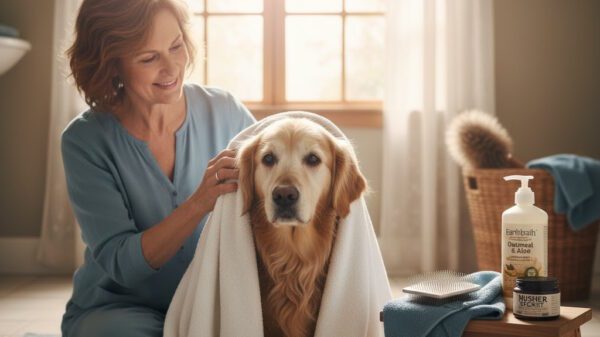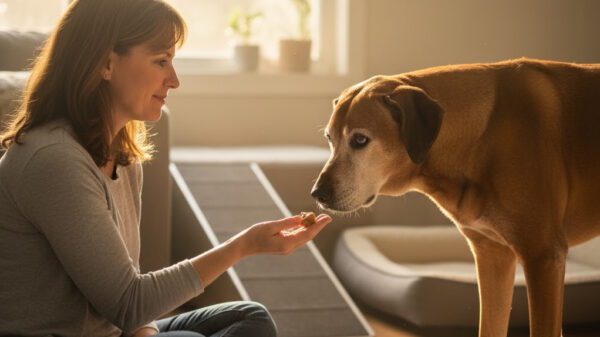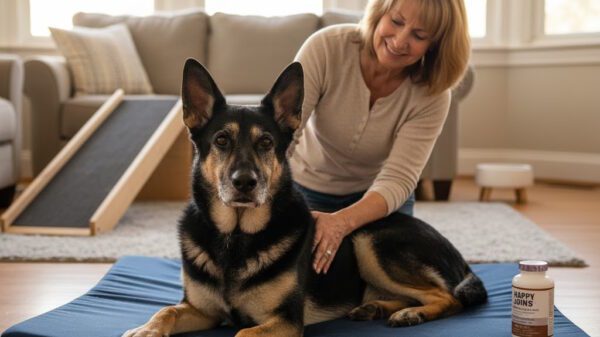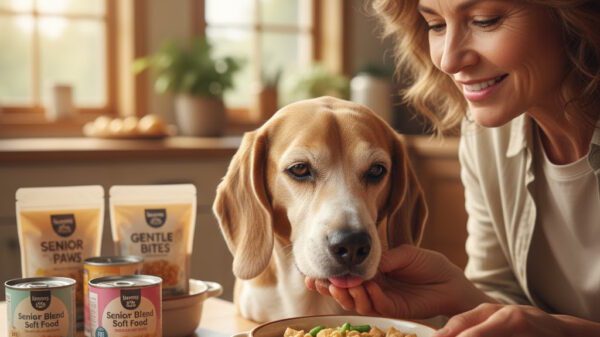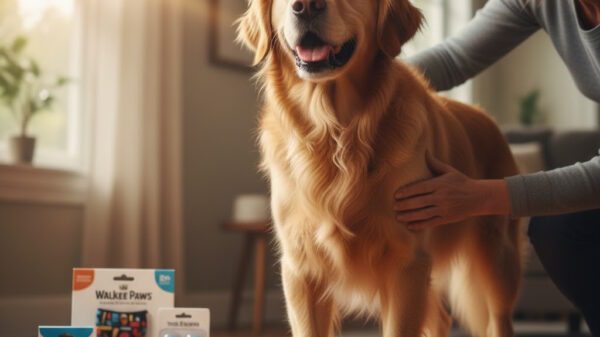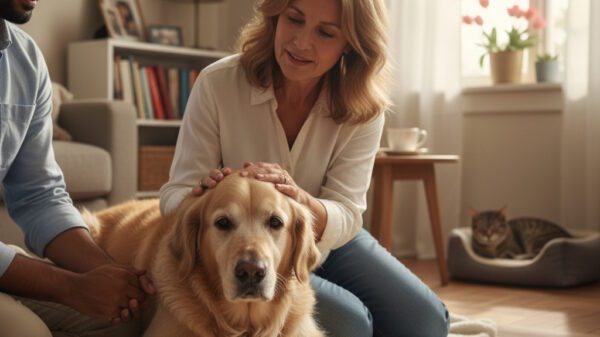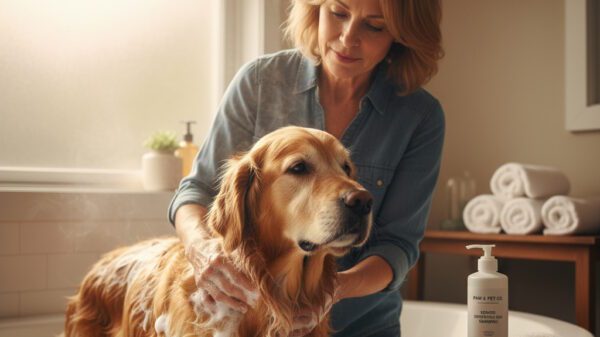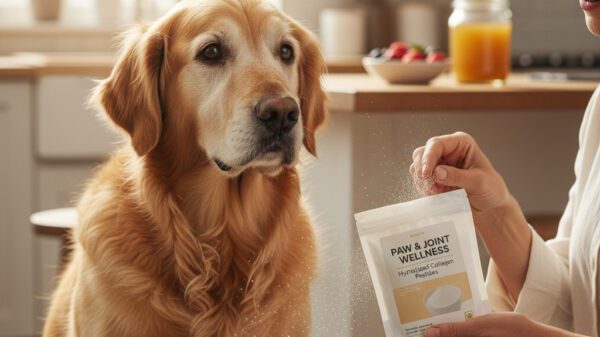
You get the diaper on your senior dog, press the tabs down, smooth the sides, and for one hopeful minute, it looks like you finally solved the problem. Then your dog takes a few steps, gives one little hip wiggle, turns toward the bed, and the diaper starts drifting backward as if it were never truly attached.
By the time your dog lies down, it is crooked. By morning, it may be around the thighs, twisted sideways, or sitting on the floor while your dog looks completely innocent.
That is usually when owners search how to keep dog diapers from falling off — not because they do not understand diapers, but because the diaper seems fine until the dog actually moves. The package makes it look simple: wrap, fasten, done. Real life is messier. Senior dogs sit unevenly, sleep hard on one hip, circle before lying down, scoot against beds, and shift their weight in ways that slowly pull a diaper out of place.
The fix is usually not “make it tighter.” The better question is: what direction is the diaper failing? Once you understand that, the solution becomes much easier.
Dog Diaper Falling Off? Match the Problem First
Before you buy a smaller diaper or pull the tabs tighter, look at how the diaper is failing. The direction of the slide usually tells you what kind of support is missing.
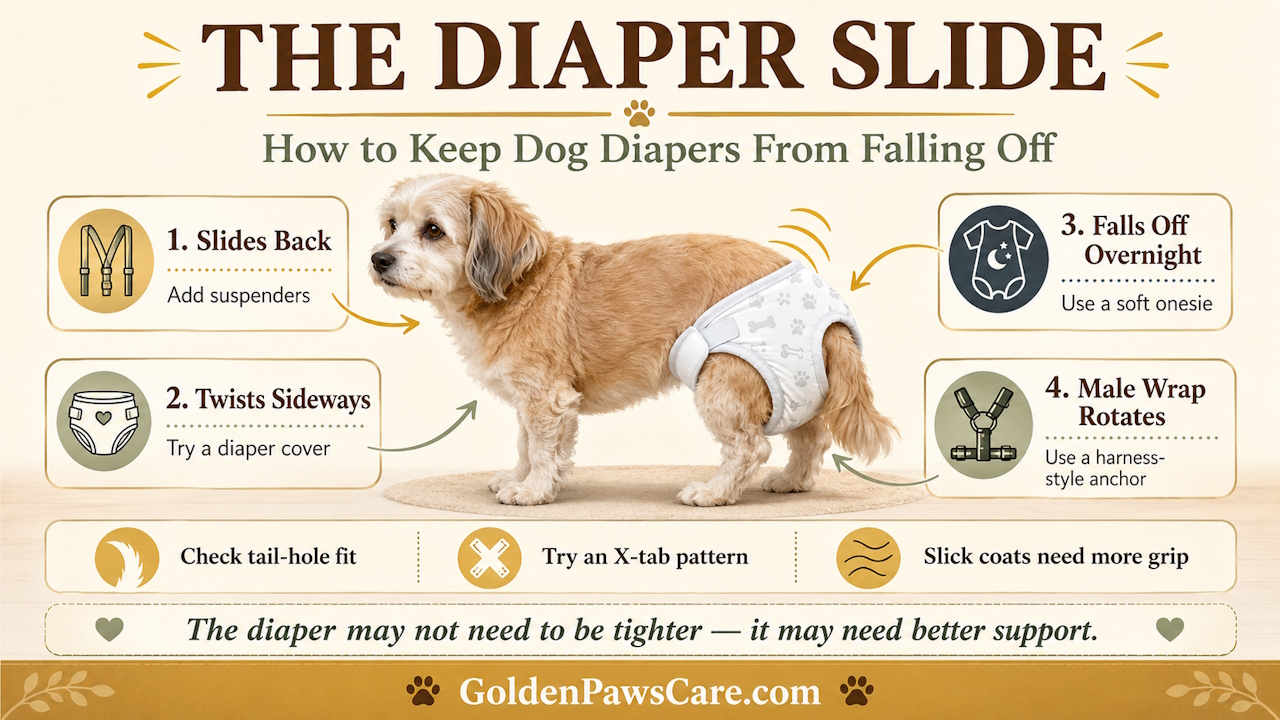
Slides Back
Usually means the diaper has no rear-body anchor. Start with suspenders or a soft onesie.
Twists Sideways
Usually means uneven movement, loose leg openings, or one-sided resting. Try a diaper cover.
Falls Off Overnight
Usually means rolling, scooting, or sleep-position friction. Use a onesie, cover, or suspenders.
Male Wrap Rotates
Usually means the belly band has no anchor. A harness-style suspender can stop the rotation.
GoldenPawsCare note: The diaper may not need to be tighter. It may need help staying where your senior dog’s changing body can no longer hold it.
Dog Diapers Keep Falling Off?
What is the diaper slide really telling you?
A dog diaper that keeps falling off is usually not failing randomly. It is giving you a clue.
If it slides straight backward, the diaper probably has nothing solid to hold onto. If it twists sideways, the fit may be uneven, or your dog may rest harder on one hip. If the tabs pop loose, the diaper may be under too much tension. If a male wrap rotates around the belly, it may need an anchor because a belly band has no hips to stop it from turning.
Here is the fast version:
| What You Notice | What It Usually Means | Best First Fix |
|---|---|---|
| Diaper slides straight backward | Not enough rear-body anchor | Suspenders or a soft onesie |
| Diaper twists sideways | Uneven movement, loose leg openings, or one-sided resting | Diaper cover or better-centered fit |
| Tabs keep popping loose | Tabs are doing too much work | Cover over the diaper, not tighter tabs |
| Diaper falls off overnight | Rolling, scooting, and sleep-position friction | Onesie, suspenders, or bedding adjustment |
| Male wrap rotates around the belly | No hip structure to stop the wrap from turning | Harness-style suspender or wrap cover |
The big mistake is treating every diaper problem as a size problem. Size matters, but shape, movement, coat texture, tail position, and support matter just as much.
Why can a dog diaper look right and still slide off?
A dog diaper can look correct while your dog is standing still and still fail five minutes later.
Most dog diapers depend on body shape. They wrap around the waist and rear, then rely on gentle pressure and the dog’s hips to keep them in position. That works best on a dog with a clear waist, a firm rear end, and enough hip shape to stop the diaper from moving backward.
Many senior dogs no longer have that body shape.
Older dogs often become narrower through the back end. Some lose muscle around the hips and rear legs. Some carry weight in the belly but become thinner behind the ribs. Others have a soft, rounded middle with very little rear-body “ledge” for the diaper to catch on.
That is why a diaper can be the “right size” and still fall off. The measurement may be correct, but the diaper has no anchor.
Think of it like a belt on pants with no hips. You can tighten the belt, but if the body underneath doesn’t provide structure, the whole thing still wants to slide.
Movement makes the problem worse. Senior dogs do not always move in clean, predictable lines. They may sway slightly, sit with one leg kicked out, drag the back feet a little, push up awkwardly from a bed, or turn in small circles before settling. Each movement can tug the diaper a little farther out of place.
This is why a diaper often passes the standing test but fails during normal senior-dog life. It is not only a fit problem. It is a fit-plus-movement problem.
This is also why the issue often feels worse at night. During the day, you catch the shift early. Overnight, your dog has hours to roll, stretch, scoot, and settle. By morning, the diaper may be off even if it looked secure at bedtime.
The 60-Second Dog Diaper Movement Test
A diaper that looks right while your dog is standing still has not really been tested yet. Before trusting the fit, watch what happens during one normal minute of movement.
- Fasten the diaper so it is snug, not tight.
- Let your dog walk ten slow steps.
- Have your dog turn around or walk back toward you.
- Let them sit or lie down if they naturally want to.
- Check whether the diaper slid back, twisted, gapped, or pulled around the tail.
If the diaper shifts during this short test, tightening it is usually not the best answer. The setup probably needs a stabilizer: suspenders, a cover, a onesie, or a better wrap anchor.
Why tightening the diaper is usually not the answer
When something slides, the natural reaction is to tighten it. With dog diapers, that can backfire.
A diaper that is too tight may gap in the leg openings, pull forward when your dog sits, or make the tabs more likely to pop loose. It may also make your dog walk stiffly, rub against furniture, or try harder to escape the feeling.
A very tight diaper can look secure at first, but fail suddenly. The tabs may let go. The diaper may roll downward. Or it may twist because one side is under more pressure than the other.
The goal is not to make the diaper as tight as possible. The goal is to make it snug, centered, and supported.
That last word matters most: supported.
dog For many senior dogs, the diaper should absorb. Something else should help hold.
What Not to Do When the Diaper Keeps Slipping
When a dog diaper keeps falling off, it is tempting to keep making the same setup tighter. That can create new problems without fixing the slide.
A smaller diaper may stop one kind of slipping but create leg gaps, rubbing, or tab strain.
If the tabs keep popping loose, the diaper likely needs support from a cover, onesie, or suspender.
Sliding backward, twisting sideways, and rotating belly bands usually need different fixes.
What small fitting tricks can help before buying anything new?
Before replacing every diaper in the house, a few small adjustments may help your current setup work better.
First, look at the tab angle. If the tabs allow it, fastening them at a slight upward angle instead of straight across can help resist backward sliding. Some owners also get a little extra hold by crossing the tabs into a soft “X” pattern, as long as the diaper still lies flat and does not bunch.
Second, check the tail hole. A round tail hole can widen as the dog moves, especially with disposable diapers. If you need to adjust a disposable diaper, a small “V” cut or tiny “plus” cut often gives the tail more room without creating one large opening that lets the diaper sag. The goal is not to cut a big hole. The goal is to let the tail pass through without pulling the diaper backward.
Third, pay attention to coat texture. Dogs with slick, silky, or freshly trimmed coats may slide out of diapers more easily because there is less surface grip. Yorkies, Maltese, Cavaliers, Cockers, Goldens, and other smooth-coated or groomed dogs can be surprisingly hard to diaper for this reason. A soft diaper cover or onesie often helps more than extra tightness because it adds gentle friction without squeezing.
These small tricks will not fix a completely wrong fit. But they can turn “almost stays on” into “stays on long enough to be useful.”
When do dog diaper suspenders make the most sense?
Dog diaper suspenders are often the cleanest fix when the diaper keeps sliding straight backward.
Suspenders change the diaper’s job. Instead of asking the diaper to stay up by squeezing around the waist, they add light upward support from the dog’s back or shoulders. That helps stop the slow backward drift that happens when a dog walks, sits, lies down, or gets up.
This is especially helpful for senior dogs with narrow hips, a weaker rear body shape, or a diaper that fits reasonably well but does not stay in place.
The key is gentle support. Suspenders should not yank the diaper tight against the body. They should simply keep it from traveling backward. A diaper that is wildly too large, badly shaped, or poorly placed will still be frustrating. But if the diaper is close to right and still keeps sliding, suspenders often solve the missing-anchor problem.
For overnight use, suspenders can be especially useful because they keep the diaper from slowly creeping down while the dog sleeps and shifts position.
Can an infant’s onesie keep a dog diaper from falling off?
An infant onesie can be one of the most useful home fixes, especially for small or slim dogs, and for dogs that slide out of diapers overnight.
The onesie acts like a soft outer shell. It does not replace the diaper. It helps keep the diaper close to the body so it cannot twist, sag, or escape as easily.
This works because the diaper is no longer exposed to every movement. When your dog lies down, rolls slightly, or pushes up from a bed, the onesie helps hold the diaper in place.
For small dogs, some owners use a baby onesie and adjust the tail area. For medium dogs, sizing can take trial and error. Human baby sizes do not translate perfectly to dogs because dogs are shaped differently. Length along the back matters more than the weight label on the onesie. A onesie that fits around the body but pulls too tightly from the neck to the rear will be uncomfortable and may cause the diaper to shift.
The goal is not a tight outfit. The goal is a light, comfortable fabric layer that keeps the diaper from wandering.
One small caution: any extra layer can hold warmth and moisture closer to the body, so check the skin during changes for rubbing, redness, trapped dampness, or areas where the diaper edge is pressing the same spot over and over.
This trick is not perfect for every dog. Some dogs dislike clothing. Some may get too warm. Some body shapes do not work well with baby garments. But for the right dog, a onesie can turn a diaper that is gone by morning into one that stays where it belongs.
A Layered Diaper Setup Should Still Breathe
A diaper plus a cover or onesie can solve the sliding problem, but extra layers can also hold warmth and dampness closer to the body. That matters most for senior dogs who nap for long stretches or wear diapers overnight.
During changes, take a quick look at the places where fabric presses or rubs most often:
- inside the leg openings
- around the belly tabs
- near the tail hole
- under any suspender clips or cover edges
- where your dog sleeps on one hip
The best setup is not the tightest setup. It is the one that stays in place without trapping dampness, rubbing the same spot, or making your dog move differently.
When does a diaper cover work better than the diaper alone?
A diaper cover helps when the diaper fits well enough, but lacks structure.
Disposable diapers can bunch, sag, or twist. Washable diapers can shift if the cut doesn’t fit your dog’s body. A diaper cover adds a second layer to the setup, helping smooth everything against the dog.
A cover can help in three practical ways.
It keeps the diaper flatter. It reduces direct pulling on the tabs. It also protects the diaper from catching on bedding, furniture, or the floor when your dog lies down and gets back up.
This is especially useful for dogs that twist out of diapers rather than slide straight backward. If the diaper is rotating under your dog’s body, suspenders may help, but a cover may be more effective because it controls side-to-side movement.
A good way to think about it is this: the diaper handles moisture, while the cover handles movement.
That separation makes many diaper setups work better.
The same skin-comfort rule applies here, too. If a cover helps the diaper stay on, it is still worth checking during changes to make sure the extra layer is not holding dampness, rubbing the groin area, or leaving pressure marks where the edges sit.
A Small Skin-Comfort Check Matters
Covers, onesies, and suspenders can help keep a diaper in place, but any extra layer can also hold warmth, dampness, or pressure against the same areas for longer.
During diaper changes, do a quick look at the places where the diaper touches most often:
- around the leg openings
- under the belly or waist tabs
- near the tail hole
- where a cover or onesie edge rests
The goal is not just a diaper that stays on. It is a diaper setup your dog can comfortably wear through normal movement, rest, and cleanup.
Why do male wraps rotate even when they seem tight enough?
Male wraps, also called belly bands, create their own version of the diaper slide. Instead of falling off the rear, they rotate around the belly, bunch near the side, or shift until the absorbent part is no longer where it needs to be.
This happens because a male wrap has no hips to hold it in place. It is basically a band around a moving cylinder. Every time your dog walks, sits, twists, or lies on one side, the wrap can slowly turn.
That is why tightening a belly band often disappoints owners. A tighter wrap may stay flat for a little while, but it can still rotate because the problem is not looseness alone. The problem is that the wrap has no forward or upward anchor.
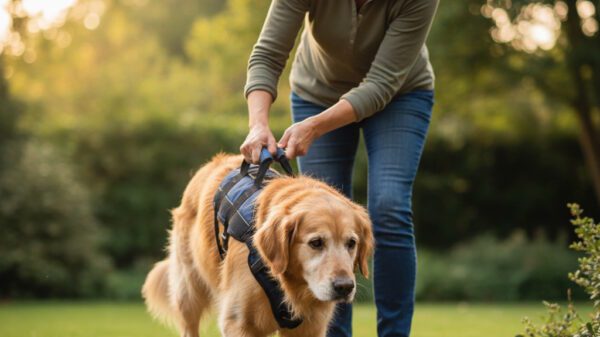
For male dogs, the most reliable fix is often a harness-style suspender made for belly bands. This gives the wrap something to connect to besides the dog’s waist. Instead of relying only on pressure around the belly, the suspender helps keep the wrap from rotating out of position.
A Simple Male Wrap Anchor Can Stop the Spin
If a belly band keeps rotating, the wrap may need one small anchor point. Some caregivers use a soft elastic strap or pet-safe suspender clip to connect the top of the wrap to a comfortable harness.
The goal is not to pull the wrap upward tightly. The goal is to stop the slow turning motion that happens when the band acts like a loose ring around the belly.
Keep the connection light, flat, and easy to remove. If the wrap still rotates after a short walk-and-turn test, the band may need a different width, fabric, or support style.
A washable wrap over a disposable pad can also help, as the outer wrap provides structure while the inner pad handles absorption. If the wrap is soft, flimsy, or too wide for your dog’s body, it may fold when he sits and then shift when he stands again.
A useful way to judge a male wrap is not just whether it feels snug while your dog is standing. Watch what happens after he lies down, gets up, turns around, and walks ten steps. That short movement test tells you more than the first fit check.
What if my dog backs out of the diaper?
Some dogs do not remove diapers with their mouth. They back out of them.
This often happens when a dog pushes up from lying down, walks backward, turns tightly in a bed, or rubs against a blanket or couch. The diaper catches just enough to move, and once it gets past the hips, gravity finishes the job.
If your dog is backing out of the diaper, the tabs are usually not the main issue. The diaper needs something that prevents backward travel.
Suspenders, a onesie, or a well-fitted cover usually helps more than repeated re-tabbing. You are not just tightening the diaper. You are stopping the direction of failure.
A good clue is where the diaper ends up. If it is behind your dog, around the thighs, or completely off after your dog walks forward, the diaper needs a forward or upward anchor.
What if the diaper twists sideways?
A diaper that twists sideways usually means it’s moving unevenly.
One side may be tighter than the other. One leg opening may be looser. Your dog may sit harder on one hip. The tail hole may be pulling the diaper crooked. Or your dog may have a natural side-to-side sway that slowly works one side loose first.
This is common in older dogs who favor one side when resting. It can also happen if the diaper cut does not match your dog’s rear shape.
The fix is often different from the fix for a diaper that slides straight back. A twisting diaper may need better centering, a different cut, or a diaper cover that keeps the fabric flat against the body.
Do not only look at where the diaper ends up. Try to notice how it gets there.
Does one tab loosen first? Does one leg opening gape? Does the tail hole pull to one side? Does your dog always sleep on the side that comes loose?
Those details tell you which part of the setup is failing.
Why does the tail hole matter so much?
The tail hole can make or break the fit.
If the tail hole is too large, the back of the diaper may sag. If it is too tight, it may pull the diaper backward or sideways every time your dog moves their tail. If it is in the wrong place for your dog’s tail set, the whole diaper may sit crooked from the start.
This is especially true for dogs with curled tails, low-set tails, very short tails, docked tails, or thick tails. Product photos often feature a single, neat body type. Real dogs are not shaped that neatly.
A diaper that pulls around the tail often looks slightly off-center before it actually falls. That early crookedness is your warning sign.
For disposables, a tiny adjustment to the tail opening may help. For washable diapers, it may be better to try a different cut rather than forcing the diaper to sit where it does not naturally fit.
Make the Tail Opening Flexible, Not Huge
If a disposable diaper pulls around the tail, the answer is usually a small flexible cut, not a large round hole. A big circle can stretch wider as your dog moves and make the back of the diaper sag.
Small “V” Cut
Best when the tail needs a little more room but the diaper still needs structure behind it.
Tiny “+” Cut
Best when the tail position changes as your dog sits, stands, or curls up to sleep.
Avoid a Big Circle
A large round hole can widen, sag, or let the diaper slide backward faster.
Simple rule: cut less than you think you need. You can always make the opening slightly more flexible, but once the hole is too large, the diaper has less support.
What are owners most likely to misread?
The most common misread is thinking the diaper must be too big.
Sometimes it is. But often, the size is close, and the support is wrong.
A smaller diaper may stop some sliding but create new gaps. A larger diaper may cover more but sag faster. A different brand may help, but only if the shape fits your dog’s body better.
Another common misread is thinking the dog is escaping on purpose. Some dogs do try to remove diapers, especially if they dislike the feel. But many senior dogs are not intentionally getting out of them. They are simply moving as senior dogs move, and the diaper is slowly losing its place.
Owners also sometimes assume that if a diaper worked last month, it should still work now. Senior-dog fit can change quickly. A little weight loss, a haircut, a change in sleep position, or less rear-leg strength can turn a once-reliable diaper into one that slides every day.
The diaper may not have changed. Your dog’s fit situation may have changed.
What should you quietly watch before changing the setup?
Before buying new diapers, watch the failure pattern for a day or two. Not nervously. Just practically.
Notice when the diaper fails. Is it during walking, sleeping, sitting, or getting up? Does it fall backward, twist sideways, or loosen at the tabs? Is the diaper dry when it falls, or is the weight from the moisture pulling it down? Does the tail hole pull crooked? Does the diaper stay on during the day but fail overnight?
If the diaper problem seems to be changing alongside new back-end weakness, weight loss, nighttime restlessness, or confusion around the house, it may help to keep those observations together instead of treating each one as a separate problem.
These questions matter because each pattern points to a different fix.
A diaper that slides off dry probably needs better anchoring. A diaper that sags when wet may need more absorbency or more frequent changes. A diaper that twists may need a cover. A diaper that falls off overnight may need a onesie, suspenders, or a different sleeping setup.
You are not trying to monitor everything forever. You are trying to stop guessing.
Track the Pattern, Not Just the Accident
If the diaper problem is changing alongside new back-end weakness, weight loss, nighttime restlessness, or confusion around the house, keep those observations together for a few days.
A simple note like “slides off overnight after turning in bed” or “wrap rotates after he gets up from the floor” is more useful than only writing “diaper failed.”
What usually works best for keeping dog diapers on?
For many senior dogs, the best answer is a layered setup.
That means a diaper plus one stabilizer.
The stabilizer might be suspenders, a diaper cover, an infant onesie, or a better wrap system. Which one you choose depends on how the diaper fails.
If the diaper slides backward, try suspenders or a onesie.
If the diaper twists sideways, try a diaper cover.
If the tabs pop loose, stop making the tabs do all the work and add an outer layer.
If a male wrap rotates, try a harness-style suspender or a more structured wrap.
If the tail hole pulls crooked, look for a better cut or make a smaller, cleaner adjustment.
The best dog diaper setup is not always one perfect product. For senior dogs, it is often a simple system: absorbency plus support.
When is it reasonable to mention diaper changes to a vet?
It is reasonable to mention diaper changes to your vet when the need for diapers is new, increasing, or changing noticeably.
You do not have to make it dramatic. You can simply bring clear observations.
You might say, “We started using diapers only at night, but now we are using them during the day too.”
Or, “The diaper problem changed around the same time her back-end movement changed.”
Or, “The diaper stays dry sometimes, but she seems unaware when she leaks.”
Those kinds of details are useful because they describe daily life. They are not overreactions. They are practical observations from the person who sees the dog most.
For the fit problem itself, describe the failure pattern: sliding backward, twisting sideways, tabs loosening, falling off overnight, or rotating around the belly. That is more helpful than simply saying, “The diapers do not work.”
Dog Diapers Falling Off: Common Questions
Most diaper problems come down to fit, movement, body shape, or missing support. These quick answers can help you narrow down what is happening before you buy a different size.
Why does my dog’s diaper keep falling off?
A dog diaper usually falls off because it has no solid anchor, not always because it is the wrong size. Senior dogs often have narrower hips, less rear-body muscle, or a different walking pattern than they used to, so the diaper slides backward as they move, sit, turn, or sleep.
How do I keep a dog diaper from sliding off overnight?
If a dog diaper falls off overnight, the issue is usually rolling, scooting, or sleep-position friction. A soft infant onesie, dog diaper suspenders, or a diaper cover can help keep the diaper from slowly creeping backward while your dog sleeps and changes position.
Should I use a smaller diaper if my dog keeps slipping out?
Not automatically. A smaller diaper may reduce sliding, but it can also create leg gaps, rubbing, or tab strain. If the diaper is close to the right size but keeps moving, the better fix is often support: suspenders, a diaper cover, or a soft onesie over the diaper.
Do dog diaper suspenders really work?
Dog diaper suspenders can work very well when the diaper slides straight backward. They help by giving the diaper an upward anchor instead of forcing the waist tabs to do all the work. They are especially useful for senior dogs with narrow hips or a thinner rear end.
Can I use a baby onesie to keep a dog diaper on?
Yes, a baby onesie can help some dogs keep a diaper in place, especially small dogs or dogs who slide out of diapers overnight. The onesie acts as a soft outer layer that keeps the diaper from twisting or drifting backward. The fit should be comfortable, not tight, and the tail area may need to be adjusted.
Why does my dog’s diaper twist sideways?
A diaper usually twists sideways because one side is moving more than the other. This can happen when one leg opening is looser, one tab is tighter, the tail hole pulls crooked, or your dog rests more heavily on one hip. A diaper cover often helps because it keeps the diaper flatter against the body.
Why does my male dog’s belly band keep rotating?
A male dog’s belly band rotates because it wraps around the belly without hips to hold it in place. As your dog walks, sits, turns, or lies on one side, the band can slowly turn. A harness-style suspender or more structured wrap can help stop the rotation.
Does the tail hole affect whether a dog diaper stays on?
Yes. If the tail hole is too large, the back of the diaper can sag. If it is too tight or poorly placed, it can pull the diaper backward or sideways. The tail hole should let the tail move without dragging the diaper out of position.
How tight should a dog diaper be?
A dog diaper should be snug enough to stay centered, but not so tight that it pulls, gaps, rubs, or changes how your dog walks. If you have to make the diaper very tight to keep it on, the setup probably needs extra support instead of more pressure.
Why solving the diaper slide matters more than it seems
When dog diapers keep falling off, the problem is not only the mess.
It is the constant checking. The interrupted sleep. The laundry. The floor cleanup. The feeling of solving the problem for five minutes, only to lose again.
It is also the guilt that comes with being frustrated, because your dog is old and not doing anything wrong.
That is why this small household problem can feel so heavy.
Keeping a dog diaper on is not about perfection. It is about giving both of you more peace. A diaper that stays in place lets your dog rest without constant adjusting. It lets you stop scanning the bed and floor every time you walk into the room. It makes caregiving feel a little less like crisis management.
Most of the time, the answer is not to tighten the same diaper and hope for a different result. The answer is to notice how it fails, then add the missing support.
A senior dog with narrow hips may need suspenders. A dog who twists out of diapers may need a cover. A small dog may do better with a soft onesie. A male dog may need a belly band with a harness-style anchor. A slick-coated dog may need more friction, not more pressure.
None of that means you were doing it wrong.
It means you noticed the real problem: the diaper was trying to do too much on its own.
And when you are trying to figure out how to keep dog diapers from falling off, that is the most useful place to start. The diaper may not need to be tighter. It may need help staying in place when your senior dog’s changing body can no longer hold it on its own.