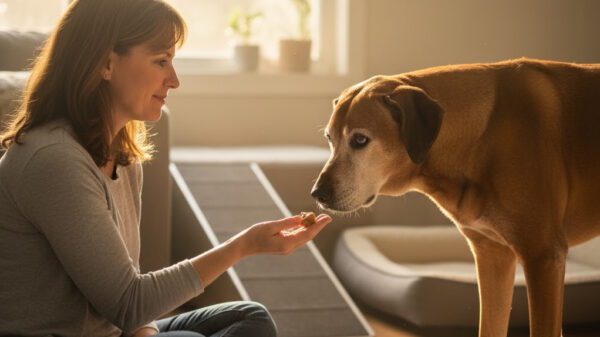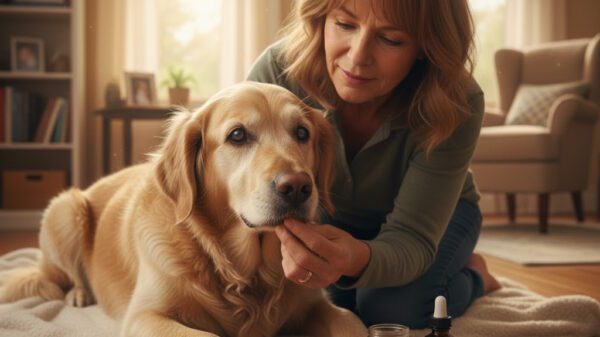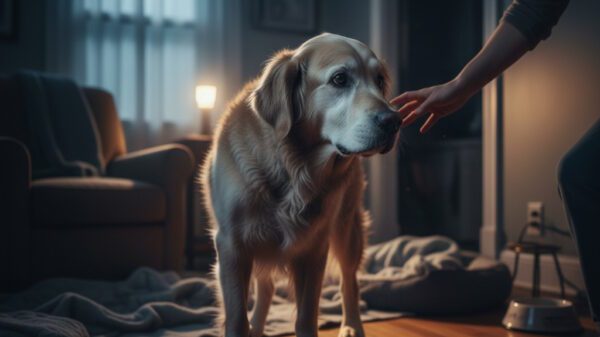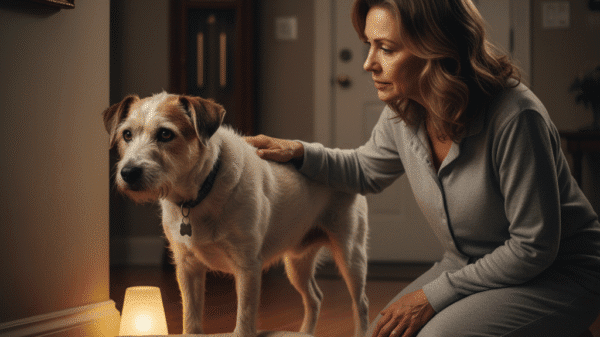
There is a specific kind of anxiety that settles in when you care for a senior dog. It’s not just the worry about stiff joints or the nightly pacing; it’s the quiet, nagging fear of “what if.”
What if the garden gate is left unlatched during a storm? What if a leash snaps in a busy parking lot? What if, heaven forbid, a medical emergency separates you from the dog who relies on you for everything?
For a young, healthy pup, a standard metal ID tag with a name and phone number is usually enough. They are resilient. If they get lost, they can often navigate the world reasonably well until found.
But for our gray-muzzled companions, the stakes are infinitely higher.
🆔 Try the GeneratorA senior dog often has a complex medical history. They might be diabetic, requiring insulin at precise times. They might have vision loss that makes approaching strangers terrifying. Or, they might have Canine Cognitive Dysfunction (dementia), meaning they can’t simply “find their way home” because they may not even recognize where home is anymore.
In those critical moments when you aren’t there to speak for them, a metal tag is silent. It can’t tell a rescuer, “I have seizures if I miss a dose,” or “Please don’t pick me up by my hips.”
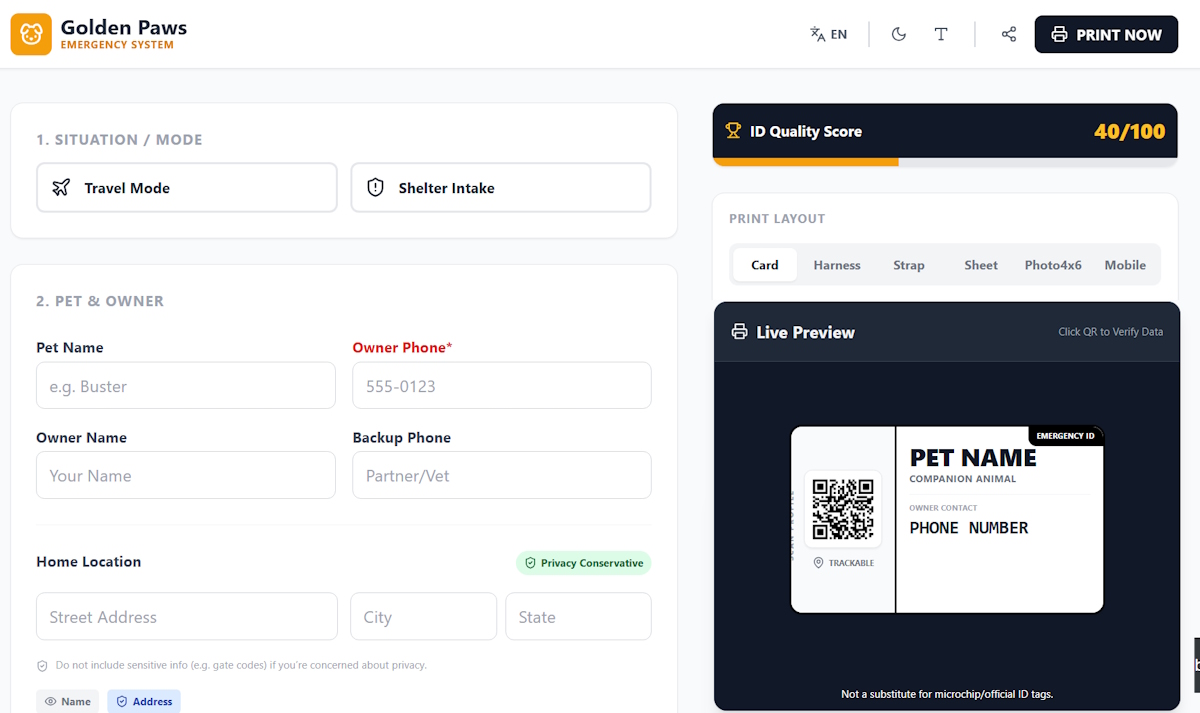
That is why we built the Golden Paws Emergency ID System. It isn’t just a fancy ID generator; it is a voice for the dogs who can no longer speak for themselves.
In This Post
The Gap Between Microchips and Reality
I want to be clear: microchips are non-negotiable. They are the gold standard for permanent identification. But in a chaotic moment—a dog running scared down a highway or confused in a shelter—a microchip is invisible. It requires a professional scanner, a vet visit, or an animal control officer to be read.
Time is the enemy in a senior dog emergency.
If a Good Samaritan finds your arthritic, deaf dog on the side of the road, they need immediate, actionable information before they try to load them into a car. They need to know if that dog is aggressive out of fear, or if they are just deaf and didn’t hear the approach.
This is where a comprehensive pet safety profile bridges the gap. We designed the Golden Paws Emergency ID System to act as that immediate layer of communication, providing context that a simple phone number never could.
At-a-Glance: Why Seniors Need More Than a Tag
- Emergency speed: microchips aren’t instant; context needs to be visible right now.
- Handling risk: pain, blindness, and fear can look like “aggression” without notes.
- Medication stakes: missed doses and sensitivities matter more in older dogs.
- Caregiver reality: sitters/boarding need a one-page truth sheet, not a long explanation.
- Privacy control: share enough to help, not more than you’re comfortable with.
Snapshot: Metal Tag vs Microchip vs Smart Emergency ID
Metal Tag
- Good for name + phone
- Visible to anyone
- Usually missing medical/behavior context
Microchip
- Great permanent ID
- Requires a scanner + database
- Not instant in the moment
Smart Emergency ID
- Medical alerts + caregiver notes
- Printable + shareable profile
- Designed for emergencies, not just identification
Features Designed for the “Complex” Dog
When we sat down to design this tool, we didn’t want another generic “Lost Dog” poster generator. We wanted something that addressed the nuances of caring for aging pets.
1. The “Do Not Miss” Medical Alerts
Senior dogs run on schedules. Thyroid meds at 7 AM, heart meds at 7 PM, joint supplements in between. A missed dose can range from uncomfortable to life-threatening.
The system allows you to toggle high-visibility “Badges” on your printable ID cards. These aren’t subtle footnotes; they are bold indicators for things like “Diabetic,” “Seizures,” “Needs Meds,” or “Addison’s Disease.”
When a rescuer sees “NEEDS MEDS” in bold red letters on a collar strap, the urgency of the situation changes immediately. It shifts the mindset from “Let’s find the owner eventually” to “We need to get this dog help now.”
2. Sensory and Behavioral Context
One of the most heartbreaking aspects of aging is the loss of senses. A dog that appears “stubborn” or “aggressive” might actually just be blind or deaf.
If a stranger corners a scared, blind dog, that dog might snap. That isn’t aggression; it’s panic. By including badges like “Blind,” “Deaf,” or “Do Not Corner,” you are giving the rescuer the instruction manual they need to handle your dog safely. You are protecting your dog from being labeled “dangerous” when they are simply old and confused.
3. Privacy for the Modern Owner
We live in a world where data privacy matters. Many owners are rightfully hesitant to engrave their full home address on a tag that dangles in plain sight at the dog park or coffee shop.
We built a “Privacy Safe” mode into the generator. You can choose to display just your City and State, giving a finder enough context to know if the dog is local, without broadcasting your street address to the world.
The “Travel Mode” for Summer Vacations
Traveling with a senior dog is a logistical feat. You have the travel bed, the ramp, the medications, and the anxiety of being in a new place.
Standard tags become useless the moment you cross state lines. If your tag says “123 Main St, Ohio,” but you are vacationing in a rental cabin in the Smoky Mountains, a local finder might assume the dog was dumped or abandoned.
With the Golden Paws Emergency ID System, you can generate a temporary “Travel Card” for the duration of your trip. Put the address of your Airbnb or hotel on the card, print it out, and tape it to the leash or slide it into a luggage tag holder. It takes five minutes, costs zero dollars, and ensures your dog is linked to your current location, not one 500 miles away.
A Lifeline for Pet Sitters and Boarding
Leaving a senior dog behind, even for a weekend, feels like leaving a piece of your heart. You worry whether the sitter will remember the exact way to mix the food or which vet to call in an emergency.
The system generates an Emergency ID Sheet—a full-page summary of your dog’s profile. This isn’t just an ID; it’s a care sheet. It includes:
- A clear photo of your dog.
- Primary and backup emergency contacts.
- Primary Veterinarian and Emergency Clinic details.
- A generated “Packing List” of food and meds.
Print this out and stick it to your fridge. Hand a copy to the boarding facility. Leave one on your car’s dashboard. It removes the guesswork for anyone stepping in to care for your dog.
Pro-Tips: How to Make Paper Tough as Nails
Since this is a free, web-based tool, you print the IDs at home. You might be thinking, “Paper? On a dog collar? That won’t last a rainstorm.”
Here is how experienced users in our community make these IDs indestructible:
- The “Shipping Tape” Lamination: It sounds crude, but it works. Print the Wallet Card, fold it, and cover the entire thing in heavy-duty clear packing tape. Punch a hole, reinforce it, and ring it to the collar. It’s waterproof, chew-resistant, and free.
- The Luggage Tag Hack: Go to any dollar store and buy a plastic luggage tag holder. Print the ID to size, slide it in, and clip it to your dog’s harness. This is excellent for “Medical Alert” information that needs to be large and readable without getting in the way.
- The Leash Wrap: Use the “Strap” layout to print a long, thin ID strip. Wrap this around the handle or base of your leash and secure it with clear tape. If your dog slips their collar but the leash is still attached (a common scenario), your info is still there.
Smart Emergency ID: FAQ
Is a Smart Emergency ID a replacement for a microchip?
No—think of it as a different tool. A microchip is permanent identification. A Smart Emergency ID is fast, visible context for the moment help is happening.
What “medical alerts” should seniors include?
Only the items that change emergency handling: seizure history, diabetes, heart disease, bleeding risk, medication sensitivities, and anything a vet tech would want before touching or sedating your dog.
What if I don’t want my home address public?
Use the Privacy mode: city/state, a primary phone, and an emergency contact are usually enough for reunification without broadcasting your street address.
Where should I keep the printed profile?
Put one copy in a visible spot at home (fridge or go-bag), and another in your dog’s travel kit with boarding instructions. If you use sitters, share a digital copy too.
Peace of Mind is Preparedness
We often delay preparedness tasks because they feel overwhelming or expensive. We think, “I’ll order that custom medical tag next week,” and then months go by.
The Golden Paws Emergency ID System eliminates that barrier. You don’t need to download an app. You don’t need to create an account if you don’t want to. You don’t need to pay a subscription.
You can go to the site right now, type in your senior dog’s details, and have a life-saving ID card in your hand in three minutes.
For those of us loving a dog through their golden years, we know that every day is a gift. But we also know that those days can be fragile. Giving them a voice when they can’t speak is one of the most profound ways we can say, “I’ve got you, buddy.”
GoldenPawsCare Tool
Build Your Senior Dog’s Smart Emergency ID
If your dog has meds, quirks, mobility issues, or “don’t grab me” rules, this tool turns that reality into a clear emergency profile you can print and share.
- Medical Alerts: the “do not miss” info a rescuer needs fast
- Behavior Context: fear, blindness, bite risk, handling notes
- Caregiver Ready: a one-page profile for sitters and boarding