Flooring Solutions for Arthritic Dogs
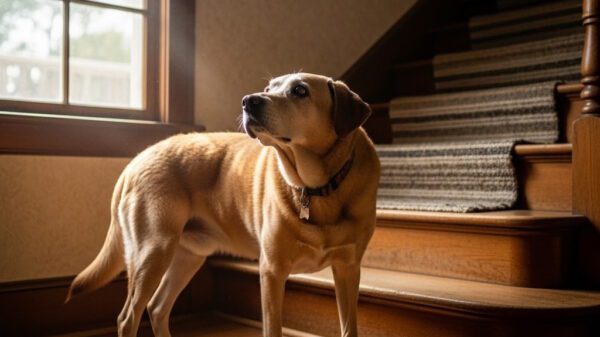
The rhythmic click-clack of paws on a hard floor is a familiar sound, evoking memories of youthful energy and confident strides. But as our cherished dogs enter their senior years, and arthritis begins to stiffen their joints, that sound can change. The confident stride may turn into a tentative shuffle, and the hard, gleaming floor that once felt so exciting can become a treacherous obstacle course. A slip, a fall, a painful stretch—these moments chip away at their confidence and can significantly diminish their quality of life.
🏠 Why the Right Flooring Matters for Arthritic & Senior Dogs
As dogs age and develop arthritis, they often lose joint-flexibility, muscle tone and proprioceptive awareness. Slick floors like hardwood or tile increase the risk of slips and falls — which can dramatically worsen joint-pain, cause flare-ups, or lead to new injuries.
Choosing flooring with traction, cushioning and durability means your dog can regain confidence to stand, walk and lie down without hesitation — improving mobility, comfort, and quality of life.
Did you know?
More than 80 % of dogs over 8 years show early mobility decline, and one slip on slick flooring can trigger a pain cycle lasting weeks.
Preventing falls starts beneath their paws.
For a dog grappling with arthritis, every step is a conscious effort, a delicate balance between pain and stability. As their loving guardians, one of the most profound ways we can ease their daily struggles is by creating a safe, navigable environment right in their own home. And often, the most impactful change we can make starts from the ground up: with our flooring.
This guide will delve into the best flooring solutions for arthritic dogs, focusing on practical, non-slip options that restore confidence, prevent injury, and provide a soft landing for their aching joints. This isn’t just about decor; it’s about dignity, safety, and a heartfelt commitment to their comfort in every single step they take.
In This Guide
The Slippery Slope: Why Hard Floors are a Hazard for Arthritic Dogs
To truly appreciate the solutions, it helps to understand the problem from your dog’s perspective. Imagine walking on a constantly icy surface while your joints are stiff and painful, and your muscles are weakening.
- Lack of Traction: Smooth surfaces like hardwood, tile, and laminate offer virtually no grip for an arthritic dog’s already compromised paws. Their worn paw pads and often splayed toes struggle to find purchase.
- Increased Pain & Instability: When a dog slips, they instinctively splay their legs to regain balance. This sudden, uncontrolled movement can hyperextend or twist already painful joints, causing acute pain and potentially further injury.
- Fear & Anxiety: Repeated slips and falls erode a dog’s confidence. They become hesitant, fearful of movement, and may even refuse to traverse certain areas, which can lead to isolation and a diminished quality of life.
- Aggravated Conditions: For dogs with hip dysplasia, degenerative myelopathy, or spinal issues, a hard fall can be catastrophic, worsening their condition or causing new injuries.
The goal, therefore, is to transform these slick surfaces into safe, supportive pathways, enabling your senior dog to navigate their home with renewed confidence and comfort.
🩺 Veterinary Research: Home Environment & OA Dogs
A clinical review by Canine Arthritis Management (CAM) states that providing non-slip surfaces is the “first and perhaps most important recommendation” when modifying homes for dogs with joint disease. They highlight that covering tile or hardwood with rugs or yoga mats significantly improves traction.
Source: CanineArthritis.org – “Home Environment Modifications for Dogs with OA”
The Ground Rules: Essential Features of Flooring
Regardless of the specific solution you choose, keep these critical features in mind:
- Maximum Traction: This is paramount. The surface must provide excellent grip for even the most unsteady paws.
- Cushioning & Support: While not as critical as traction, a degree of softness can help absorb impact and provide a more comfortable resting spot, especially for their pressure points.
- Durability & Cleanability: Accidents happen with seniors. The solution needs to withstand dog traffic and be easy to clean.
- Aesthetics (Secondary): While important for your home, remember that your dog’s safety and comfort take precedence. Many attractive options are also dog-friendly.
📋 Insight: Flooring Challenges for Dog Mobility
According to an article from Floors for Paws, cushioned and textured flooring surfaces reduce slip-risk and joint-strain in dogs, especially those with early mobility decline.
Source: Floors For Paws – “What can I do at home to help my dog with arthritis?”
🏡 Flooring Options for Arthritic or Senior Dogs
Every home surface offers different levels of traction, shock absorption, and maintenance needs. Here’s how popular flooring types compare when it comes to comfort and safety for aging dogs:
| Floor Type | Benefits | Concerns | Best For |
|---|---|---|---|
| Luxury Vinyl Plank (LVP) | Soft underpaw feel; slip-resistant texture; waterproof. | Some cheaper options are slick when wet; confirm traction rating. | All-around choice for multi-dog homes with seniors. |
| Rubber Flooring / Mats | Highest traction; shock-absorbing; great in recovery areas. | Industrial appearance; can retain odor if not cleaned regularly. | Basements, garages, or rehab zones. |
| Cork Flooring | Eco-friendly, soft, and naturally slip-resistant. | Sensitive to moisture; may dent under heavy claws. | Quiet households, low-traffic rooms. |
| Carpet Tiles / Runners | Excellent traction; modular and easy to replace if soiled. | Can trap allergens; needs frequent cleaning for hygiene. | Hallways, bedrooms, or stairs. |
| Area Rugs with Non-Slip Pads | Fast, inexpensive traction fix; easy to reposition or wash. | Pads can bunch if not anchored; check edges for trip risk. | Temporary or rental spaces; quick mobility boosts. |
| Hardwood & Tile | Durable and easy to clean. | Extremely slippery; cold; transmits joint shock. | Only when fully covered with traction mats or rugs. |
Tip: Look for floor materials rated with a COF (Coefficient of Friction) ≥ 0.50 for safe traction in dogs with joint instability.
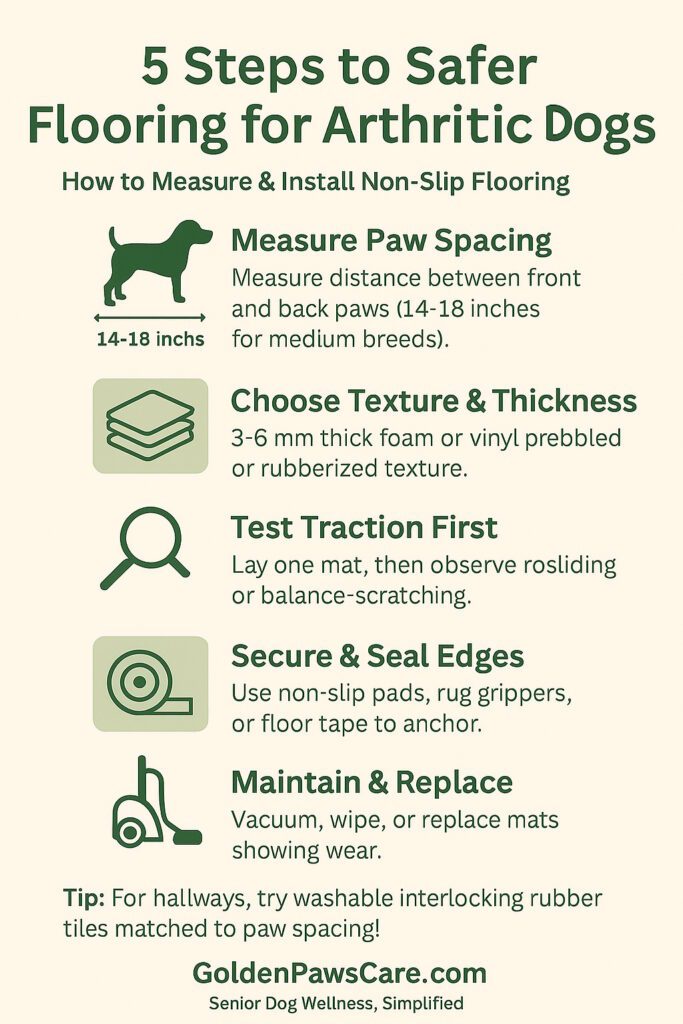
🧩 How to Measure & Install Non-Slip Flooring for Senior Dogs
1️⃣ Measure Paw Spacing
Place your dog on a flat surface and measure the space between front and back paws (average 14–18 inches for medium breeds). This ensures rugs or pads overlap properly when walking.
2️⃣ Choose Texture & Thickness
Look for 3–6 mm thick foam or vinyl with a lightly pebbled or rubberized texture — thin enough for stability, cushioned enough to reduce impact.
3️⃣ Test Traction First
Lay down one mat or runner and observe your dog’s gait — there should be no sliding or claw-scratching for balance. Adjust texture if needed.
4️⃣ Secure & Seal Edges
Use non-slip pads, rug grippers, or floor tape to anchor each piece. Avoid adhesives with strong odors that can deter senior dogs from walking confidently.
5️⃣ Maintain & Replace
Vacuum or wipe weekly; replace mats showing flattening or curled edges. Consistent traction means fewer joint jolts and safer steps for aging dogs.
Tip: For small hallways, use interlocking rubber tiles — they’re washable, low-odor, and customizable to exact paw spacing.
🐾 Recommended Non-Slip Solutions
Looking for trusted options? These vet-approved flooring aids provide traction, cushioning, and comfort for senior dogs coping with arthritis.
⬇️ View Top-Rated Mats & RunnersAffiliate disclosure: We may earn a small commission if you purchase through our links — at no extra cost to you.
Top Flooring Solutions for Arthritic Dogs
Here are the most effective strategies, from full flooring overhauls to simple, targeted additions.
1. Area Rugs & Runners: The Immediate & Versatile Solution
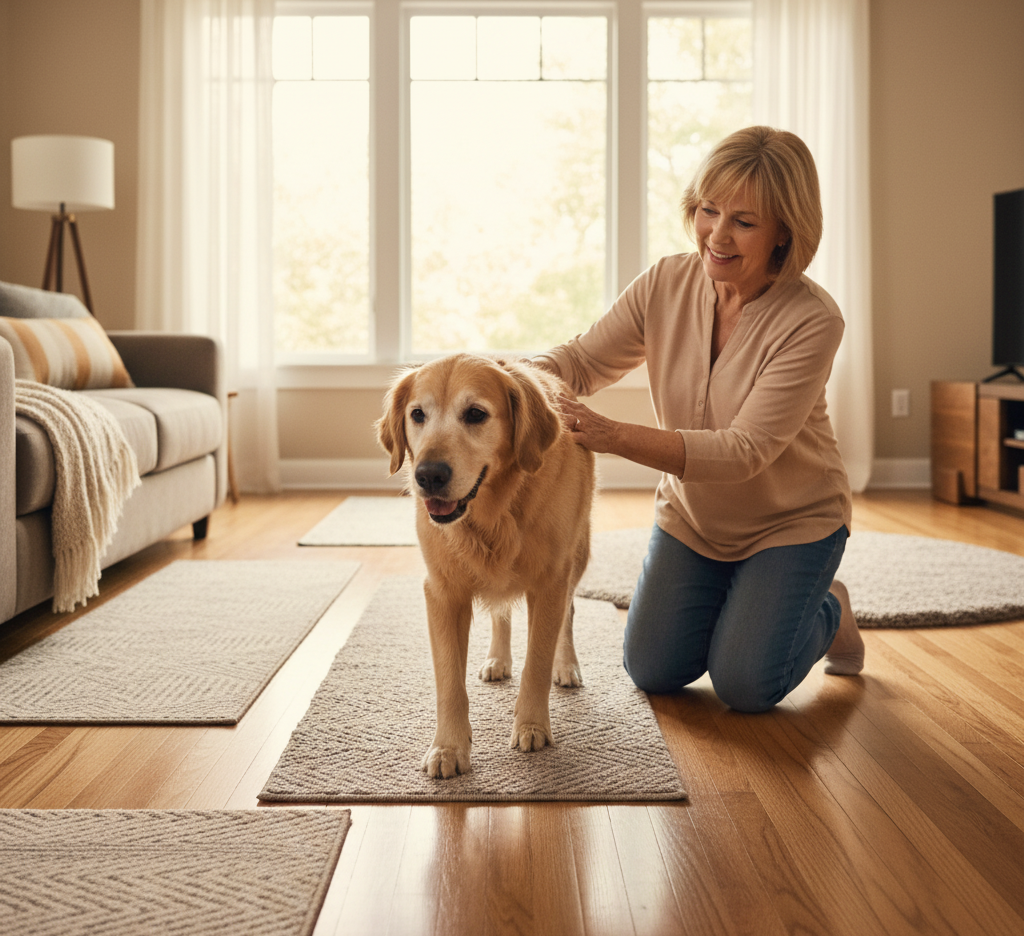
This is often the first and most impactful change you can make. Strategically placed rugs and runners can transform treacherous pathways into safe and inviting spaces.
- What to Look For:
- Low Pile/Dense Weave: Opt for rugs with a low pile or dense weave to avoid tripping hazards for senior dogs and to prevent snagging their nails. A dense, low-pile loop or cut pile is ideal.
- Non-Slip Backing: This is non-negotiable. The rug itself must have a rubberized or siliconized backing, or a high-quality, full-coverage non-slip rug pad must be used underneath. A sliding rug is just as dangerous as a slick floor.
- Strategic Placement: Don’t just place one in the middle of a room. Place runners in high-traffic areas (such as hallways, in front of the couch, or between the bed and the water bowl) to create continuous “safe zones.” Place rugs at the base of stairs and in areas where your dog frequently rests or gets up.
- Avenue for Promotion: Look for machine-washable rugs from brands like Ruggable for easy cleanup. Consider runners specifically designed for pet homes, often made with more durable, stain-resistant fibers.
2. Interlocking Foam Mats: The Soft & Adaptable Choice
These are the same type of mats used in home gyms or children’s playrooms, but they can be a lifesaver for senior dogs.
- What to Look For:
- Textured Surface: Choose mats with a slightly textured, non-slip surface.
- Thick & Dense: Opt for thicker, high-density foam (at least 1/2 inch) for better cushioning and support.
- Easy to Clean: Most are wipeable and moisture-resistant.
- Best For: Creating safe, cushioned zones in specific rooms, under food/water bowls, around beds, or even creating a temporary safe path from one room to another. They are also fantastic for protecting pressure points if your dog likes to lie on the floor.
3. Carpet Tiles: The Flexible & DIY-Friendly Option
Carpet tiles offer the traction of carpet with the flexibility of a modular system.
- What to Look For:
- Low Loop or Cut Pile: Again, steer clear of shaggy styles.
- Peel-and-Stick or Interlocking: These options are easy to install for DIY enthusiasts.
- Moisture Barrier: Some brands offer tiles with a built-in moisture barrier, which is excellent for senior dogs prone to accidents.
- Best For: Covering larger areas of hard flooring without the commitment or expense of wall-to-wall carpet. If a tile becomes soiled or damaged, you can replace it.
4. Vinyl Plank Flooring (Luxury Vinyl Plank – LVP): The Permanent & Pet-Friendly Upgrade
If you’re considering a full flooring renovation, LVP is an excellent choice for homes with dogs that suffer from arthritis.
- What to Look For:
- Textured Surface: Many LVP products now feature realistic wood-grain textures, providing excellent grip. Avoid perfectly smooth, high-gloss options.
- Durability: LVP is incredibly durable, scratch-resistant, and 100% waterproof.
- Subtle Cushion: While not as soft as foam, LVP has a slight give compared to tile or hardwood, making it a bit kinder on joints.
- Best For: A permanent, beautiful, and highly pet-friendly flooring solution for an entire home or large sections of it.
Beyond the Floor: Enhancing Mobility & Safety
While flooring is foundational, a holistic approach to your senior dog’s home environment will provide the most comprehensive relief.
- Paw Grips & Socks: For dogs who struggle even on carpet, specialized non-slip dog socks or paw grip pads can make a significant difference, providing them with extra traction wherever they go.
- Ramps and Stairs: Provide dog ramps for beds, couches, and vehicles to eliminate dangerous jumps and climbs.
- Orthopedic Bedding: Ensure your dog has a high-quality orthopedic bed that supports their joints and is easy for them to get in and out of.
- Nail Trims: Keep nails short! Long nails reduce paw pad traction and force the paw to splay, exacerbating joint pain. Regular, gentle trims are essential.
🐕 More Senior-Dog Comfort Resources
“When an arthritic dog slips even once, it can undo weeks of progress in joint comfort and confidence. Stable footing is one of the simplest, most overlooked forms of pain management.”
— Dr. Sarah Kent, DVM, Veterinary Mobility Specialist
🩺 Dr. Sarah Kent Answers: Flooring & Mobility FAQs
Can dogs with arthritis walk on hardwood floors?
Yes, but only with protection. Use rugs, yoga mats, or traction pads to reduce slipping and shock on joints.
What’s the easiest flooring fix for renters?
Interlocking foam or rubber tiles are ideal — no adhesives, affordable, and fully removable.
Do traction socks work as well as mats?
They complement each other — socks protect paws on stairs, while mats improve traction on flat surfaces.
Reviewed by: Dr. Sarah Kent, DVM – Veterinary Mobility & Senior Care Specialist
Creating a safe, comfortable home for an arthritic senior dog is a continuous act of love and attentiveness. By understanding the challenges they face and implementing thoughtful solutions, you empower them to navigate their golden years with greater confidence, reduced pain, and renewed security. Every rug, every mat, every thoughtful choice is a step towards a happier, more comfortable life for the companion who deserves nothing less.