Creating a Senior Dog Legacy Box
There’s a unique, bittersweet light that fills the room in the late afternoon. It’s soft, golden, and casts long shadows. It’s beautiful, but you know it’s the signal that the day is ending.
Source: Pet Loss Support & Coping. ASPCA.
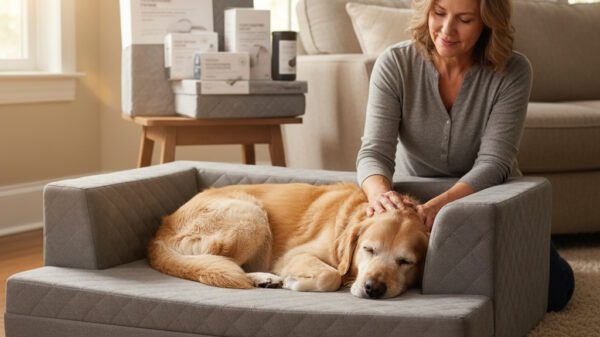
Loving a senior dog feels a lot like living in that light.
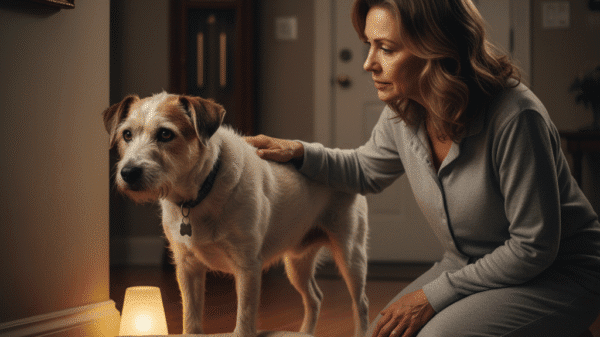
Every day with them is a profound gift, a privilege. But coexisting with that gratitude is a quiet, aching awareness of time. We watch their muzzles turn silver, their steps become more deliberate. This awareness has a name: anticipatory grief. It’s the complex, often silent sadness we feel when we know a goodbye is on the horizon, even if it’s not here today.
As someone who has dedicated years to understanding the human-animal bond, I can tell you this feeling is not only normal; it’s a testament to the depth of your love. But it can also be heavy, leaving us feeling anxious and helpless.
So, what can we do with these big, complicated emotions?
We can channel them. We can turn that passive grief into an active, beautiful, and healing ritual: Creating a Senior Dog Legacy Box.
In This Guide
📚 Reference:
“The Science of Pet Grief: Why Losing a Pet Feels So Hard.” (2025) —
Sweet Goodbye for Pets Blog.
Explains that rituals — including memory boxes — help validate loss, support healing, and maintain the human-pet bond.
More Than a Box: Why This Isn’t Morbid
Let’s address the elephant in the room. I can feel the hesitation from here. “Isn’t this… morbid? Isn’t it like I’m giving up or rushing things?”
It’s a valid fear, but I want to gently reframe this.
A Legacy Box is not an admission of defeat. It is the ultimate act of celebration. It’s a mindful, tangible way to say, “The life you are living right now is so important, so meaningful, that I am going to build a monument to it.”
Source: Grief After the Loss of a Pet. AVMA.
It’s a practice of proactive gratitude. Instead of letting the fear of the future steal the joy of today, this project anchors you in the present. It forces you to pause and truly see your dog. To notice the little things—the way their ear flips back, the exact shade of their eyes in the sun—and consciously decide, “This. This is worth saving.”
This box is a treasure chest, a time capsule, and, for later, a first-aid kit for your heart.
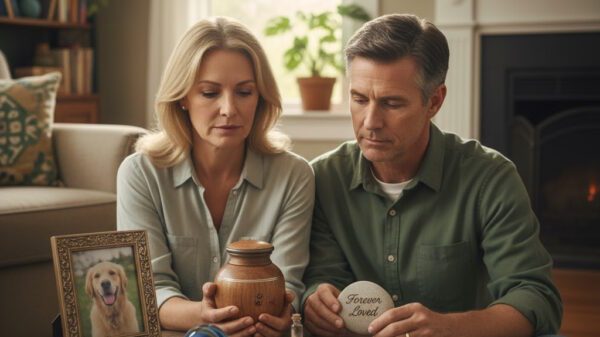
Rituals like creating a legacy or memory box allow grieving pet parents to transform their pain into meaning. Tangible keepsakes give structure to grief and help families — especially children — process loss with love rather than avoidance.
— Dr. Katie Lawlor, PsyD, Clinical Psychologist & Pet-Loss Researcher, Stanford University School of Medicine
The Foundation: What to Put in Your Dog’s Legacy Box
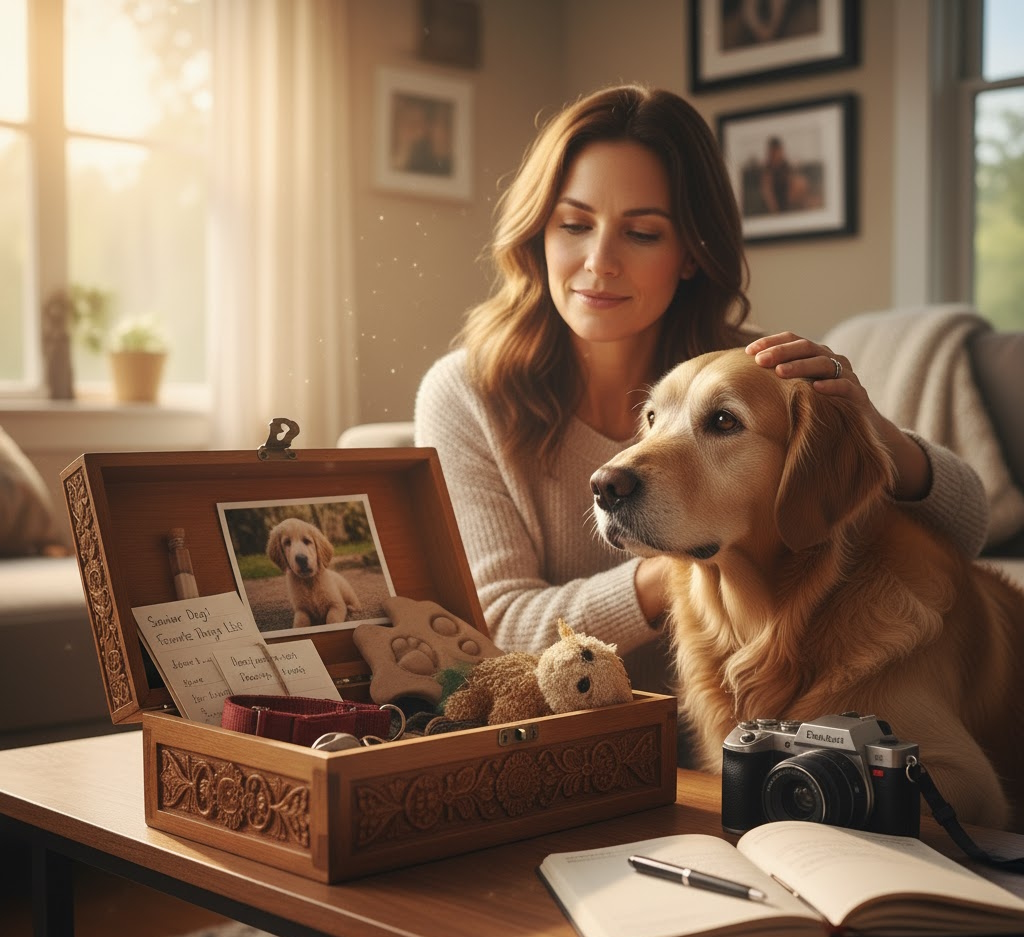
This is not a checklist; it’s a list of possibilities. Your box should be as unique as your dog. A beautiful wooden chest, a sturdy photo box, or a dedicated trunk will all work. The container matters less than the contents.
Here are some ideas for what to include, broken down into things to collect and things to create.
Veterinary Note: If you choose to include fur or a paw print, store items dry and away from sunlight and moisture. If your dog is currently ill, ask your veterinarian about safe keepsake timing. AVMA.
1. Tangible Treasures (The Items of Touch & Scent)
These are the items that will one day evoke the strongest, most visceral memories.
- The Classic Paw Print: This is a non-negotiable for most. You can use a child-safe, non-toxic ink pad on a piece of beautiful cardstock or, my personal favorite, a soft clay mold kit. The ritual of gently pressing their paw into the clay, of feeling its shape and weight in your hand, is a memory in itself.
- A Fur Clipping: You don’t need a lot. Just a small, soft tuft from a favorite spot—perhaps from their ruff, their chest, or the tip of their tail. Place it in a tiny glass locket, a small jar, or a sealed, labeled envelope.
- Their “Iconic” Collar and Tags: One day, the silence in your home will be the hardest part. The jingle of those tags is the soundtrack of your life together. Save the collar they wore the most, with all its scuffs and worn spots.
- The Real Favorite Toy: Not the new, pristine one. I’m talking about the one-eyed, three-legged, slobber-encrusted plush toy they truly loved. The one they carried around, slept with, and greeted you with. Gently wash it if you must, but its worn-down nature is what makes it precious.
- A Piece of Their Favorite Blanket: If they have a large bed or blanket, consider cutting a small square from it. Scent is the most powerful memory trigger we have.
- Whiskers: This may sound strange, but dog whiskers are coarse, unique, and shed naturally. When you find one on the couch or floor, save it. They are as unique as fingerprints.
📚 Reference:
“To Memorialize a Beloved Pet.” (2020) —
LovingKindness Vet PDF.
Provides practical memory-box ideas and emphasizes collecting mementos such as collars, paw prints, and photos to honor and remember a pet companion.
🐾 Legacy Box Planning Worksheet
Download your free, beautifully designed worksheet to plan your senior dog’s Legacy Box — capture memories, keepsakes, and heartfelt moments in one place.
⬇️ Download PDF2. The Narrative (The Items of Story & Heart)
This is where you capture their personality and your relationship.
- A “Gotcha Day” Story: Write down, in as much detail as you can remember, the story of how you met. Where were you? What was your first impression? What was the car ride home like? What was their first night with you?
- A Letter to Your Dog: This is for you, not them, but it’s a powerful healing tool. Write them a letter. Thank them. Tell them what they’ve taught you. Tell them your favorite thing about them. Tell them you love them.
- A “Quirks & Nicknames” List: This is a fun one. Make a list of all their silly nicknames. Write down their funniest, most baffling habits. (e.g., “Hates the UPS truck, but loves the mailman. Will only eat his kibble if it’s in the ‘red’ bowl. Sits on the cat.”)
- Story Prompts for the Family: Get everyone involved. Leave a small stack of index cards and a pen by the box with prompts:
- “My favorite memory with [Dog’s Name] is…”
- “The funniest thing [Dog’s Name] ever did was…”
- “[Dog’s Name] taught me…”
The Art of Seeing: Photographs & Videos
We all have hundreds of photos on our phones. But this project is about being intentional.
- Focus on the Details: Move past the standard portrait. Get in close. Take a high-resolution photo of their nose, their graying muzzle, the way their paws cross when they lie down, and the little spot on their ear.
- Capture the Connection: Hand your phone to a friend and ask them to take a photo of you with your dog—not both smiling at the camera, but of you looking at them while they’re sleeping. Of your hand on their head. These “connection” shots are often the most comforting.
- Don’t Forget Video (and Sound!): This is so important. A photo can’t capture a sound. Take short video clips of:
- Their bark or “welcome home” howl.
- The sound of their “tippy-tappy” feet on the hardwood floor.
- The way they drink their water.
- The little “huff” they make when they lie down.
- Them snoring.
- Them panting happily on a car ride. Store these on a dedicated, labeled USB drive and put it in the box.
Disclosure: GoldenPawsCare participates in the Amazon Services LLC Associates Program and other affiliate programs. This means we may earn a small commission if you purchase through our links — at no additional cost to you. We only recommend products that meet veterinary quality and safety standards.
More Than a Box: Memory Rituals to Do Right Now
This is the most critical part. The Legacy Box isn’t just about preserving the past; it’s about enriching the present. You make the memories, then you add them to the box.
This is your “Senior Dog Bucket List”—but I prefer to call it a “Favorite Things List,” as “bucket list” can feel frantic. This is about slowness and savoring.
- The “Scent Walk”: Go for a walk with no destination and no time limit. This walk is for them. Let them sniff everything for as long as they want. A dog’s world is scent, and this is like letting them read the entire newspaper, front to back.
- The “Legacy Portrait” Day: Hire a professional pet photographer or just dedicate an afternoon to it yourself. Make it a special event. Go to their favorite park or set up a cozy spot at home. The act of doing this is a celebration. Print your absolute favorite photo in high quality and put it in the box.
- The “Favorite Meal” Night: That’s right. Cook them a steak (unseasoned, of course). Give them that “pup cup” from the local ice cream shop. Take a photo of their blissful face and write a little note about it for the box.
- The “Comfort Day”: As they slow down, just “being” with you is their greatest joy. Plan a day to do nothing. Lie on the floor with them, pile up the blankets, listen to quiet music, and just be. Read a book aloud to them. It’s not about what you do; it’s about the shared peace.
Legacy Box — Common Questions
Answers reviewed by Dr. Sarah Kent, DVM (Pet Nutrition & Senior Care).
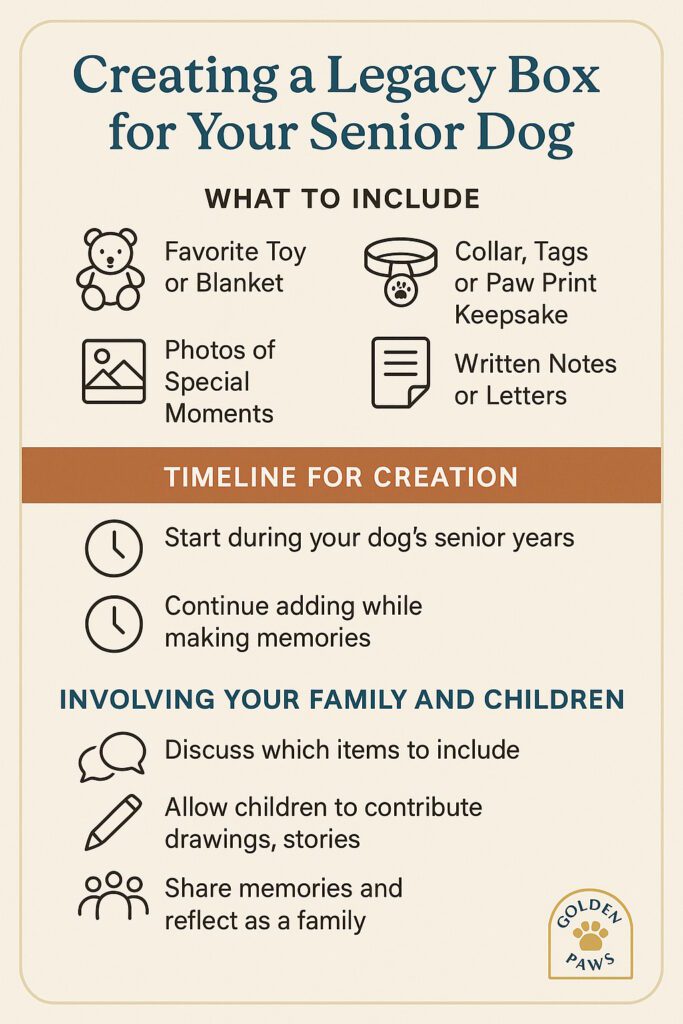
When should I start a Legacy Box?
What belongs in it?
How do I involve kids compassionately?
Assembling Your Box: A Bridge of Love
Once you’ve gathered your items, find a quiet afternoon. As you place each item in the box, hold it for a moment. Remember the story it holds. Let yourself feel the love and, yes, the sadness. It’s all part of the same beautiful, messy tapestry.
Your Legacy Box is a living thing. You can add to it for as long as you have your wonderful friend.
When the time comes, and you’re navigating the quiet, empty spaces, this box will not be a source of pain. It will be a bridge. It will be a tangible, physical collection of a love that was—and still is—profoundly real. It’s a way to hold onto them, long after you’ve had to let them go. And that is a gift of immeasurable comfort.