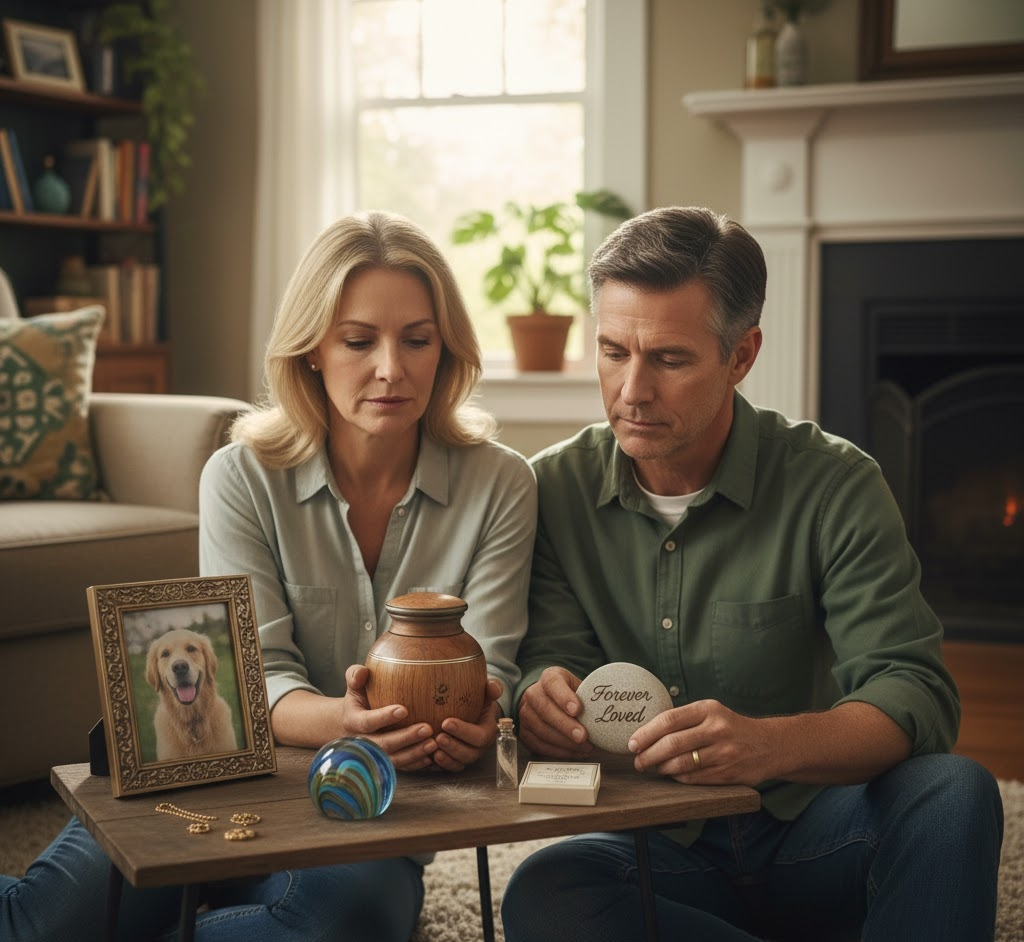
Pet Aftercare Choices
The love we share with our pets creates an unbreakable bond, a tapestry woven with countless memories, unconditional affection, and unwavering companionship. When the inevitable reality of death eventually severs that bond, the emotional pain can be overwhelming. In the midst of profound grief, we are often faced with practical, yet deeply significant, decisions about our pet’s physical remains. These “aftercare choices” are more than just logistics; they are a final act of love, a way to honor a life well-lived and to find peace in remembrance.
As someone who has guided countless families through this tender process—and made these decisions for my own beloved companions—I understand the weight of these moments. This article is designed to be a compassionate guide, comparing the main pet aftercare choices: cremation, burial, and the growing array of memorial keepsakes. I hope to provide clarity, comfort, and confidence as you navigate these deeply personal decisions, helping you find the path that best honors your cherished friend and supports your healing journey.
In This Guide
Navigating the Emotional Landscape of Aftercare Decisions
Making aftercare decisions while grieving is incredibly difficult. It’s natural to feel overwhelmed, confused, or even guilty. There’s no single “right” choice; what feels appropriate is deeply personal, influenced by your beliefs, your family’s preferences, your living situation, and your budget.
Permit yourself to feel your emotions. It’s okay if the decision takes time, and it’s okay if you change your mind. The most important thing is that the choice brings you a sense of peace and respects the bond you shared.
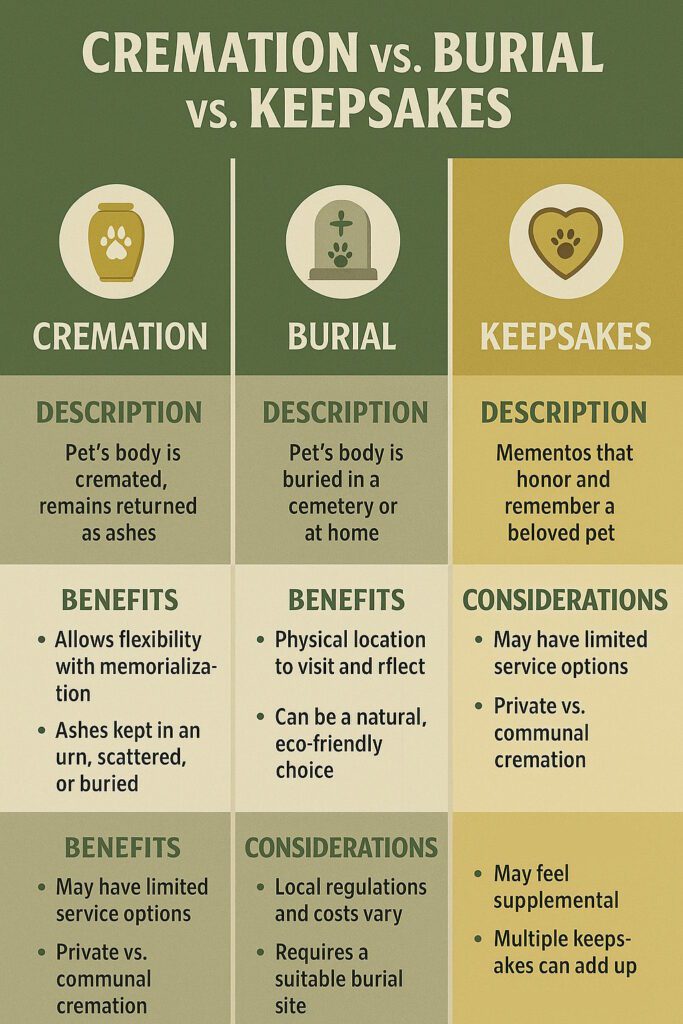
Option 1: Pet Cremation – A Common and Versatile Choice
Pet cremation is the most widely chosen aftercare option today, largely due to its versatility and ability to provide a lasting physical remembrance.
How it Works: Cremation involves using high heat to reduce the body to bone fragments, which are then processed into “ashes” or “cremated remains.” This process is typically handled by specialized pet crematories, often affiliated with veterinary clinics or independent providers.
Types of Cremation:
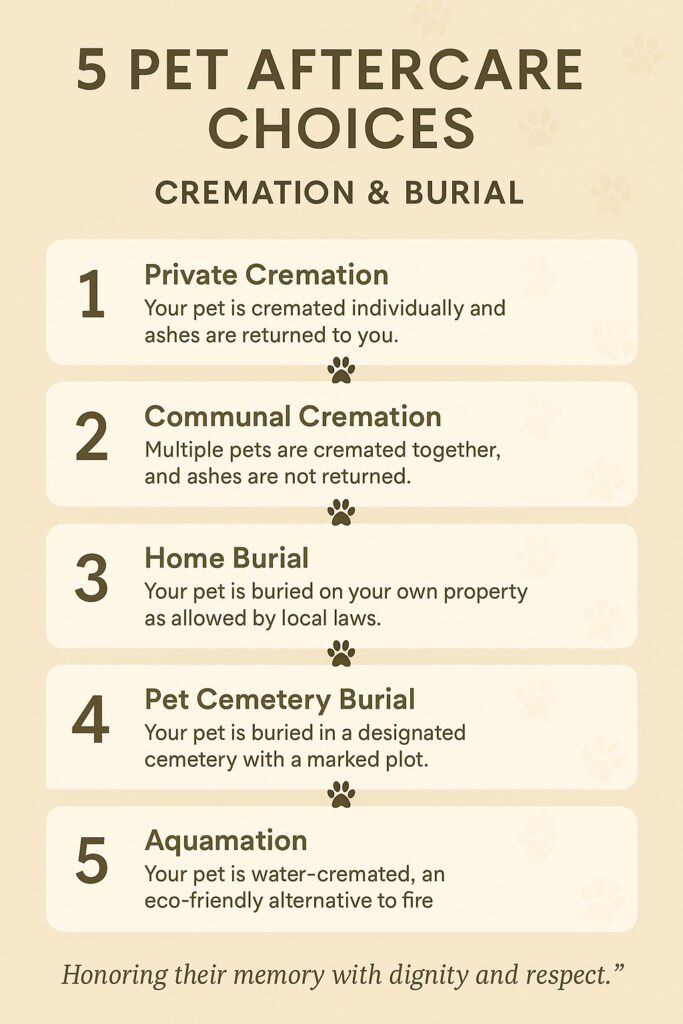
- Private/Individual Cremation: This is where your pet is cremated alone, and their ashes are returned to you. This is the most common choice for those who wish to keep their pet’s remains. Reputable crematories offer a guarantee that the ashes you receive are solely those of your pet, often using a metal identification tag that stays with the pet throughout the process.
- Communal/Group Cremation: In this option, several pets are cremated together. Their ashes are not separated or returned to individual owners. These ashes are typically scattered in a garden, memorial ground, or disposed of according to the crematory’s policy. This is often a more economical choice and suitable for those who do not wish to keep ashes.
- Partitioned/Segregated Cremation: Some facilities offer a “partitioned” cremation, where pets are separated by space within the cremation chamber but are cremated simultaneously. While this offers a greater likelihood of receiving mostly your pet’s ashes, it’s not a true individual cremation. If receiving only your pet’s ashes is paramount, always choose “private” or “individual” cremation.
Pros of Cremation:
- Flexibility: Ashes can be kept at home, scattered in a meaningful location, buried, or incorporated into keepsakes.
- Portability: Ideal for families who may move homes in the future, as the remains can easily come with them.
- Space-Saving: Requires less space than burial, especially important for urban dwellers or those without yard access.
- Closure: Having the ashes returned can provide a tangible focal point for grief and remembrance.
Cons of Cremation:
- Cost: Private cremation is generally more expensive than communal cremation due to the individual handling.
- The “Unknown”: For some, the idea of the cremation process itself can be distressing. Choosing a reputable, transparent crematory is vital.
What to Ask Your Vet/Crematory:
- What type of cremation is offered (private, communal, partitioned)?
- How do you guarantee I receive only my pet’s ashes? (e.g., ID tags)
- What is the turnaround time for ashes?
- What urns/containers are included or available?
- Can I visit the facility, or can I arrange home pickup?
Option 2: Pet Burial – A Traditional and Grounded Choice
Burial offers a traditional and tangible way to lay a beloved pet to rest, creating a permanent resting place for remembrance.
Need a gentle next step?
Families often pair aftercare with a simple keepsake or planning guide.
Types of Burial:
- Pet Cemetery Burial: Dedicated pet cemeteries offer formal plots, sometimes with headstones, providing a respectful and lasting final resting place. Some even allow for visitation similar to human cemeteries.
- Home Burial: If permitted by local ordinances and property conditions, burying your pet in your own yard can be a deeply personal and comforting option, allowing your pet to remain close to home.
Pros of Burial:
- Tangible Resting Place: Provides a specific location for remembrance, reflection, and visitation.
- Traditional Comfort: For many, burial aligns with cultural or personal beliefs about death and honoring the deceased.
- Natural Cycle: Some find comfort in returning their pet’s body to the earth.
Cons of Burial:
- Permitted Only: Home burial is often restricted by local laws, zoning regulations, or HOA rules. Check these carefully!
- Space & Permanence: Requires adequate space. If you move, you leave the grave behind (unless you exhume, which is costly and complex).
- Environmental Concerns: For home burial, ensuring proper depth and avoiding water sources is crucial to prevent environmental contamination.
- Cost: Pet cemetery plots can be expensive, often involving ongoing maintenance fees.
“Your choice isn’t about the method — it’s about meaning.
Choose what brings you peace.”
What to Ask Your Vet/Crematory/Cemetery:
- Are there local ordinances regarding home burial?
- What is the required depth for home burial?
- What are the costs for a pet cemetery plot, including opening/closing fees and perpetual care?
- Are caskets or burial shrouds required/available?
Cremation & Burial Options at a Glance
| Option | Return of Remains | Typical Cost* | Key Benefit | Action |
|---|---|---|---|---|
| Cremation (Individual / Private) | Yes — ashes returned to you | $150–$300 | Personal keepsake; memorial flexibility; some providers allow witnessing | View Keepsakes |
| Cremation (Partitioned) | Usually — separated by partitions | $100–$200 | Lower cost than private; ashes typically returned | View Keepsakes |
| Cremation (Communal) | No — ashes not returned | $50–$150 | Most affordable; respectful group handling | Explanation |
| Home Burial | N/A (burial at home) | $0–$100+ | Personal, private farewell at home (check local laws first) | View Keepsakes |
| Pet Cemetery Burial | N/A (dedicated cemetery plot) | $400–$800+ | Perpetual care; formal memorial site and services | See Memorials |
*Costs vary by region, pet size, and provider. Ask for itemized pricing and chain-of-custody details.
Option 3: Memorial Keepsakes – Lasting Tributes to a Love Story
Beyond the physical disposition of remains, many families find immense comfort in creating memorial keepsakes. These tangible reminders help keep their pet’s memory alive and can be incredibly healing.
Gentle Memorial Keepsake Ideas
- Paw or Nose Print: Made at home with ink, clay, or through your vet or cremation service.
- Fur Clipping: Save a small lock in a sealed keepsake pouch or photo frame compartment.
- Name Tag Shadow Box: Combine collar tag, favorite photo, and note into a framed memento.
- Engraved Urn or Pendant: Personalize with your dog’s name, dates, or a short phrase.
- Digital Memorial Page: Many cremation services offer a free online remembrance page with photos and messages.
These small gestures often help families find comfort in honoring a life well-loved.
Common Memorial Keepsakes:
- Urns: Available in an endless variety of materials (wood, ceramic, metal, biodegradable), sizes, and designs to hold your pet’s ashes.
- Cremation Jewelry: Pendants, rings, or bracelets designed to hold a tiny portion of ashes or a lock of fur.
- Paw Prints/Nose Prints: Clay or ink impressions of your pet’s paw or nose, often framed or incorporated into sculptures.
- Hair Clippings: A small lock of fur kept in a locket, frame, or memory box.
- Custom Artwork: Portraits (painted, sketched, digital) created from photos of your pet.
- Photo Albums/Memory Books: Dedicated albums filled with cherished photos and written memories.
- Garden Stones/Markers: Personalized stones or plaques for a garden or special outdoor spot.
- Diamonds from Ashes: A more modern and costly option where carbon from ashes is converted into a synthetic diamond.
- Glass Art: Ashes infused into beautiful glass sculptures or paperweights.
- Tattoo Art: Commemorative tattoos, sometimes incorporating a small amount of ashes into the ink.
Pros of Keepsakes:
- Personalization: Allows for unique and deeply meaningful ways to remember your pet.
- Proximity: Keepsakes keep your pet’s memory physically close to you.
- Healing Focus: Provides a positive and creative outlet for grief.
Cons of Keepsakes:
- Cost: Highly personalized or elaborate keepsakes can be expensive.
- Time: Some custom items take weeks or months to create.
More help for loving goodbyes
“Choosing an aftercare option in advance—before grief peaks—often brings families more peace and ensures their dog’s remains are treated exactly as they wish.”
🐾 Pet Aftercare FAQ
What’s the difference between communal and private cremation?
Is pet burial legal everywhere?
How much does pet cremation or burial cost?
Can I keep some ashes and scatter the rest?
Are there eco-friendly aftercare options?
Can I keep my pet’s ashes at home?
Yes. Many owners choose to store ashes in an urn, memory box, or decorative keepsake. Ensure the container is sealed and placed in a dry, shaded area.
How long does pet cremation take?
Typically 2–3 hours depending on the pet’s size. Individual cremations are performed separately to ensure ashes are not mixed.
Are there eco-friendly aftercare options?
Yes. Options like biodegradable urns, water cremation (aquamation), and eco burials help reduce environmental impact while honoring your pet’s memory.
What documents should I receive after cremation?
You should receive a certificate of cremation, and, if requested, engraved labeling or ashes in a sealed urn or pouch.
Making the Decision with Love and Peace
The journey of pet aftercare is a final demonstration of the profound love you shared. There is no one-size-fits-all answer, and that’s perfectly okay. Take your time, discuss options with family members and your veterinarian, and listen to your heart.
Whether you choose the lasting presence of cremation ashes, the grounded comfort of burial, or the intricate beauty of a memorial keepsake—or a combination of these—your decision should bring you a sense of closure and comfort. It’s an act of honoring, a testament to a bond that death cannot truly break, and a step towards finding peace in their memory.