
Grooming & Hygiene for Senior Dogs
Aging skin gets thinner, coats change texture, ears get waxier, teeth get more sensitive, and bathing can turn into a mobility event. This hub organizes grooming by the real problems owners face—odor, itching, dental buildup, ear/eye irritation, and safe bathing.
What Changes in Grooming as Dogs Age?
Senior-dog grooming is really “health monitoring with a brush.” As dogs get older, normal routines can become uncomfortable:
stiff joints make standing in a tub hard, dry skin can flare after shampoo, dental disease can quietly steal appetite, and ear/eye buildup
can shift from harmless to infected faster than it used to.
The safest approach is to stop treating grooming like a cosmetic chore and start treating it like a weekly comfort check:
keep sessions short, reduce slipping, protect thin skin, and watch for pain signals (lip licking, sudden head turns, backing away,
grumbling, or trying to sit/lie down mid-task). This hub is organized by common “owner problems”—odor, itching, dental buildup,
ear/eye irritation, and bathing without stress—so you can jump directly to the guide that matches your dog today.
Start Here: Choose What You’re Dealing With
Pick the closest match—this jumps you to the most relevant guides.
If You Read One Guide First, Start Here
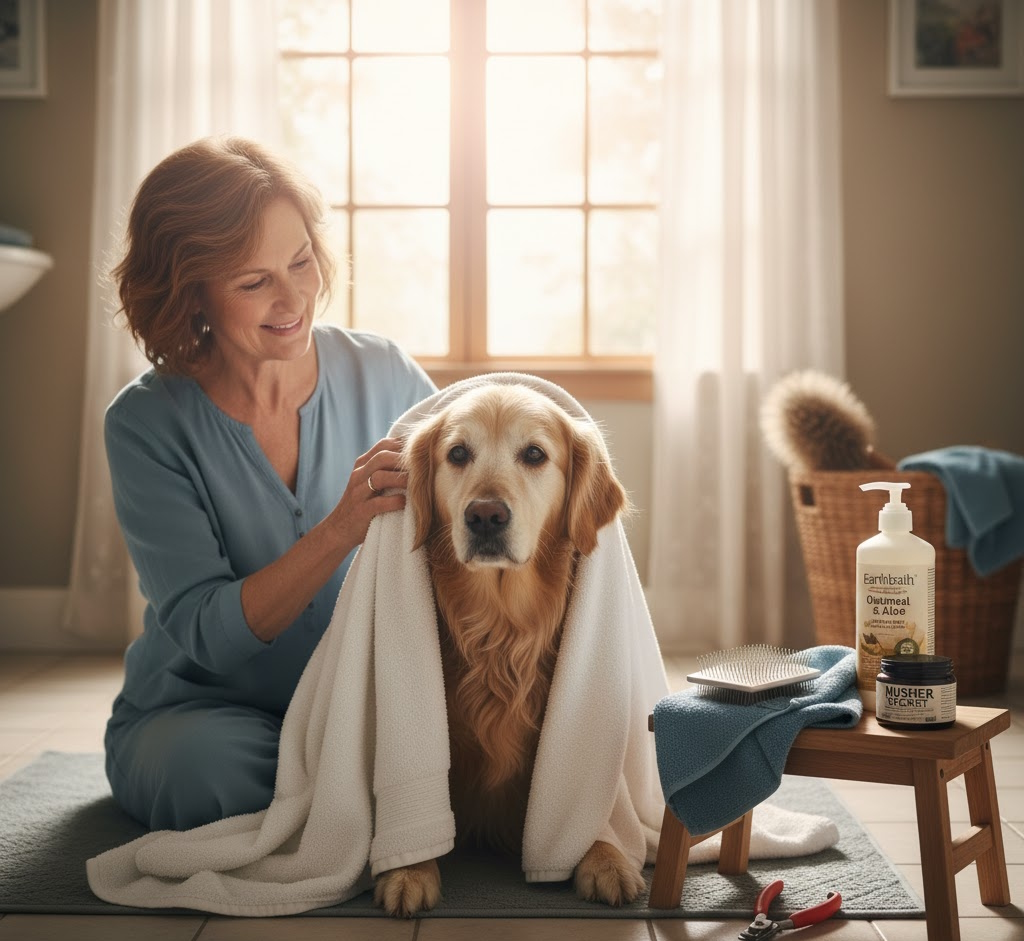
How to Bathe a Senior Dog Safely: A Step-by-Step Guide
The safest setup, the least stressful sequence, and the common mistakes that cause slipping, fear, and pain flare-ups.
Start Here
Fast comfort upgrades:
• use traction (mat/towel) before water touches the tub
• keep water lukewarm and sessions short
• switch products before switching frequency
• treat dental + ear/eye care like “tiny daily reps,” not marathon sessions
Bathing & At-Home Grooming (Safe Steps)
Setup, sequence, traction, and handling—without turning it into a wrestling match.
Gentle products, safe steps, and a calmer routine for older bodies.
Preventing irritation—and catching infection and discomfort early.
Skin, Coat, Itching & Sensitivity
A complete guide for sensitive and itchy skin—without over-stripping oils.
A gentle routine that reduces stress, dryness, and post-bath irritation.
When smell is a hygiene issue—vs. when it’s a skin, mouth, or ear issue.
Odor & “Old Dog Smell” (Root Causes)
A practical map: coat vs ears vs mouth vs skin—and what helps each one.
Bad breath is often pain + infection, not just “gross teeth.”
Ear buildup and inflammation can create persistent odor fast in seniors.
Dental Care & Mouth Comfort
What works at home, what doesn’t, and when vet care is the real fix.
How to tell if odor is dental, ear-based, skin-based, or something else.
How to reduce stress signals when brushing, lifting, and bathing.
Eye & Ear Care (Prevent Infection and Discomfort)
Tools & Checklists That Help
Use these when you want quick structure (and fewer “am I doing this wrong?” moments).
Quick FAQs
Short answers with the right next click.
How often should I bathe a senior dog?
It depends on skin sensitivity and odor source. Start with the safe-bathing guide, then adjust frequency based on dryness/itching and what your dog tolerates.
Why does my older dog suddenly smell worse even after bathing?
Odor is often ear, mouth, or skin inflammation—not “dirty fur.” Start with the Odor guide, then check dental and ear/eye care.
What if grooming causes snapping, shaking, or panic?
Treat that as a pain/stress signal. Shorten sessions, improve footing, and use the Silent Pain Decoder to check for underlying discomfort.
Content on GoldenPawsCare is written and reviewed using veterinary references, clinical guidelines, and real-world senior dog care experience.
Learn more about grooming terms like halitosis and contact dermatitis in our senior guides.