Signs of Pain in Senior Dogs
There is a myth that persists among dog owners, one that I have seen cause unnecessary suffering more times than I care to count. The belief is that if a dog is in pain, they will cry out. We expect a yelp, a whimper, or a whine. We expect them to tell us, loudly and clearly, that they hurt.
But the reality of canine biology is far quieter and far more heartbreaking.
In the wild, a predator that announces its vulnerability doesn’t survive. Your senior dog, despite sleeping on an orthopedic memory foam bed and eating distinctively shaped kibble, still carries that ancient, evolutionary instinct to mask weakness. They are masters of the “stiff upper lip.” They will wag their tails through a torn cruciate ligament. They will eat dinner despite a throbbing tooth. They will greet you at the door even when their hips are burning with arthritis.
Clinical Reminder
For those of us who love them, this creates a profound responsibility. We cannot wait for them to cry. We have to learn to speak their silent language. We have to become observers of the subtle, visual cues that scream—quietly—that our old friends are hurting.
This guide is designed to help you strip away the mask. We will walk through the visual pain scale used by professionals to assess discomfort, and I will introduce you to a vital resource—the Silent Pain Decoder—that can help you translate your dog’s behavior into actionable data for your vet.
Silent Pain Snapshot: What to Watch For
Use this quick snapshot to connect what you see at home with the four main “zones” where senior dogs quietly show pain.
In This Guide
The “Old Age” Trap: Why We Miss the Signs
The biggest enemy of pain detection is the phrase: “He’s just slowing down.”
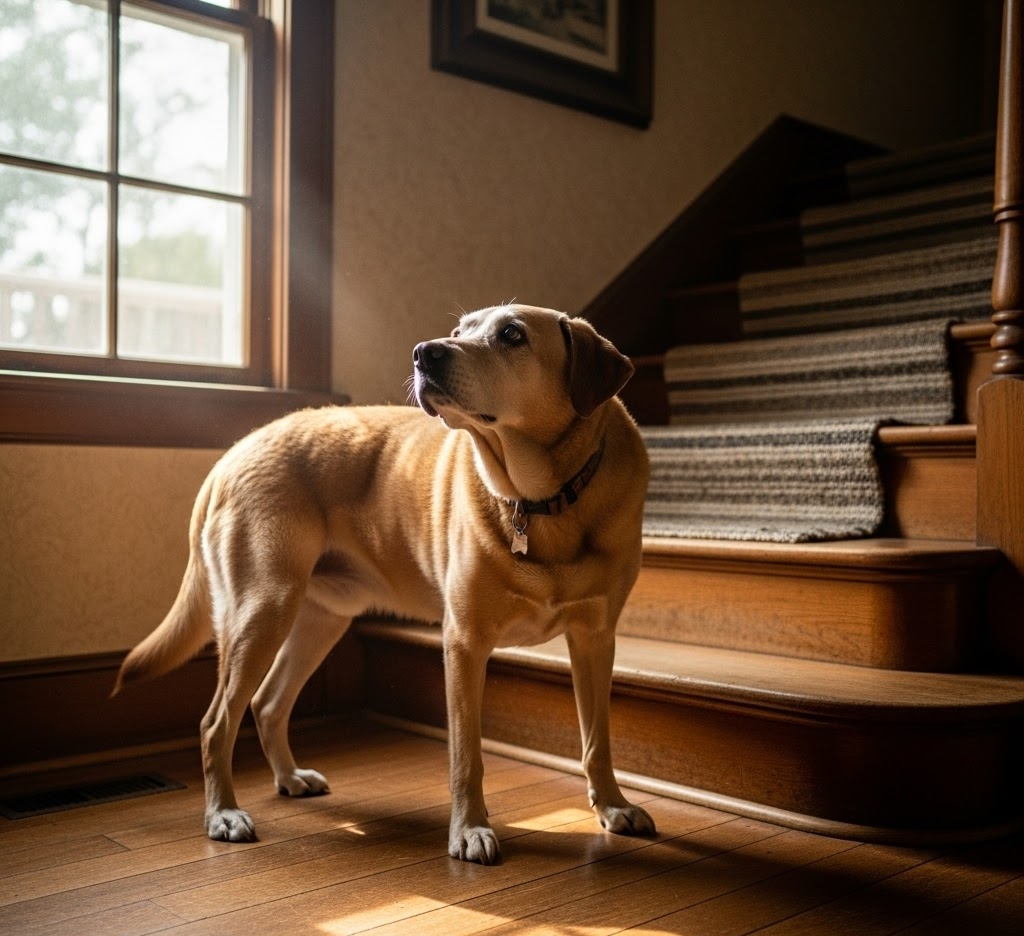
We attribute so much to the inevitability of age. We see a dog sleeping more, hesitating at the stairs, or playing less, and we write it off as the natural progression of time. While energy levels do dip with age, pain is not a requirement of aging.
If your senior dog is “slowing down,” there is a very high probability that they are actually “hurting.” The difference is crucial because pain can be managed. Age cannot. When we treat the pain, we often see the “age” reverse. I’ve seen 14-year-old dogs labeled as “lazy” start playing like puppies again once their silent chronic pain was finally addressed.
Research Insight: Why We Miss Pain in Senior Dogs
Studies in older dogs show that changes in activity level, sleep, and social interaction are often more reliable pain clues than vocalizing. Many arthritic dogs never yelp or cry — instead, they walk shorter distances, hesitate on stairs, and quietly drop favorite activities.
Veterinary pain guidelines now emphasize watching for pattern changes in posture, movement, and mood, not just obvious limping. That is why a dog who “seems a little off” but is still walking can still be living with significant pain.
To stop missing the signs, we have to stop looking for drama and start looking for detail.
The Visual Pain Scale: What to Look For
Pain changes the way a dog holds their body, interacts with the world, and even the shape of their face. Veterinary researchers have developed various “pain scales” (such as the Colorado State University Acute Pain Scale or the Liverpool Osteoarthritis in Dogs scale) to quantify pain.
🚀 New: Interactive Pain Decoder
We have upgraded this guide into a digital tool. Use our interactive checklist to get an instant Pain Severity Score for your dog.
Launch Symptom Checker ➤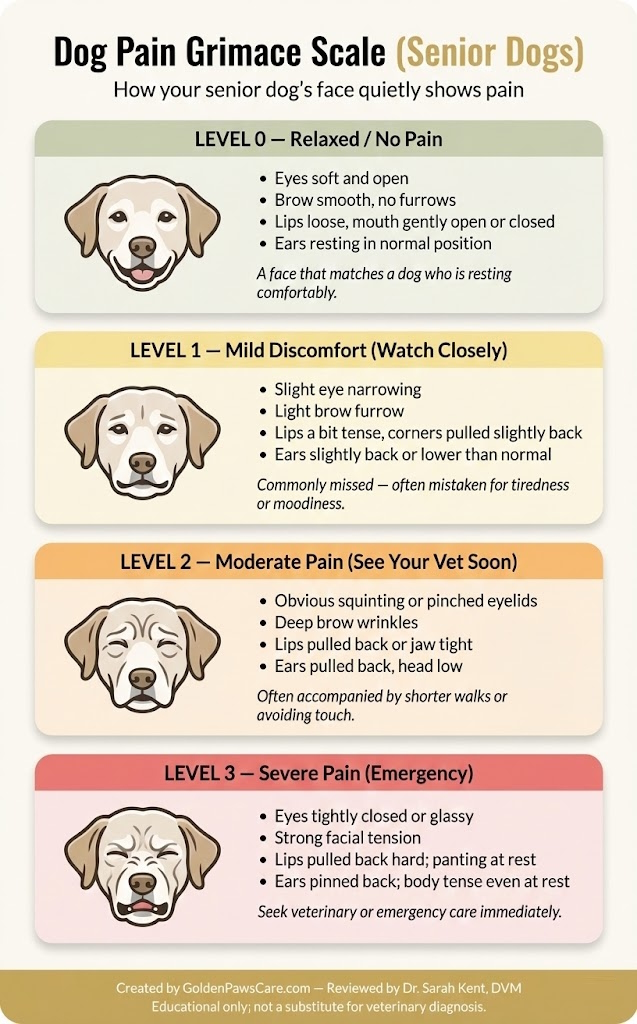
Below, I’ve broken down these clinical observations into a practical Visual Pain Scale you can use in your living room.
1. The Face of Pain: The “Grimace”
You know your dog’s face better than anyone. You know their “I want a treat” look and their “I did something bad” look. But do you know their pain face?
Recent studies on the “Canine Grimace Scale” have shown that dogs, like humans, tighten specific facial muscles when experiencing pain.
- The Ears: Are they pinned back or held stiffly out to the side, rather than perked up or relaxed?
- The Eyes: Look for “squinting” or a “worry line” between the eyebrows. A dog in pain often has a “hard” stare or, conversely, a vacant, glazed-over look. They may seem to be looking through you rather than at you.
- The Mouth: Heavy panting when it isn’t hot is a classic red flag. Also, look for “lip licking” or tight, pursed lips. A relaxed dog has a loose, open mouth; a painful dog often clamps their jaw shut or pants with a tight grimace.
Veterinary Note
Facial “grimace” scales are a powerful way to catch silent pain, but we never read the face in isolation. In practice, vets combine what they see in the eyes and muzzle with posture, gait, and behavior before deciding how uncomfortable a dog really is.
If your senior dog’s expression looks tighter and you’re noticing shorter walks, hesitation on stairs, or new irritability, it is time to talk with your veterinarian about pain control.
2. The Posture of Pain: The “Hunch”
A healthy dog stands square. A hurting dog is constantly trying to offload weight from the painful area.
- The Roach Back: If your dog is standing with their spine arched upward (resembling a roach or a cat stretching), they are likely experiencing abdominal or spinal pain. This is a guarding posture.
- The “Prayer” Position: This is a critical emergency sign. If your dog creates a “play bow” (front legs down, rear end up) but stays there stiffly without wagging or playing, they are stretching their abdomen to relieve severe stomach pain (often associated with pancreatitis or bloat).
- The Head Drop: A dog with neck or shoulder pain will hang their head low, below the level of their shoulders, and may be reluctant to lift it to look at you. They might track you with their eyes rather than turning their head.
3. The Mobility of Pain: The “Shuffle”
Changes in gait are often the first thing owners notice, but they misinterpret them.
- The Bunny Hop: When running or climbing stairs, does your dog hop on both back legs at once, like a rabbit? This is a classic sign of hip dysplasia or arthritis. They are using their core to swing both legs forward, avoiding hip joint articulation.
- The Morning Stiffness: Watch your dog the moment they get up. Do they struggle to rise? Do they walk stiffly for the first five minutes and then “warm out of it”? This is the hallmark of osteoarthritis.
- The Nail Scuff: Listen to your dog walk on pavement. Do you hear a scritch-scritch sound? If they are dragging their toenails rather than lifting their paws, it indicates nerve pain or weakness in the hind end.
4. The Behavior of Pain: The “Grump”
Pain is exhausting. It eats away at patience.
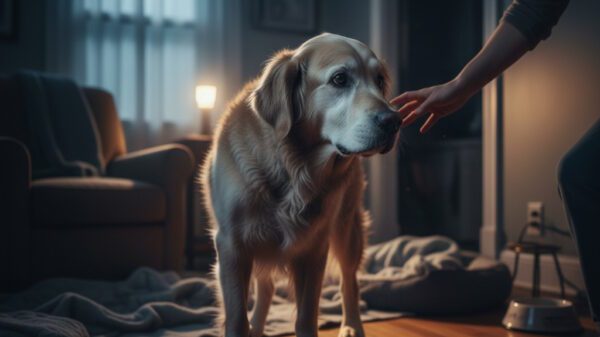
- The Withdrawal: A dog who used to be in the center of the family room might start sleeping in a back bedroom or under a desk. They are seeking protection from accidental bumps and chaos.
- The Snap: If your gentle senior dog suddenly snaps when you brush their hips or when a grandchild falls on them, do not punish them. They are protecting a painful area. Aggression in a senior dog is almost always pain-related.
- The Lick: Obsessive licking of a specific joint or paw is not usually a “hot spot” or allergy; it is a localized massage. They are trying to soothe a specific point of hurt.
Dog Pain Signs: What They May Mean and When to Call the Vet
Use this table alongside the Silent Pain Decoder to decide when a change is “worth watching” versus a true red flag.
| Pain Sign | What It May Mean | When to Call the Vet |
|---|---|---|
| Squinting or tightened eyes | Headache, eye irritation, or facial pain | If one eye suddenly closes, becomes red, or your dog rubs or paws at it. |
| Tense muzzle or lips pulled back | Acute discomfort, dental pain, or nausea | If it appears suddenly or with drooling, bad breath, or pawing at the mouth. |
| Hunched back or guarded posture | Spinal pain, abdominal discomfort, or joint disease | If your dog cries when picked up, resists touch, or cannot straighten up fully. |
| Shuffling or shortened stride | Arthritis, joint stiffness, or muscle soreness | If it worsens over days, appears after a fall, or your dog struggles with stairs. |
| Reluctance to jump or use furniture | Hip, knee, or spinal pain | If your dog suddenly refuses to jump in situations that used to be easy. |
| Restless at night, pacing or panting | Uncontrolled pain, anxiety, or internal discomfort | If nighttime restlessness becomes a pattern or your dog cannot settle to sleep. |
| Growling or snapping when touched | Protecting a painful area, chronic pain flare-up | If this behavior is new or directed at family members during normal handling. |
| Withdrawal or hiding | Ongoing discomfort, anxiety, or serious illness | If your dog hides more than usual, avoids family contact, or skips routines. |
Introducing: The Silent Pain Decoder
Reading this list can feel overwhelming. You might be looking at your dog right now, wondering, “Is that ear position normal? Is that panting just because the heater is on?”
Ambiguity is the enemy of action. That is why we built the Silent Pain Decoder.
This interactive tool takes the guesswork out of the visual pain scale. It isn’t just a checklist; it’s a logic-based assessment engine designed to weigh the symptoms you are seeing.
How the Silent Pain Decoder Works: You will answer a series of simple, observational questions about your dog’s current state—covering everything from their sleep patterns and stair-climbing ability to subtle facial expressions. The Silent Pain Decoder then aggregates these signals to give you a “Pain Probability Score.”
- Why use it? Because our brains are wired to normalize our pets’ behavior. The Decoder forces you to look objectively at changes that have happened so slowly you may have missed them.
- The Output: It provides you with a clear, summarised report that you can show directly to your veterinarian. Instead of saying, “I think he’s feeling off,” you can say, “He scored ‘High Probability’ for joint pain, specifically showing signs of ‘bunny hopping’ and ‘worry lines’.”
🚀 New: Interactive Pain Decoder
We have upgraded this guide into a digital tool. Use our interactive checklist to get an instant Pain Severity Score for your dog.
Launch Symptom Checker ➤Don’t guess. Know. Use the Silent Pain Decoder to give a voice to their silent suffering.
Why Veterinary Confirmation Matters
The Visual Pain Scale and the Silent Pain Decoder are powerful tools for detection, but not for diagnosis.
Once you have identified that your senior dog is likely in pain, the next step is crucial: finding the source. Is it osteoarthritis? Dental disease? A soft tissue injury? Or something systemic like pancreatitis?
When you bring your findings to your vet, you change the conversation. You move from a general wellness check to a targeted investigation. This saves time, saves money on unnecessary tests, and gets your dog relief faster.
The Good News: Pain Management Has Evolved
I want to end this on a note of hope. I know that realizing your dog is in pain is gut-wrenching. You feel guilty for not seeing it sooner. You feel scared of what it means.
But we are living in a golden age of canine pain management. We have moved far beyond just “giving them an aspirin” (which you should never do without vet approval, by the way).
- Modern NSAIDs are safer and more effective for long-term use.
- Monoclonal Antibodies (like Librela) are revolutionizing arthritis treatment by blocking pain signals at the nerve level without taxing the kidneys.
- Physical Therapy, Laser Therapy, and Acupuncture are now widely available for pets.
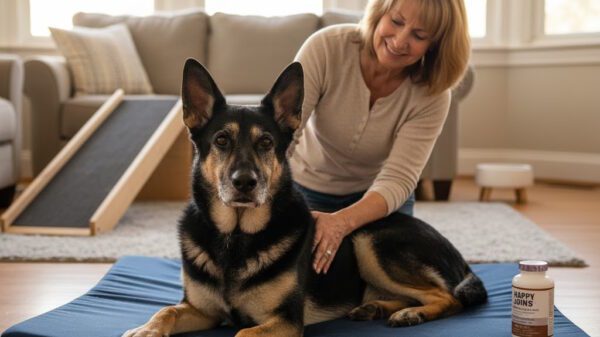
- Home Environmental Changes (the “home retrofit”) can immediately reduce pain triggers.
Dr. Kent’s Perspective on Senior-Dog Pain
“Most senior dogs I see in practice have been uncomfortable for months before their families realize it. They are loyal, stoic animals — they keep walking, keep wagging, and keep trying. I tell owners to trust their sense that ‘something is different’ even if there is no dramatic limp or cry. If your gut says your dog is not themselves, you’re usually right.”
FAQ Senior-Dog Pain Questions
These are the questions Dr. Kent hears most often from families who are worried their older dog is hurting but not “complaining.”
+ How do I tell if my senior dog’s pain is severe?
+ What early signs of pain do most owners miss?
+ What is the dog pain grimace scale?
+ Which mobility changes suggest arthritis or chronic joint pain?
+ When should I bring my senior dog to the vet for pain?
+ Are behavior changes a sign of chronic pain in older dogs?
Conclusion: Be Their Advocate
Your senior dog has spent their entire life watching you. They know when you are sad, when you are sick, and when you are coming home. Now, it is your turn to watch them with that same intensity.
Don’t accept “slowing down” as an answer. Look for the grimace. Watch for the hesitate. Listen for the scuff. Use the Silent Pain Decoder to validate your instincts.
Pain is inevitable, but suffering is optional. By learning to see the invisible, you are giving your best friend the greatest gift possible: a comfortable, happy twilight to a life well-lived.