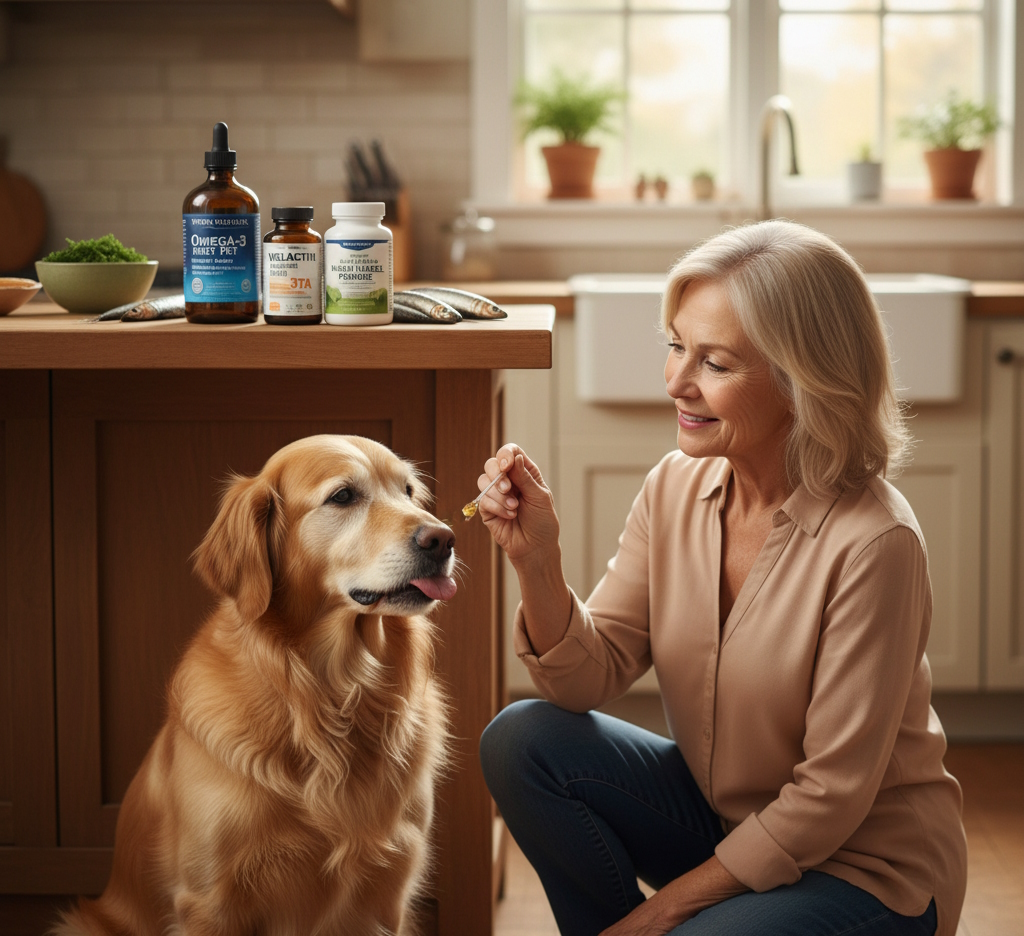
We strive to provide our senior dogs with every possible comfort and advantage as they navigate their golden years. We upgrade their beds, adapt our homes, and cherish every gentle moment with them. Yet, hidden within a tiny, unassuming capsule or a spoonful of oil, lies one of the most powerful and scientifically backed tools we have to support their aging bodies: Omega-3 fatty acids.
🧬 Why Senior Dogs Need Omega-3s for Joint Health
As dogs enter their senior years, joint-cartilage repair slows, synovial fluid becomes thinner, and chronic low-grade inflammation increases. Long-chain omega-3 fatty acids EPA and DHA (from fish oil) help intra-cellular inflammation, protect cartilage, and improve joint lubrication.
Using omega-3s as part of a comprehensive joint-care plan (alongside weight control, mobility, and supplements) empowers your senior dog to stay active, comfortable and pain-managed.
For a senior dog battling the daily aches and pains of arthritis, Omega-3s aren’t just another supplement. They are potent, natural anti-inflammatories, vital for joint health, skin, coat, and even cognitive function. They are the “golden drop” that can help turn discomfort into ease, stiffness into gentle fluidity, and a dull coat into a vibrant testament to internal health.
However, the world of Omega-3 supplements can be confusing, filled with countless products and conflicting advice. This 2025 guide will cut through the noise, empowering you with clear, vetted information. We’ll explore why Omega-3s are so crucial, identify the best sources, and provide you with the knowledge to choose a high-quality product that genuinely supports your cherished senior dog’s journey.
🩺 Veterinary Insight: Omega-3s & Canine Joint Health
According to a review published on PetMD, fish oil supplementation rich in EPA & DHA helps reduce arthritic discomfort, improve joint lubrication, and support heart, kidney and brain health in older dogs.
Source: PetMD – “Fish Oil for Dogs: Benefits, Dosage & Vet Pick.” June 25, 2025.
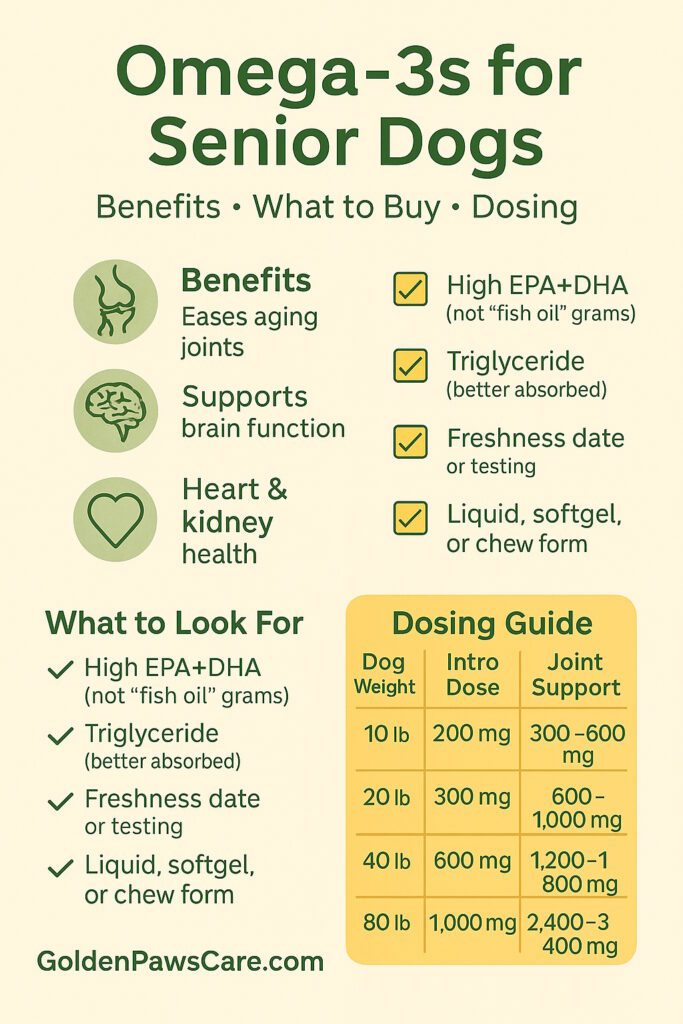
🐟 What to Look For in Omega-3s for Senior Dogs
| Criterion | Why It Matters | Target for Seniors |
|---|---|---|
| EPA + DHA per serving | Active anti-inflammatory dose depends on combined EPA+DHA, not “fish oil” grams. | Higher density per tsp/softgel = fewer servings; verify label mg of EPA+DHA. |
| Chemical form | Re-esterified/triglyceride forms are typically better absorbed than ethyl-ester in dogs. | Prefer “triglyceride” or “re-esterified TG” where possible. |
| Freshness / Oxidation | Rancid oils can reduce efficacy and cause GI upset. | Look for batch testing or freshness date; smaller bottles; cool, dark storage. |
| Purity testing | Heavy metals/PCBs should be filtered to human-grade standards. | Prefer brands stating 3rd-party testing (IFOS/NSF or equivalent). |
| Form & palatability | Liquids dose easily; softgels can hide in food; chews are owner-friendly. | Choose the form your senior tolerates (smell, burps, texture). |
| Stabilizers | Vitamin E (mixed tocopherols) helps resist oxidation. | Prefer products with antioxidant protection. |
| Allergens & add-ins | Some chews include chicken, beef, or flavorings that can trigger sensitivities. | Check for fish allergy, protein sensitivities, or added herbs. |
Tip: The label should list EPA and DHA milligrams clearly. If it only shows “fish oil” total, email the brand for an EPA+DHA breakdown.
🧪 Omega-3 Dosage Guide (EPA+DHA combined)
Typical veterinary ranges for joint support use the combined EPA+DHA amount. Start low for 5–7 days, then titrate.
| Dog Weight | Intro Dose (daily) | Typical Joint-Support Range | Notes |
|---|---|---|---|
| 10 lb (4.5 kg) | 200–300 mg EPA+DHA | 300–600 mg | Split dose with meals if burps occur. |
| 20 lb (9 kg) | 300–500 mg | 600–1,000 mg | Monitor stool; adjust slowly. |
| 40 lb (18 kg) | 600–800 mg | 1,200–1,800 mg | Higher end for advanced arthritis. |
| 60 lb (27 kg) | 800–1,100 mg | 1,800–2,600 mg | Consider liquid for accuracy. |
| 80 lb (36 kg) | 1,000–1,400 mg | 2,400–3,400 mg | Watch calories in chews. |
| 100 lb (45 kg)+ | 1,200–1,600 mg | 3,000–4,000 mg | Split into 2–3 meals. |
Safety: Always confirm dosing with your veterinarian, especially if your dog has pancreatitis risk, bleeding disorders, or is on anticoagulants/NSAIDs.
In This Guide
The Silent Battle: How Inflammation Harms Senior Joints
To understand the power of Omega-3s, we must first understand their adversary: inflammation. Chronic, low-grade inflammation is the silent enemy of aging bodies, especially in the joints.
- Osteoarthritis (Arthritis): As cartilage in the joints wears down, the body responds with inflammation. This inflammation releases destructive enzymes that further break down cartilage, creating a vicious cycle of pain, stiffness, and more damage.
- Systemic Impact: Chronic inflammation isn’t just confined to joints. It contributes to various age-related issues, affecting the heart, kidneys, skin, and even the brain.
Omega-3 fatty acids, particularly EPA and DHA, serve as powerful natural anti-inflammatory agents. They work at a cellular level, helping to dampen the body’s inflammatory response and thereby breaking the cycle of pain and further damage.
The Omega-3 Superstars: EPA and DHA
When we talk about Omega-3s for dogs, we are primarily interested in two specific types:
- EPA (Eicosapentaenoic Acid): The anti-inflammatory superstar. EPA directly helps reduce the production of pro-inflammatory molecules in the body, which is critical for managing arthritis pain and improving joint comfort.
- DHA (Docosahexaenoic Acid): While also having anti-inflammatory properties, DHA is best known for its crucial role in brain development and cognitive function. For senior dogs, it supports brain health and helps combat cognitive decline.
These two specific Omega-3s are found predominantly in marine sources, which is why fish oil is often the go-to supplement. While other sources, such as flaxseed oil, contain ALA (Alpha-Linolenic Acid), the body must convert ALA into EPA and DHA, and dogs are not very efficient at this conversion. Therefore, direct sources of EPA and DHA are far more effective.
🐟 Vet-Trusted Omega-3 Picks for Senior Joints
High-purity EPA+DHA, tested for quality, and easy to dose for seniors.
Liquid (Accurate Dosing)
Ideal for medium/large seniors; measure by tsp for EPA+DHA targets.
🛒 Check Liquid Fish OilSoftgels (Low Odor)
Great for picky eaters; hide in meals; count capsules to reach dose.
🛒 Check Softgel Fish OilChews (Owner-Friendly)
Easiest compliance; confirm EPA+DHA per chew, not just “fish oil.”
🛒 Check Omega-3 ChewsDisclosure: As an Amazon Associate, GoldenPawsCare may earn from qualifying purchases—at no extra cost to you.
Diving Deep: Best Sources of Omega-3s for Your Senior Dog
When choosing an Omega-3 source, quality, purity, and the concentration of EPA and DHA are paramount.
1. Fish Oil (The Gold Standard) This is, hands down, the most recommended and effective source of EPA and DHA for dogs.
- What to Look For:
- Source: Opt for fish oil derived from small, cold-water fish like anchovies, sardines, mackerel, or krill. These fish have shorter lifespans and are lower on the food chain, meaning they accumulate fewer toxins (like mercury) than larger fish.
- Purity & Testing: This is absolutely critical. The fish oil industry is largely unregulated, leading to products that can be rancid, contaminated, or contain less Omega-3 than advertised. Look for brands that provide a Certificate of Analysis (COA) from a third-party lab. This COA should confirm:
- The actual levels of EPA and DHA.
- The absence of heavy metals (mercury, lead), PCBs, and other environmental toxins.
- Oxidation levels (TOTOX value) are low, indicating freshness (lower TOTOX values indicate fresher oil).
- Form: Liquid fish oil is often easier to administer and adjust the dose, but capsules can be more convenient. Either form is acceptable as long as it meets the purity standards.
- Avenue for Promotion: Brands such as Nordic Naturals, Nutramax Welactin, and Carlson Labs are often highly recommended by veterinarians for their rigorous testing and high-quality standards.
- How to Store: Fish oil is sensitive to light, heat, and air. Always keep it in its original dark bottle, stored in the refrigerator (or even the freezer for liquid forms) to prevent oxidation and rancidity.
2. Green-Lipped Mussel (GLM): A Natural Superfood from the Sea Hailing from New Zealand, Green-Lipped Mussel (Perna canaliculus) is more than just an Omega-3 source; it’s a holistic joint superfood.
- What It Offers: GLM contains a unique and comprehensive profile of Omega-3 fatty acids (including a rarer form called ETA, which is a powerful anti-inflammatory), along with glucosamine, chondroitin, and other vitamins and minerals beneficial for joint health. This synergistic blend makes it incredibly potent.
- Form: Often available in powder form (sprinkled on food) or as soft chews.
- Avenue for Promotion: Look for supplements that use freeze-dried GLM powder from reputable brands. Ensure the product states the amount of GLM per serving.
3. Algal Oil (For Fish Allergies or Sustainable Choices) For owners who have a dog with a fish allergy, or who prefer a vegan/vegetarian or more sustainable option, algal oil is an excellent choice.
- What It Offers: Algal oil is derived directly from marine algae, which is where fish get their Omega-3s in the first place. It is a potent, direct source of DHA and often EPA.
- Best For: Dogs with seafood allergies, or owners committed to plant-based/sustainable pet care.
4. Flaxseed Oil (Limited Effectiveness for Direct EPA/DHA) While flaxseed oil is an Omega-3 source, it primarily contains ALA (Alpha-Linolenic Acid).
- The Conversion Problem: Dogs are not very efficient at converting ALA into the active forms of EPA and DHA. Therefore, while flaxseed oil offers other benefits (such as fiber when using ground flaxseed and some coat health benefits), it is not a reliable primary source of EPA and DHA for joint health.
*EPA+DHA density = combined omega-3 actives per serving. Verify label specifics before buying.
More Help for Achy Senior Joints
❓ Omega-3 FAQs for Senior Dogs
Answered by Dr. Sarah Kent, DVM — Veterinary Nutrition & Senior Care
How long until omega-3s help my senior’s joints?
Most dogs show subtle comfort changes within 2–3 weeks; full effect typically takes 6–8 weeks at a consistent dose.
Can I use human fish oil for dogs?
Sometimes—if purity is high and dosing is accurate. Avoid flavored/enteric-coated capsules with xylitol or unknown additives. Confirm EPA+DHA per capsule to hit veterinary ranges safely.
What side effects should I watch for?
Soft stool, fishy breath, or rare oily coat. Reduce dose and split with meals. Talk to your vet if your dog has pancreatitis risk or is on blood thinners.
*This content is for education, not a substitute for veterinary care. Always consult your veterinarian for individualized dosing.*
“Omega-3s aren’t magic, but in senior dogs they’re foundational—quieting joint inflammation while supporting brain, heart, and kidney health.”
— Dr. Sarah Kent, DVM • Veterinary Nutrition & Senior Care
Dosing, Storage, and Veterinary Guidance
- Veterinary Consultation is Crucial: Always, always discuss Omega-3 supplementation with your veterinarian before starting. They can help determine the appropriate dose of EPA and DHA for your dog based on their size, specific health conditions (especially kidney or bleeding disorders), and current medications.
- Read Labels Carefully: Don’t just look at the total amount of “fish oil.” Review the guaranteed analysis to determine the specific amounts of EPA and DHA per serving. This is what truly matters.
- Start Slow: Introduce any new supplement gradually to avoid stomach upset.
- Monitor for Benefits: It can take 4-8 weeks to see the full anti-inflammatory benefits of Omega-3s. Watch for subtle improvements in mobility, energy levels, and overall comfort.
Providing your senior dog with high-quality Omega-3s is a proactive, powerful way to support their vitality and comfort. It’s a testament to your commitment to their well-being, ensuring that every wag, every step, and every moment of their golden years is as vibrant and comfortable as possible.