Adopting a Senior Dog
There’s a quiet magic in the “seniors” section of an animal shelter.
You walk past the bouncing, yipping, “pick-me-now!” puppies and the manic, hopeful energy of the young adults. And then you see them. A grey-muzzled face. A pair of soft, knowing eyes. A gentle tail-thump on a bed, as if to say, “I am here, if you happen to notice.”
Veterinary Note: Before adopting, plan a baseline veterinary exam and senior screening so you can budget realistically for the first 90 days.
Source: Pet Care Costs & Adoption Considerations. ASPCA.
Most people walk right past.
But you’re a little different. You’ve paused. You’re thinking about it. And a little voice in your head is whispering, “What if…?”
You’re also probably terrified. And that’s a good, smart, normal way to feel. You’re wondering about the vet bills, the “unknowns,” and the most painful question of all: “Will the heartbreak of losing them come too soon?”
I’m here to tell you that your fears are valid. And I’m also here to tell you, with my whole heart, that adopting a senior dog is the single most transformative, love-filled, and “worth-it” thing I’ve ever seen anyone do.
It is not just “a nice thing to do.” It is the best-kept secret in the world of rescue.
But it’s not a decision to be made lightly. It’s a partnership that requires a different kind of preparation. So let’s talk about it, with open eyes and a full heart.
In This Article
Part 1: The Preparation — Creating a “Soft Landing”
When you adopt a puppy, you prepare for chaos. When you’re adopting a senior dog, you prepare for comfort. Your goal is to create a soft landing for a dog who has likely known a hard one.
Your Home Environment: Think “gentle.” Think “support.” This isn’t about puppy-proofing; it’s about senior-proofing.
Mobility & Comfort Aids — Typical Ranges
| Aid | Range (USD) | Notes |
|---|---|---|
| Orthopedic Bed | $60–$220 | Size/support density matters. |
| Ramps/Steps | $45–$160 | Minimize jumping/strain. |
| Traction Runners/Mats | $30–$120 | Protect hips on slick floors. |
| Harness/Lift Support | $25–$90 | Assist stairs/car transfers. |
- Flooring: Hardwood, tile, or laminate floors are a senior dog’s worst enemy. They’re slippery and terrifying for a dog with wobbly, arthritic legs. The single best investment you can make is a set of non-slip carpet runners or area rugs for all the main pathways.
- Beds: A cheap, fluffy bed will “pancake” under their weight. What they need is a high-quality, orthopedic (memory foam) bed. Put one in the living room and one in the bedroom. They need this joint support.
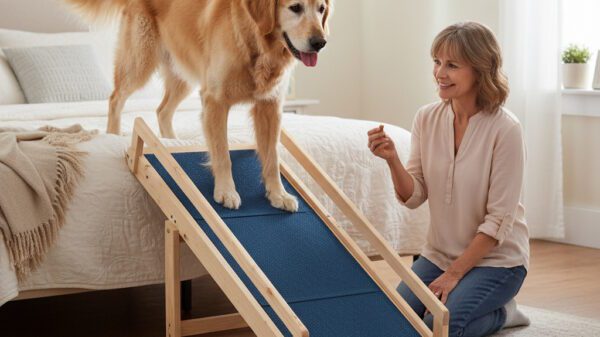
- Ramps & Stairs: Are there three steps up to your front door? That’s a mountain. A sturdy, non-slip ramp can be a day-one game-changer. If you have a tall bed, a set of pet stairs is an invitation to cuddle that they can actually accept.
The Decompression: The “Rule of Threes” (on Steroids): You’ve heard of the “Rule of Threes” for rescue dogs: 3 days to decompress, 3 weeks to learn the routine, 3 months to feel at home. For a senior, you must have even more patience.
This dog is not a blank slate. They are fully formed beings with a past, a history, and habits you will never know. They may have been adored or abandoned.
For the first few weeks, their only “job” is to exist and feel safe. Don’t drag them to the pet store. Don’t invite all your friends over. Let their world be small, predictable, and quiet. Let them unfurl at their own pace.
The Most Important Step: The “Discovery” Vet Visit: This is not optional, and it should not wait. Schedule a vet visit within the first 3-5 days of adoption. This is not just a “check-up”; this is your “Discovery Phase.”
You must go in knowing that you will find things. The shelter did its best, but you need a complete picture. This visit should include:
- A Full Senior Blood Panel: This checks their liver, kidneys, thyroid, and blood sugar. This is your baseline, your road map for their entire future.
- A Thorough Dental Exam: This is often the most significant, and most hidden, source of pain. Many shelter seniors are living with agonizing, rotting teeth.
- A “Lumps and Bumps” Map: Your vet will find them. Get them checked, and make a plan.
- A Frank Talk about Pain: Watch your dog. Do they “grunt” when they lie down? Do they hesitate at stairs? They are probably in pain. This is the visit to create a pain management plan from day one.
Part 2: The Honest Conversation About Costs
This is where many people get scared, so let’s be blunt and honest. Adopting a senior dog will, in all likelihood, cost more than adopting a young one.
The Financial Costs
One-Time Setup Costs (First 30–60 Days)
| Item | Typical Range (USD) | Notes |
|---|---|---|
| Adoption Fee (shelter/rescue) | $50–$350 | Often includes spay/neuter, vaccines, microchip. |
| Initial Exam (senior) | $60–$150 | New-patient exam, history, plan. |
| Core Vaccines Update (if due) | $75–$200 | Depends on records/region. |
| Baseline Labs (CBC/Chem/UA) | $120–$260 | Foundation for meds/diet decisions. |
| Fecal/Parasite Screen | $25–$60 | Common in new intakes. |
| Heartworm/Tick-borne Test | $25–$75 | Regional risk varies. |
| Dental Evaluation (senior) | $0–$75 | Estimate for cleaning may follow. |
| Starter Supplies (bed, bowls, ID, leash) | $80–$200 | Buy once, then replace as needed. |
Ranges are typical; check your local clinic/rescue for exact pricing.
Ongoing Costs (Monthly Averages)
| Category | Typical Range | Notes |
|---|---|---|
| Food (senior-appropriate) | $40–$110 | Size/brand dependent. |
| Preventatives (HW/Flea/Tick) | $15–$45 | Seasonality varies by region. |
| Chronic Meds/Supplements | $10–$60 | Joint support, Rx as needed. |
| Pet Insurance (senior) | $40–$120 | Premiums rise with age/breed/region. |
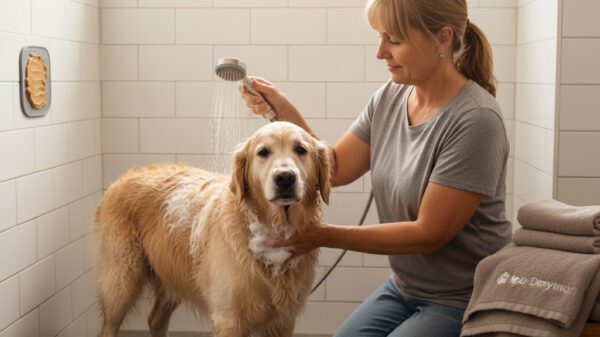
| Grooming/Incontinence Supplies | $10–$40 | Bathe-at-home reduces costs. |
| Savings for Vet Care | $20–$80 | Build a cushion for surprises. |
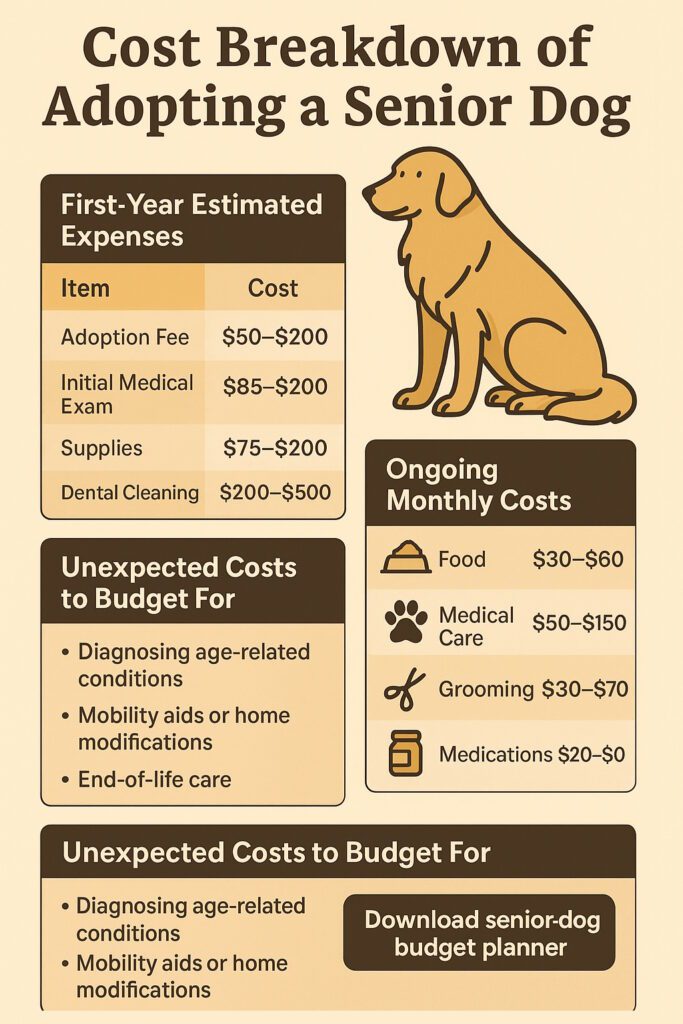
- The Initial Vet Visit: That “Discovery” visit I mentioned? It won’t be cheap. Be prepared for a $300-$800+ bill right out of the gate for bloodwork, a dental estimate, and any initial medications. This is the “cost of entry.”
- The Dental Surgery: This is the big one. If your senior has dental disease, a full cleaning with multiple extractions can cost anywhere from $1,000 to $3,000+. But I will tell you this: it is the most immediate and miraculous gift you can give them. A dog with a pain-free mouth is a new dog, full-stop.
- The Ongoing “Management”:
- Food: They will need a high-quality senior food, or perhaps a (pricier) prescription diet for kidney or liver support.
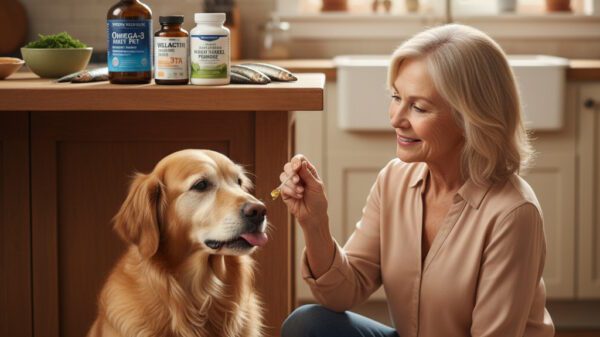
- Supplements: A good joint supplement (glucosamine, chondroitin) and Omega-3 fatty acids are non-negotiable for 99% of seniors.
- Medications: They may need a daily, affordable thyroid pill, or a more expensive monthly arthritis injection or pill.
- The “Senior Dog Emergency Fund”: You must have one. A lump will suddenly appear. A new cough will start. Things change fast with seniors. Having a separate fund (or pet insurance, if you can get it) is not for “if” it happens, but “when.”
Senior-Dog Health Screening — Typical Costs & Purpose
| Test / Screening | Why It Matters | Typical Cost |
|---|---|---|
| Senior Wellness Exam | Full physical; detects early chronic disease | $60–$120 |
| Bloodwork (CBC/Chem) | Checks kidneys, liver, anemia, metabolic issues | $95–$160 |
| Urinalysis | Detects UTI, kidney decline, diabetes indicators | $30–$55 |
| Dental Exam / Cleaning | Prevents infections & heart/kidney complications | $250–$500 |
| X-Rays (Hips/Spine) | Evaluates arthritis, mobility limitations | $120–$250 |
| Thyroid Panel | Identifies low thyroid — common in older dogs | $85–$110 |
Typical pricing based on U.S. veterinary averages. Exact costs vary by clinic and region.
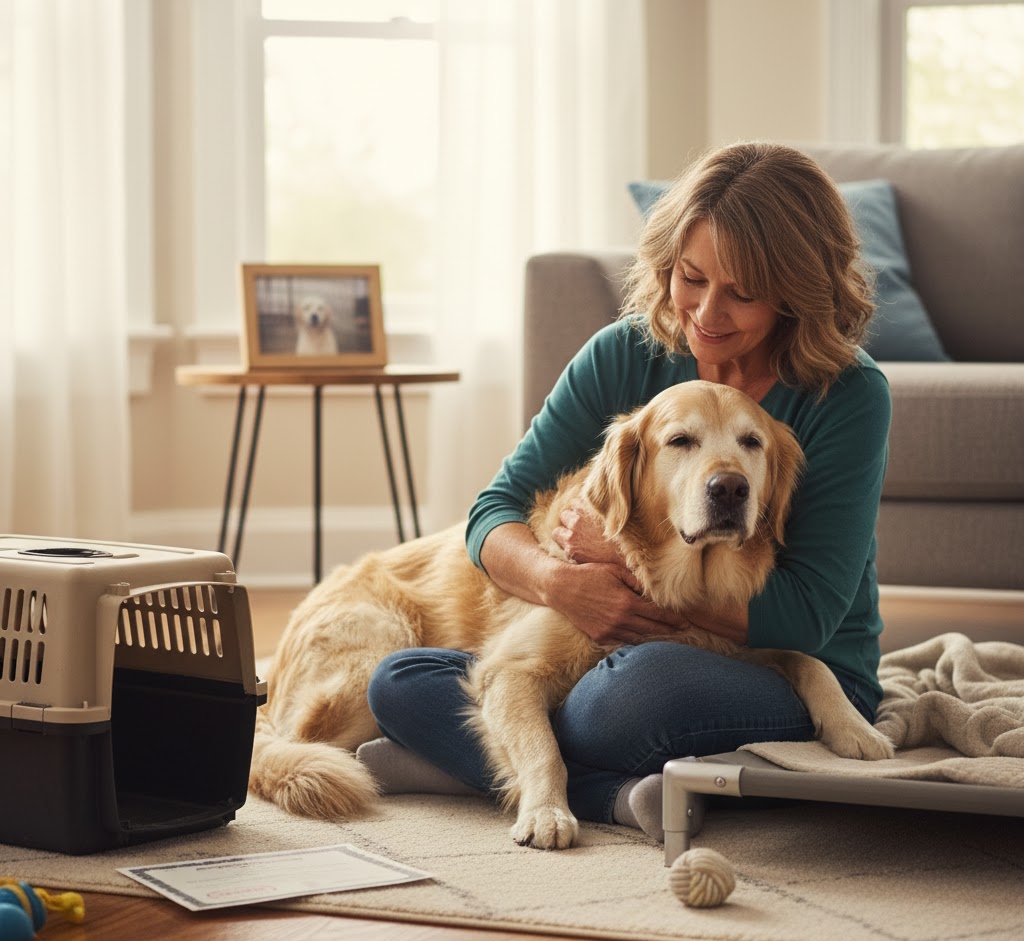
The Emotional Costs: This is the one we’re all most afraid of. The “price of admission” for loving a senior dog is acknowledging anticipatory grief. You start the process of saying goodbye on the same day you say hello.
You will watch them fade. You will see them have a bad day, and your heart will crack. You will have to make “the” decision, and it will almost certainly be sooner than you’d ever want.
This is the hard part. It’s the truest, most honest “cost” of this journey. And it is a cost you will find, to your own surprise, you are 100% willing to pay, again and again.
First-Year Budget Planner for a Newly Adopted Senior Dog
| Category | Estimated Cost | Notes |
|---|---|---|
| Adoption Fee | $75–$350 | Often includes vaccines + microchip |
| Initial Vet Visit | $150–$300 | Exam + baseline tests |
| Medication & Supplements | $40–$120/mo | Arthritis, thyroid, GI support |
| Food | $45–$75/mo | Senior formula recommended |
| Grooming | $30–$60 | Depending on coat type |
| Emergency Fund | $300–$500 | Highly recommended for seniors |
Costs vary by dog size, medical history, and local veterinary pricing.
Part 3: The Overwhelming, Incalculable Rewards
So, after all that—the cost, the ramps, the vet bills, the looming grief—why on earth would anyone do it?
Oh, let me tell you.
The “What You See Is What You Get” Dog: You get to skip all the hard parts of dog ownership. No potty-training accidents at 3 AM. No, “is he going to be a 90lb terror?” No shark-toothed land-gator phase. No adolescent “I’m deaf to you” phase.
You are adopting a person. Their personality is fully formed. The shelter staff can tell you, “He’s a couch potato,” “She’s a perfect lady on leash,” “He just wants to sit by your feet.” And they will be right. You are getting a shortcut straight to the “old, faithful, perfect companion” phase.
Insurance vs Self-Pay: What’s the Difference?
| Option | Pros | Considerations |
|---|---|---|
| Pet Insurance (senior) | Predictable monthly cost; helps with unexpected bills | Pre-existing conditions often excluded; premiums higher |
| Self-Pay + Emergency Fund | Full control; no policy limits | Requires discipline; big bills hit savings immediately |
The Miracle of the “Unfurling” The dog you pick up from the shelter will not be the dog you have in six months.
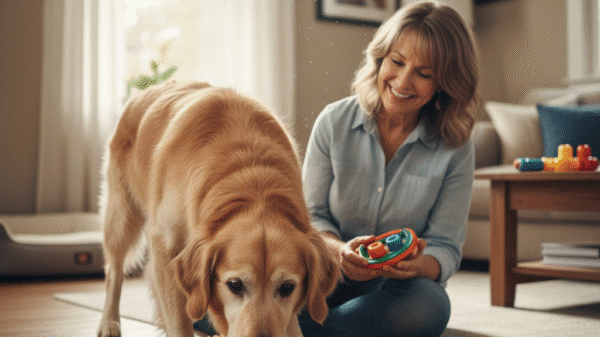
The miracle is in the watching. It’s the first time they sigh—that deep, bone-settling sigh of a dog who finally feels safe. It’s the first time they wag their tail, not just at dinner, but just because you walked into the room. It’s the day, three months in, that you find an old tennis ball and they, to your utter shock, play with it for 15 seconds.
You are not just giving them a home; you are giving them their life back. You are watching them “unfurl.” It’s like watching a flower bloom in slow motion.
The Gratitude. Oh, the Gratitude. This is the secret. A senior dog knows. They know the difference between a cold concrete floor and a memory foam bed. They know the difference between being abandoned and being adored.
They will thank you, not with frantic, slobbery kisses, but with a quiet, profound devotion that will change your definition of the word “love.” They will thank you by leaning their full weight against your legs. They will thank you by gazing at you, their soft eyes telling you a story of “before” and a story of “now.”
Hidden & Unexpected Costs to Plan For
| Expense | Why It Happens | Typical Cost |
|---|---|---|
| Dental Emergencies | Senior dogs often have hidden dental decay | $400–$1,200 |
| Sudden Arthritis Flare-Ups | Cold weather or old injuries resurface | $60–$180 (meds) |
| Incontinence Supplies | More common in spayed females and seniors | $20–$50/mo |
| Mobility Aids | Weak hind legs, arthritis, spinal issues | $40–$120 |
| Behavior Consult | Anxiety or confusion from past trauma | $75–$200 |
These costs don’t apply to every senior dog, but preparing for them makes the transition smoother.
Adoption & Senior-Care — Related Reads
Plan & Budget
Health & Screening
End-of-Life & Support
🐾 Adoption & Costs — FAQ
Are senior dogs more expensive to care for than puppies?
What should I budget for the first 30–60 days after adoption?
Is pet insurance worth it for a newly adopted senior dog?
How do I plan for dental care costs in seniors?
What baseline vet checks are smart right after adoption?
Can adoption fees be reduced for senior dogs?
Expert reviewed by Dr. Sarah Kent, DVM — Senior Canine Health
“Adopting a senior dog is a love decision and a planning decision—set a realistic first-year budget and get your vet on board from day one.”
— Dr. Sarah Kent, DVM • Senior Canine Health | context
The Conclusion: A Different Kind of Math
When you adopt a senior dog, you are making a brave choice. You are agreeing to a different kind of math. You are choosing to believe that the depth of love matters more than the length of time.
Yes, the time is shorter. But the love is denser. It is concentrated, pure, and present.
It is a journey that will crack your heart open and fill it with something you didn’t even know was missing. It is not for everyone. But if it’s for you—if you’re the one who paused at that kennel—I can only say one thing: Do it.
You will not just be saving them. I promise you, in all the ways that count, they will be saving you right back.