Homemade Senior Dog Food
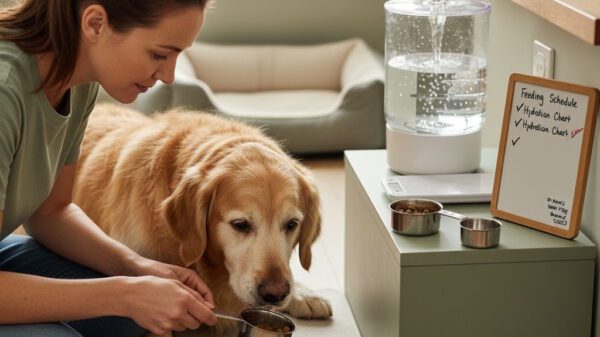
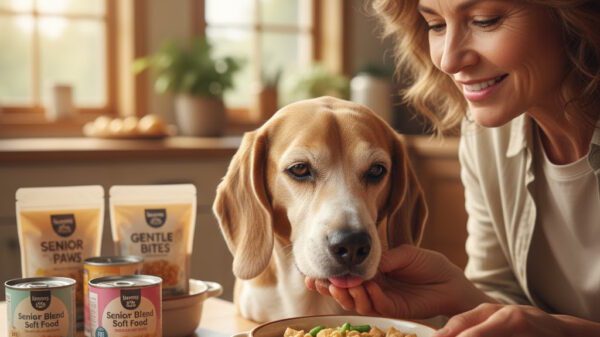
There are few acts of love more fundamental than preparing a meal for someone you cherish. For the loyal, grey-muzzled friend who has been by your side for years, the gentle chopping of vegetables and the savory aroma of cooking meat can feel like the ultimate expression of devotion. Cooking for your senior dog is a way to cater to their picky palate, meet their nutritional needs, manage their sensitive stomach, and ensure every ingredient that enters their body is fresh, wholesome, and served with love.
🍽️ Why Your Senior Dog Needs a Tailored Diet
As dogs enter their golden years, metabolism slows, lean muscle mass decreases, and digestive efficiency changes. A diet that worked in mid-life may no longer support joint health, brain function, or optimal weight in older dogs.
Custom homemade meals give you control over protein quality, joint-support nutrients, digestibility and calorie intake — all crucial for senior wellness.
But this rewarding journey comes with a great responsibility. A senior dog’s nutritional needs are complex and precise. A diet that is lovingly prepared but nutritionally incomplete can do more harm than good. The goal isn’t just to make food that tastes good, but to create a balanced, life-sustaining meal that nourishes and supports their aging bodies.
This guide is designed to empower you with the foundational principles of senior dog nutrition, based on veterinary guidelines. We’ll provide two balanced starter recipes to show you what a complete homemade meal looks like, and give you the knowledge to work confidently with your veterinarian to create the perfect diet for your irreplaceable companion.
In This Article
The Golden Rules: Vet-Approved Guidelines for Senior Nutrition
Before you pick up a pan, it’s essential to understand the core building blocks of a healthy diet for an older dog. These are the non-negotiable principles that ensure you’re nourishing, not just feeding.
🩺 Did You Know? By age 8, over 60% of dogs show muscle loss and slower metabolism. Balanced homemade meals with controlled protein and omega-3s can help preserve lean mass and joint health (Journal of Veterinary Internal Medicine, 2020).
⚠️ A CRITICAL FIRST STEP: This article is for informational purposes only. Before making ANY changes to your dog’s diet, you MUST consult with your veterinarian or a board-certified veterinary nutritionist. They are the only ones who can create a diet that is safe and appropriate for your dog’s specific health needs.
1. High-Quality, Digestible Protein is Key: Senior dogs need ample high-quality protein to combat sarcopenia, the age-related loss of muscle mass. Strong muscles support weak joints and maintain overall strength.
- Best Sources: Lean, cooked meats like chicken breast (no skin), 93% lean ground turkey, whitefish (like cod or pollock), and eggs. These are easily digestible and packed with essential amino acids.
2. Healthy Fats in Moderation: Fats are a crucial energy source and are essential for brain health, but too much can lead to weight gain, which is devastating for aging joints.
- Best Sources: Omega-3 fatty acids are superstar anti-inflammatories. The best way to add these is through a high-quality fish oil supplement. A small amount of flaxseed oil or olive oil can also be beneficial.
3. Digestible, Complex Carbohydrates for Energy: Carbs provide energy and fiber, which is crucial for healthy digestion. Choose complex carbs that are easy on a senior’s digestive system.
- Best Sources: Cooked sweet potatoes, pumpkin puree (made from 100% pure pumpkin), brown rice, rolled oats, and quinoa. These provide steady energy without spiking blood sugar.
4. The Non-Negotiable: Vitamins & Minerals: This is the single most important and most often overlooked aspect of homemade diets. Meat, grains, and vegetables alone are NOT a complete and balanced diet. They are critically deficient in certain minerals, especially calcium. Feeding an unbalanced diet over time can lead to serious health issues, including bone fractures.
- The Solution: You must add a veterinarian-recommended vitamin and mineral supplement specifically designed to balance homemade meals. Products like Balance IT, Just Food For Dogs DIY, or similar are formulated to fill these nutritional gaps. This is not optional.
🩺 Vet Insight: Homemade Diets for Senior Dogs
According to The Spruce Pets, homemade dog food must be “complete and balanced” to safely support older dogs — missing vitamins/minerals can accelerate age-related decline.
Source: The Spruce Pets – “Vet-Approved Homemade Dog Food Recipes” (2021)
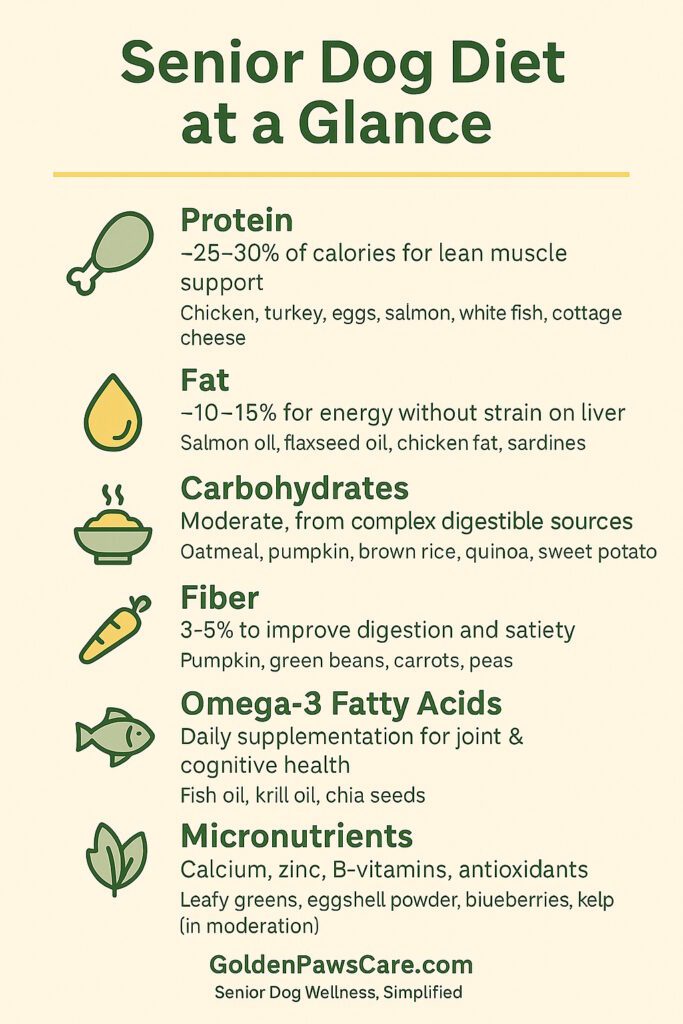
🍲 Senior Dog Nutrition at a Glance
| Macronutrient | Senior Target | Best Ingredient Sources |
|---|---|---|
| Protein | ~25–30% of calories for lean muscle support | Chicken, turkey, eggs, salmon, white fish, cottage cheese |
| Fat | ~10–15% for energy without strain on liver | Salmon oil, flaxseed oil, chicken fat, sardines |
| Carbohydrates | Moderate, from complex digestible sources | Oatmeal, pumpkin, brown rice, quinoa, sweet potato |
| Fiber | 3–5% to improve digestion and satiety | Pumpkin, green beans, carrots, peas |
| Omega-3 Fatty Acids | Daily supplementation for joint & cognitive health | Fish oil, krill oil, chia seeds |
| Micronutrients | Calcium, zinc, B-vitamins, antioxidants | Leafy greens, eggshell powder, blueberries, kelp, liver (in moderation) |
*Targets based on veterinary consensus and NRC (National Research Council) guidelines for mature dogs.
The Loving Ladle: Two Balanced Starter Recipes
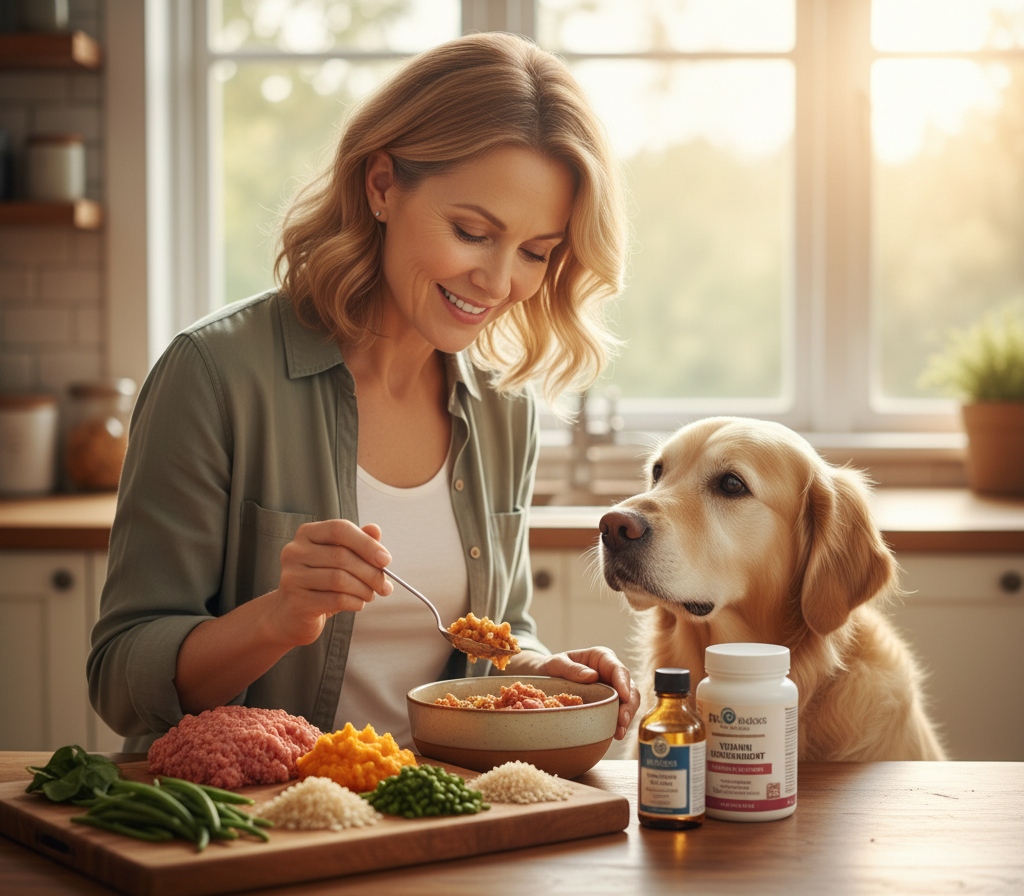
These recipes exemplify a balanced meal, adhering to a common 40% protein, 50% carbohydrate, and 10% fruit/vegetable ratio. Remember to add the balancing supplement as directed. Yields are approximate and should be adjusted according to your dog’s size, activity level, and your veterinarian’s advice.
Recipe 1: Gentle Turkey & Sweet Potato Mash
(Ideal for sensitive stomachs and easy digestion)
Ingredients:
- 1 lb 93% lean ground turkey
- 2 cups cooked sweet potato, mashed
- 1 cup mixed vegetables (carrots and spinach), finely chopped or pureed
- 1 tbsp fish oil (or as directed)
- Veterinarian-recommended vitamin/mineral supplement (as per package directions for the batch size)
Instructions:
- Cook the Protein: In a large skillet, cook the ground turkey over medium heat until browned. Drain off any excess fat.
- Prepare the Veggies: Steam or boil the carrots until tender. If using fresh spinach, steam it for just a minute until wilted.
- Combine: In a large bowl, combine the cooked turkey, mashed sweet potato, and finely chopped/pureed vegetables.
- Cool and Supplement: Allow the mixture to cool to room temperature. Once cool, thoroughly mix in the fish oil and the required amount of the vitamin/mineral supplement. Adding supplements to hot food can degrade their potency.
- Portion and Store: Portion into daily meals according to your veterinarian’s caloric recommendations. Store in airtight containers in the refrigerator for up to 4 days, or freeze for up to 3 months.
Recipe 2: Savory Chicken & Rice Medley
(A classic choice for muscle maintenance and digestive health)
Ingredients:
- 1 lb boneless, skinless chicken breast, cooked and shredded
- 2 cups cooked brown rice
- 1/2 cup green beans, steamed and chopped
- 1/2 cup 100% pure pumpkin puree
- 1 tbsp olive oil
- Veterinarian-recommended vitamin/mineral supplement (as per package directions for the batch size)
Instructions:
- Cook the Chicken: Boil or bake the chicken breasts until cooked through, then shred with a fork.
- Prepare Veggies: Steam the green beans until tender-crisp, then chop into bite-sized pieces.
- Combine: In a large bowl, mix the shredded chicken, cooked brown rice, chopped green beans, and pumpkin puree.
- Cool and Supplement: Let the mixture cool completely. Stir in the olive oil and the vitamin/mineral supplement until evenly distributed.
- Portion and Store: Portion into individual meals. This medley stores well in the refrigerator for up to 4 days or can be frozen.
🐾 Trusted Senior-Dog Meal Tools
If you’re preparing homemade meals, these vet-trusted tools make it safer and easier to keep your senior dog’s nutrition balanced:
- BalanceIT Canine Nutrient Mix — ensures complete vitamins and minerals
- Precision Kitchen Scale — accurate meal portioning for consistency
- Omega-3 Fish Oil — supports joints, brain, and coat health
*Affiliate disclosure: As an Amazon Associate, we may earn from qualifying purchases. We only recommend products personally vetted for senior-dog wellness.
Smart Practices for the Home Chef
- Transition Slowly: When introducing any new food, do it gradually over 7-10 days, mixing a small amount of the new food with their old food and slowly increasing the ratio.
- Batch Cook for Convenience: Save time by cooking a week’s or even a month’s worth of food at once and freezing it in pre-portioned containers.
- Foods to ALWAYS Avoid: Onions, garlic, grapes, raisins, chocolate, macadamia nuts, and anything containing the artificial sweetener xylitol are toxic to dogs.
💬 Dr. Kent Answers Common Questions About Senior Dog Diets
Are homemade diets safe for senior dogs?
Yes — if they’re balanced and designed with veterinary input. Seniors need careful control of phosphorus, sodium, and protein levels to protect kidney and heart health.
Should supplements be added to homemade meals?
Most homemade diets require vitamin and mineral supplements. Common additions include calcium, zinc, and omega-3s — but always confirm amounts with your vet or a board-certified nutritionist.
Can I rotate recipes week to week?
Rotating proteins and vegetables keeps meals interesting and helps ensure nutritional diversity — as long as each recipe meets essential nutrient targets.
Expert reviewed by Dr. Sarah Kent, DVM — Canine Nutrition & Wellness Specialist
*Answers are educational and not a substitute for personalized veterinary care.*
“A well-balanced homemade diet can be a powerful way to support longevity in older dogs. The key is balance, portion control, and ongoing veterinary guidance — not just good ingredients.”
— Dr. Sarah Kent, DVM
Veterinary Nutrition & Senior Wellness
Cooking for your senior dog is a beautiful journey that deepens your bond with them. It’s a way to take complete control of their nutrition in their most vulnerable years. By respecting the science of their dietary needs and partnering with your veterinarian, you can ensure that every loving spoonful is also a step toward a healthier, happier life.