

Pain & Joint Health for Senior Dogs
Arthritis isn’t “just getting old.” It’s treatable, trackable, and—when you structure the home correctly—often dramatically more manageable. This hub routes you to the right next step based on what you’re seeing today: stiffness, limping, weather flares, slipping on floors, or a dog who’s suddenly avoiding stairs.
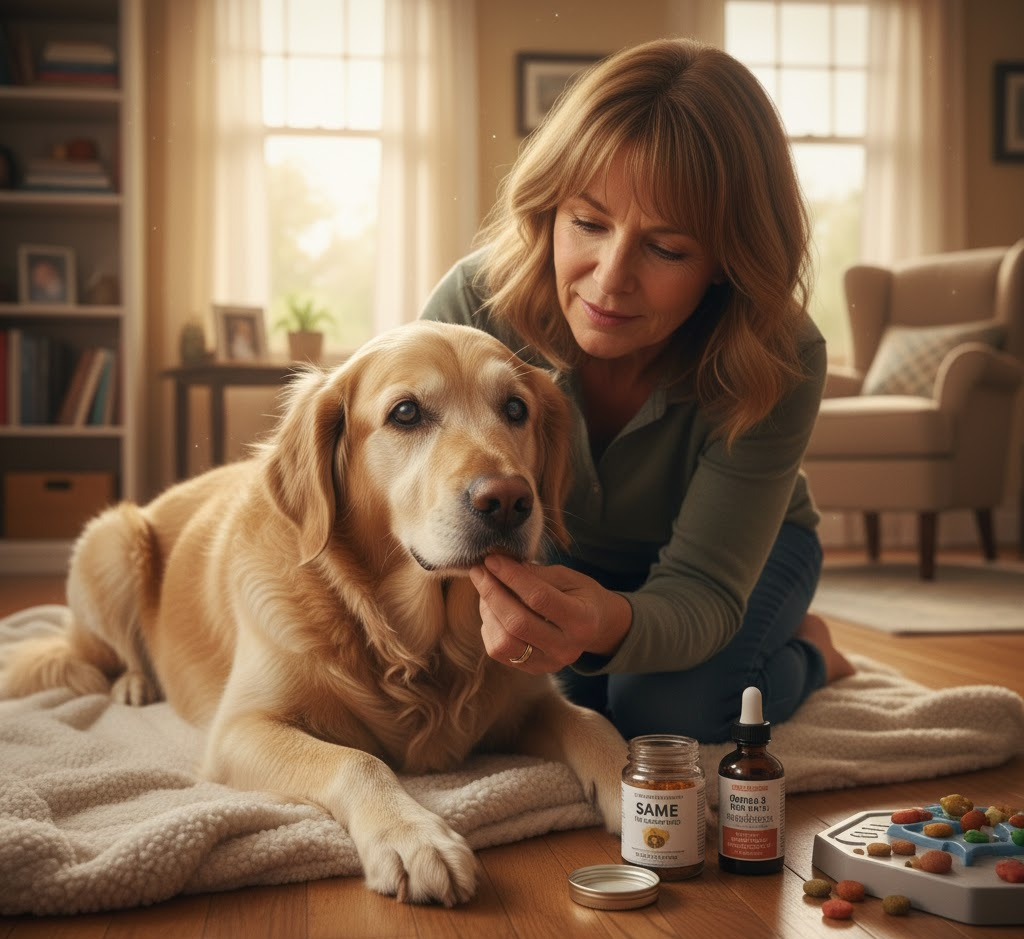
How to Think About Arthritis (Without Panicking or Underreacting)
Senior-dog joint pain usually shows up long before the dramatic limp. It starts as “small weird stuff”: slower sit-downs, a hesitation at door thresholds, a dog who suddenly prefers the rug to the hardwood, or a grumpy reaction to being touched in a spot they used to love. Owners often miss these early signals because the dog still eats, still wags, and still wants to be near you. But the body is quietly compensating—and compensation is exhausting.
Here’s the rule that changes everything: pain has patterns. Weather shifts can trigger flare days. Slick floors can create fear (and repeated micro-slips can make joints worse). Too little movement causes stiffness; too much movement causes payback. The solution is rarely one “magic supplement.” It’s a system: smart movement, safer surfaces, better tracking, and a vet-guided pain plan when needed.
Use the router below to choose what looks most like your dog right now. Then work the relevant guides in order—because in senior dogs, the best outcomes come from stacking small fixes until the bad days stop winning.
Start Here: What Are You Seeing?
Pick the closest match—this drops you into the right “bucket” of guides.
If You Read Two Things First, Read These

Beyond the Prescription: Natural Pain Relief (2025)
The “stack” that actually helps: movement, environment, support tools, and where holistic fits (without magical thinking).
Start HereGlucosamine vs Chondroitin vs MSM
A no-fluff breakdown of what each does, who it’s for, and what to pair together for seniors.
Compare Them More Supplements Track & ToolsSpotting Pain Early (Before the Limp)
Cold-Weather Flares & “Bad Morning” Stiffness
Building a Real Pain Plan
Supplements & Support Nutrients
What each does and when it’s worth using.
Inflammation support, dosing logic, and realistic outcomes.
Where collagen fits—and what to pair it with.
A curated guide built around senior-dog needs.
Home Setup That Protects Joints
Traction fixes that prevent slips and fear-walking.
Angles, safety, and which ramp types fit which dogs.
Pressure relief, support, and what “orthopedic” should actually mean.
Tools That Make Pain Easier to Manage
These are built for real life: track patterns, reduce guesswork, and know when it’s time to call.
Quick FAQs
The questions owners ask right after they notice “something’s off.”
How do I know if my senior dog is in pain?
Look for pattern changes: slower sit/stand, avoiding stairs, licking joints, sleeping more, grumpiness when touched, or slipping on floors. Use the Silent Pain Decoder, then track symptoms for a week.
Is exercise good or bad for arthritis?
Both—depending on intensity. The right answer is gentle, frequent, low-impact movement. Start with Motion as Medicine and avoid “weekend warrior” bursts.
Why is my dog worse when it gets cold?
Many arthritic dogs flare during pressure/temperature shifts. Prevention matters more than reaction. See Cold Weather Joint Pain and consider the Joint Pain Index for tracking.
Content on GoldenPawsCare is written and reviewed using veterinary references, clinical guidelines, and real-world senior dog care experience.
Learn more about joint conditions like osteoarthritis and hip dysplasia in our senior mobility guides.