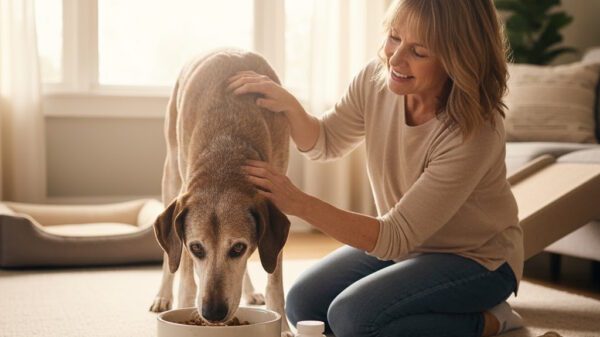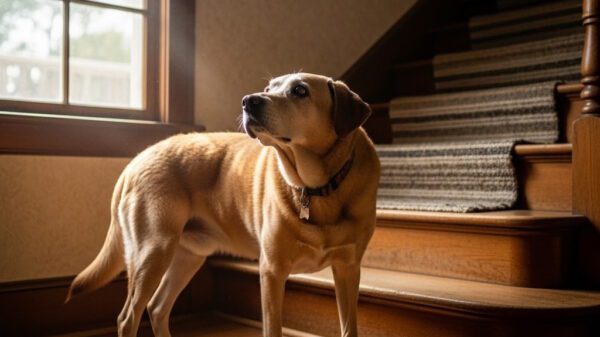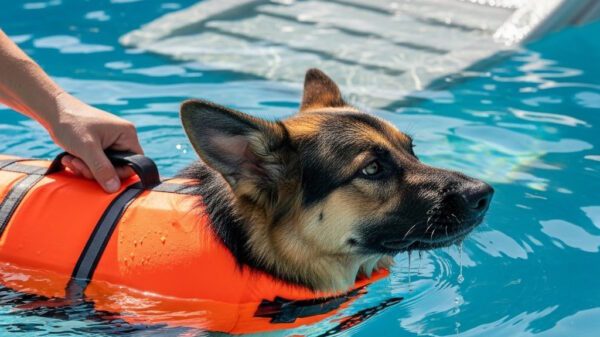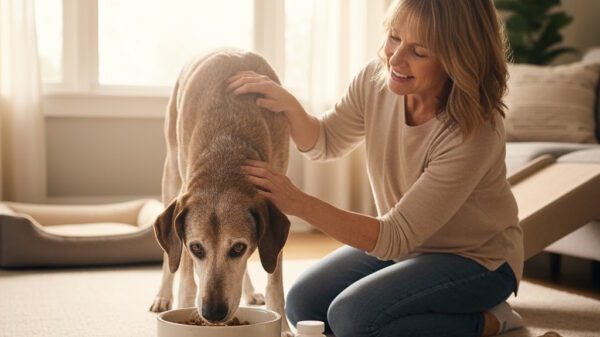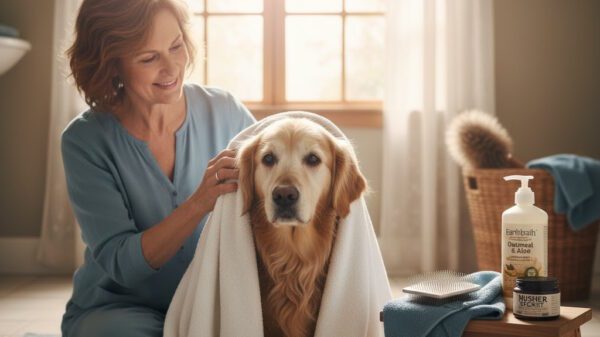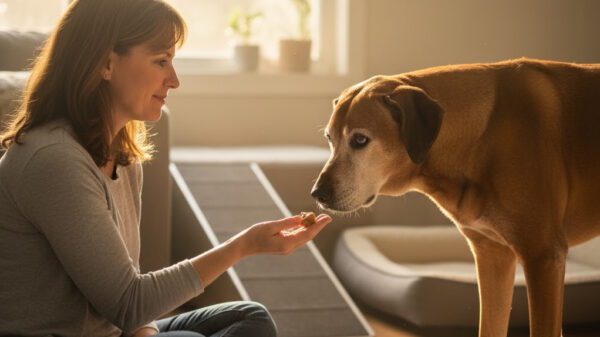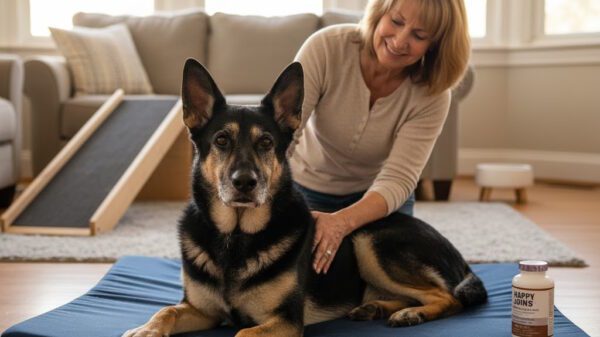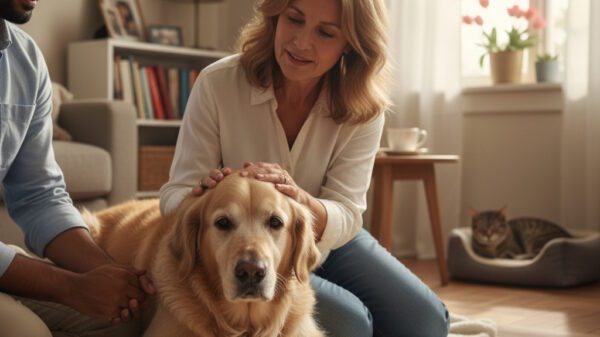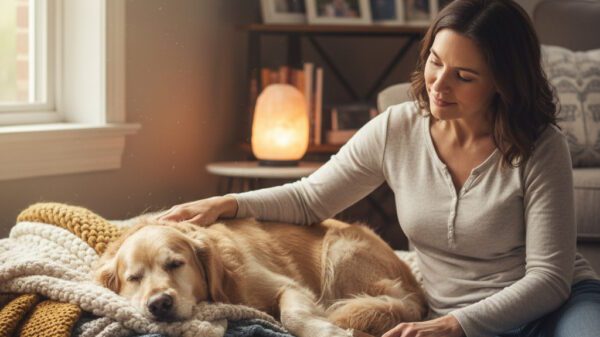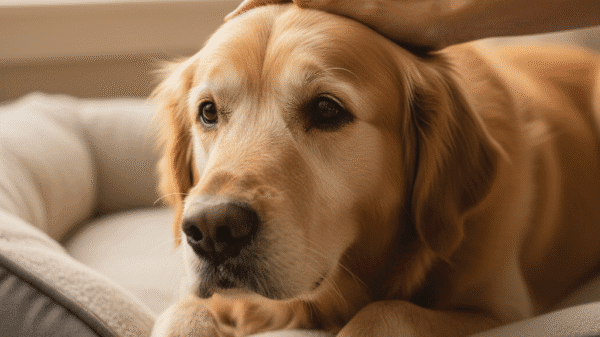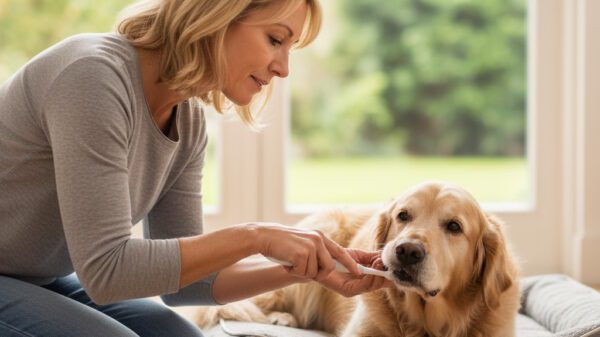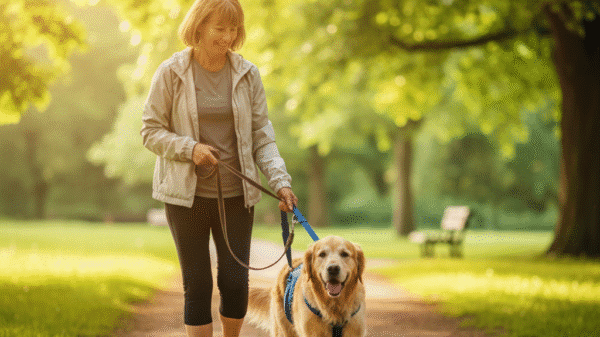
Imagine your senior dog getting up from their bed with more ease, greeting you at the door with a bit more enthusiasm, and navigating their golden years with less stiffness. This isn’t just wishful thinking; it’s an achievable goal: incorporating gentle, therapeutic home exercises into their daily routine. For a dog with arthritis, the right kind of motion/movement is powerful medicine. It breaks the painful cycle of stiffness and muscle loss, helping to build strength, restore confidence, and improve their quality of life, one gentle stretch at a time. This guide is your toolkit for becoming your dog’s loving, at-home physical therapist.
🐾 Why Senior Dogs Move Differently
As dogs age, the mechanics of movement shift dramatically. Muscle mass declines, cartilage thins, and nerve signals slow, changing how they walk, rise, and even rest. These small biomechanical shifts explain why senior dogs often hesitate on stairs or tire more easily.
Joint lubrication (synovial fluid) also decreases with age, making every motion slightly less smooth. In turn, reduced range of motion can trigger stiffness and compensatory strain in other limbs. Understanding these changes helps caregivers choose exercises that build stability — not pain.
- • Slower reflexes and proprioception (body awareness)
- • Thinning cartilage and reduced joint cushioning
- • Weakened core and hind limb strength
- • Longer recovery time after activity
Tip: Short, frequent movement sessions keep senior joints lubricated and improve circulation without overexertion.
🦴 Summary: Spotting Joint Decline & Supporting Mobility
| Signs of Joint Decline | Gentle Exercises to Try | When to See a Veterinarian |
|---|---|---|
| Stiffness after naps or slower rising | Slow leash walks on grass; gentle range-of-motion stretches | If stiffness lasts over 24 hours or worsens despite movement |
| Limping or shifting weight between legs | Short underwater treadmill or pool walks; light uphill strolls | If lameness persists, swelling is visible, or pain vocalizations occur |
| Avoiding stairs or jumping onto furniture | Cavaletti poles at low height; assisted step-ups on soft ramps | If mobility continues to decline or signs of back discomfort appear |
| Tiring quickly on walks | Interval walks (3–5 min activity / rest / repeat); gentle sit-to-stand drills | If fatigue sets in within minutes or panting is excessive |
| Muscle loss in hind legs | Balance pad sessions; supported standing or core-engaging treats | If progressive muscle atrophy or instability develops |
Tip: Always warm up first and stop activity if pain, limping, or vocalization occurs. Regular, low-impact motion is safer than occasional long sessions.
In This Guide
The Philosophy of Gentle Movement: More Than Just Exercise
Before we get into specific movements, it’s crucial to understand why this is so beneficial. Gentle, controlled exercise for an arthritic dog accomplishes four key things:
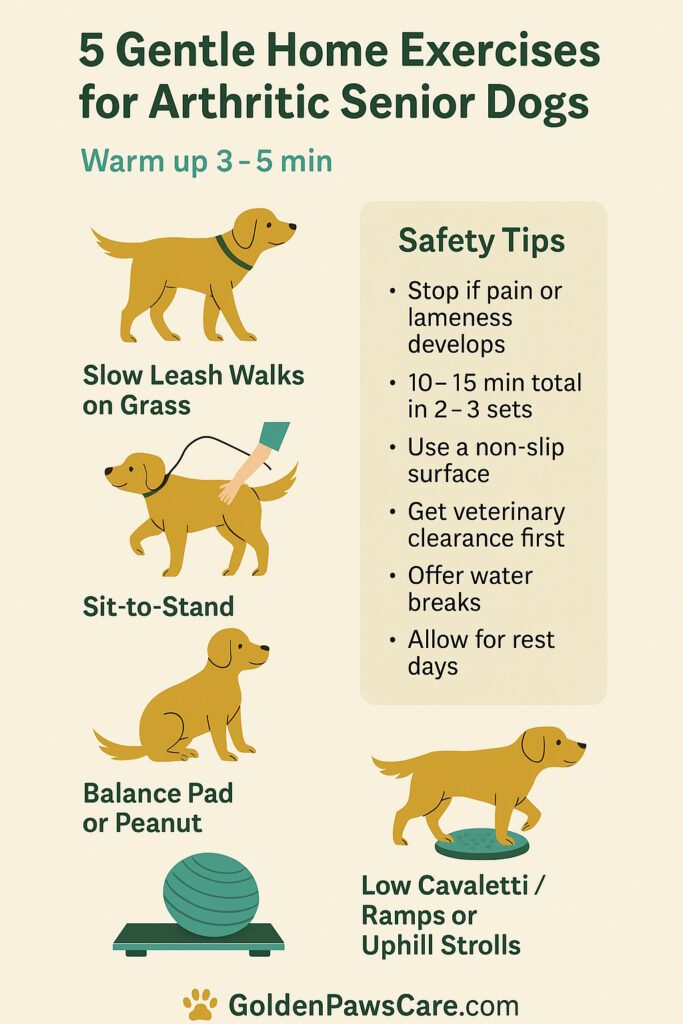
- It Lubricates the Joints: The old saying “motion is lotion” is absolutely true for arthritic joints. Movement encourages the production of synovial fluid, the natural lubricant in the joint capsule, which helps reduce friction and stiffness.
- It Builds Supporting Muscles: Strong muscles in the legs, hips, and core act as natural “shock absorbers” and stabilizers. By strengthening these muscles, you take significant pressure off the compromised joints, leading to less pain and a more stable gait.
- It Improves Body Awareness (Proprioception): Arthritis can interfere with the nerve signals that tell a dog where their limbs are in space. This is why they might stumble or drag their paws. Specific exercises can help retrain these pathways, improving their coordination and confidence.
- It Enhances Mental Well-being: Being able to move more comfortably and engage in positive activities with you can combat the anxiety or depression that can accompany chronic pain and reduced mobility.
🩺 Veterinary Insight: Exercise & Joint Health
Controlled movement helps increase synovial fluid production, improving joint lubrication and reducing stiffness in arthritic dogs. Regular, low-impact activity has been shown to slow cartilage degeneration and enhance range of motion.
Source: Millis DL, Levine D. “Canine Rehabilitation and Physical Therapy.” Elsevier, 2nd ed., 2014
The Ground Rules: Safety First, Always
Think of yourself as your dog’s personal, loving physical therapist. Your primary goal is to help, not harm. Before you begin any exercise program, you must adhere to these golden rules.
- Consult Your Veterinarian First: This is non-negotiable. Your vet or a certified canine rehabilitation therapist can confirm which joints are affected, rule out other issues, and provide guidance on which exercises are most appropriate (and which to avoid) for your dog’s specific condition.
- Warm-Up and Cool-Down: Never exercise cold muscles. Start and end every session with a very slow 5-minute leash walk, or apply a warm compress to their major muscle groups (like the hips) for a few minutes.
- Quality Over Quantity: This is not about pushing through reps. Five slow, perfectly controlled movements are infinitely better than 20 sloppy, rushed ones. Keep sessions short (5-10 minutes, once or twice a day) and consistent. Motion is the key.
- Become a Body Language Expert: Your dog cannot tell you what hurts, but they will show you. Watch for signs of pain or fatigue, such as pinning their ears back, excessive panting, licking their lips, widening their eyes, or trying to move away. Stop the session before you see these signs.
- Provide a Non-Slip Surface: Always perform exercises on a rug, yoga mat, or carpeted surface. Slipping on a hardwood or tile floor can cause serious injury to an already unstable dog.
The Toolkit: 5 Gentle Exercises for At-Home Therapy
Here are five safe and effective exercises you can do at home. Remember to introduce them slowly and use plenty of positive reinforcement, such as praise and small, high-value treats.
1. Passive Range of Motion (PROM)
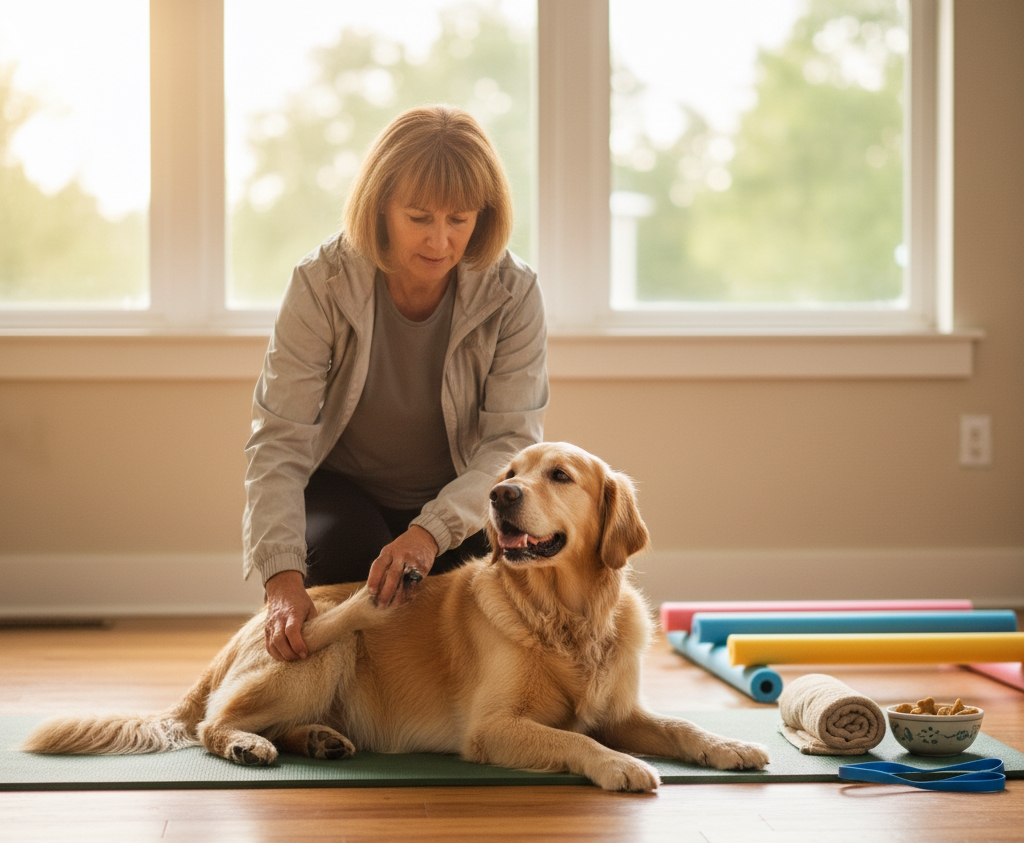
- What It Is: You do all the work, gently moving your dog’s joints through their natural range of motion while they are comfortably lying on their side.
- Why It Helps: Motion lubricates the joints and maintains flexibility without putting any weight on them, making it perfect for dogs with significant joint pain.
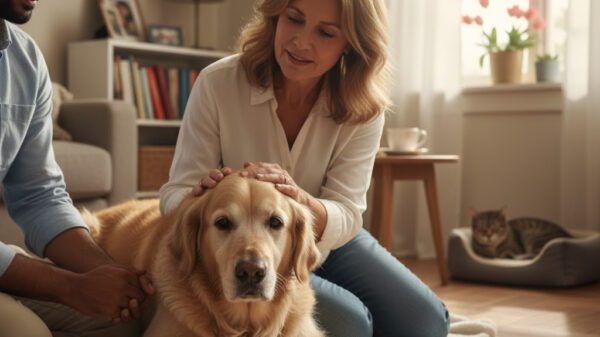
- How to Do It: With your dog relaxed on its side, place one hand on its hip or shoulder to stabilize it. With your other hand, gently take their paw and slowly bend and straighten the leg, mimicking a slow-motion bicycling movement. Move the joint only as far as it goes comfortably without any resistance. Never force or extend it beyond its natural stopping point. Repeat the motion 10-15 times on each leg.
2. Sit-to-Stands
- What It Is: These are essentially controlled doggy squats.
- Why It Helps: This is one of the best exercises for strengthening the large muscles of the hind legs (quadriceps and glutes) that support the hips and knees.
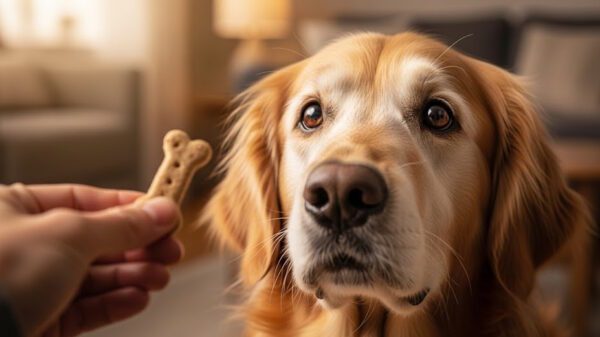
- How to Do It: In a standing position, hold a treat near your dog’s nose and slowly lower it down and back towards their tail, encouraging them to move into a sit. As soon as their rear touches the ground, praise them and give them the treat. Then, immediately use another treat to lure their head up and forward, encouraging them to stand back up. Repeat 5-10 times.
📊 Research Highlight: Balance & Coordination Training
Studies demonstrate that proprioceptive exercises — such as balance boards and slow, guided movements — significantly improve joint stability, muscular endurance, and confidence in senior dogs with osteoarthritis.
Source: Monteiro-Steagall BP et al., “Effects of Physiotherapeutic Exercise on Dogs with Osteoarthritis.” American Journal of Veterinary Research, 2013
3. Weight Shifting
- What It Is: Encouraging your dog to shift their body weight from side to side and front to back.
- Why It Helps: This exercise strengthens the core and the small stabilizer muscles around the joints, improving overall balance and stability.
- How to Do It: While your dog is standing squarely, place your hands on one side of their hips and gently push them so their weight shifts to the opposite side. Hold for a few seconds, then release and repeat on the other side. You can also do this from the shoulders. The movement should be very subtle—you are rocking, not pushing.
4. Cavaletti Rails (Makeshift Version)
- What It Is: Having your dog walk slowly over a series of low-raised obstacles.
- Why It Helps: This encourages your dog to lift their feet higher than they normally would, which improves joint flexion and proprioception (awareness of where their feet are).
- How to Do It: You don’t need fancy equipment. Lay several broomsticks, pool noodles, or rolled-up towels on the floor, spaced about one dog’s length apart. On a leash, walk your dog slowly over the “rails,” encouraging them to step over each one.
5. Cookie Stretches
- What It Is: Using a treat to lure your dog into gentle neck and spinal stretches.
- Why It Helps: This maintains flexibility in the spine and neck, which can also become stiff from compensating for sore leg joints.
- How to Do It: While your dog is standing, hold a treat by their nose and slowly guide their head around towards their hip, as if they are trying to bite their tail. Hold for a second, then give them the treat. Repeat on the other side. You can also guide their head down towards their chest and between their front paws.
🧠 Clinical Note: Movement vs. Rest
While rest is important after flare-ups, excessive inactivity can accelerate muscle loss and joint stiffness. Research shows dogs with moderate, guided exercise programs experience fewer pain relapses and improved long-term comfort.
Source: Bennett D., et al. “Management of Osteoarthritis in Dogs: Physical Therapy and Exercise.” Veterinary Record, 2002
🐾 More Help for Arthritic & Mobility-Challenged Senior Dogs
Practical guides our readers use alongside gentle exercise:
- 🔹 Best Orthopedic Beds for Senior Dogs
- 🔹 Non-Slip Socks & Paw Grips for Safer Floors
- 🔹 Hydration Guide for Senior Dogs
- 🔹 Collagen Benefits for Joint Comfort
- 🔹 Senior Nutrition: Anti-Inflammatory Basics
- 🔹 Evening Routine for Restless Seniors (Sundowning)
- 🔹 At-Home Comforts for Dogs Nearing the End
Each guide pairs well with a gentle daily movement plan for safer, happier senior-dog days.
🦴 Senior Dog Exercise — Common Questions
Tap a question to reveal Dr. Mendel’s answers.
How often should an arthritic senior dog exercise?
What kind of surface is safest for arthritic joints?
Are swimming or underwater treadmills safe for older dogs?
How do I know if my dog is overdoing it?
Should I use joint supplements with exercise?
“Movement is not just about keeping the body limber — it tells an aging dog’s brain that life is still full of rhythm and purpose. Gentle, regular motion keeps joints nourished, reduces stiffness, and supports emotional wellbeing.”
— Dr. Elise Mendel, DVM
Geriatric Mobility & Rehabilitation Specialist
A Final, Loving Thought
The journey with an arthritic dog is one of profound patience and compassion. It requires us to transform our feelings of helplessness into acts of healing. These gentle motion exercises are more than just physical movements; they are a conversation you have with your dog’s body. They are a daily commitment that says, “I see you, I’m here for you, and we will navigate this together.” By strengthening their muscles, you are also strengthening the incredible bond that you share, ensuring their golden years are filled with as much comfort, dignity, and love as possible.