Hydrotherapy for Dogs at Home
There is a specific kind of magic that happens when a dog in pain steps into the water. I have watched German Shepherds with hips so stiff they drag their toes on concrete, suddenly glide effortlessly once the water takes their weight. I’ve seen old Labradors, whose tails rarely wag due to spinal arthritis, paddle with a look of pure, unadulterated relief on their faces.
Water is the great equalizer. It suspends gravity, conquers pain, and rebuilds muscle in ways land-based exercise simply cannot.
However, there is a dangerous misconception that “hydrotherapy” is just a fancy word for “swimming.” It isn’t. Throwing a tennis ball into a lake for your dog to chase is high-intensity cardio; it is chaotic and uncontrolled. Hydrotherapy for dogs at home is deliberate, slow, and precise. It is medicine in liquid form.
If you are looking to help a senior dog, a post-surgical patient (with vet clearance), or an obese pup regain their mobility, setting up a home water routine can be life-changing. But it must be done with the rigour of a clinic, even if it’s happening in your backyard pool.
Studies published in the American Journal of Veterinary Research show that controlled hydrotherapy can increase joint range of motion and reduce pain in arthritic dogs through buoyancy-supported movement.
In This Guide
The Science: Why Water Works When Land Fails
To understand how to do this safely, you have to understand the three forces at play. When I explain this to owners, I see the lightbulb go on—they realize why their previous attempts at “swimming” might have actually made things worse.
- Buoyancy: This is the anti-gravity force. It reduces the load on weight-bearing joints. For a dog with hip dysplasia, water removes the crushing weight of their own body, allowing them to move the joint through a full range of motion without the sharp sting of bone-on-bone contact.
- Hydrostatic Pressure: The pressure water exerts on the body. It acts like a compression stocking, reducing swelling (edema) in the legs and providing constant sensory feedback to the dog’s nervous system. It tells the dog where their limbs are, which is crucial for neurological issues.
- Viscosity (Resistance): Water is thicker than air. Every movement requires more energy but carries less impact. It builds muscle fast, but safely.
Phase 1: The Setup and The Safety Gear
You cannot just toss a dog in a pool and hope for the best. The environment must be controlled.
⚠️ Safety First
- Water temperature must be 82–88°F for senior dogs (lower can tighten joints).
- Never submerge the head—aspiration pneumonia risk is serious.
- Short sessions only if your dog has heart disease or laryngeal paralysis.
- Avoid hydrotherapy during active skin infections or open wounds.
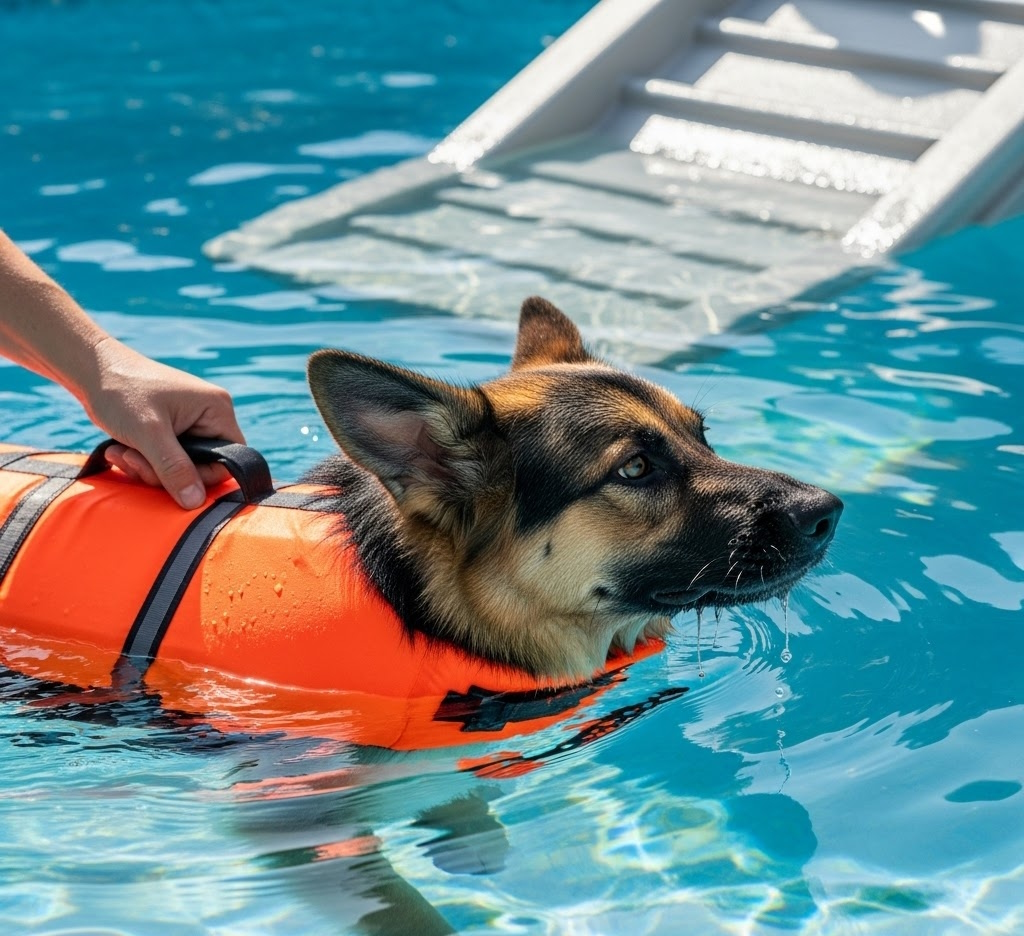
- Always use a fitted life jacket with a handle.
The Vessel
For small dogs, a pristine, chemical-free bathtub can work, provided you have a non-slip mat covering the entire floor. Porcelain is ice to a wet paw, and a slip in the tub can tear a ligament.
For medium to large dogs, you are likely looking at a backyard swimming pool or a heavy-duty stock tank. Crucial Rule: If you are using a pool, you must provide a gradual entry for the dog. A ramp or broad steps are essential. Never throw a dog in, and never force them to jump out. The impact of landing on the pool deck can undo all the benefits of the swim.
The Armor: The Life Jacket
Even if your dog is a Chesapeake Bay Retriever born to swim, they still need a life jacket for hydrotherapy. In a therapeutic setting, we use the jacket handles to guide the dog’s posture. We aren’t just keeping them afloat; we are manipulating their spine and hips to ensure they are level.
- The Fit: It should be snug. If you can lift the dog by the handle and the jacket slides up around their ears, it’s too loose. It needs to support the ribcage and keep the spine straight.
The Temperature
This is the detail most DIYers miss. Cold water causes muscles to contract and stiffen. If your dog has arthritis, a cold pool (below 75°F/24°C) will likely increase their pain after the session. Therapeutic water should be warm—ideally between 80°F and 88°F (26°C-31°C). If you are using a stock tank or kiddie pool, use warm water from the house to raise the temperature. If you have a large unheated pool, save your sessions for the warmest part of the day or invest in a solar cover.
At-Home Hydrotherapy vs Rehab Clinic vs No Hydrotherapy
This isn’t about guilt—it’s about understanding what each path realistically offers a stiff, arthritic senior dog so you can make the best decision with your veterinarian.
| What You’re Comparing | At-Home Hydrotherapy | Rehab Clinic Hydrotherapy | No Hydrotherapy |
|---|---|---|---|
| Joint support & movement | Good support for stiff joints if water depth, time, and exercises are kept gentle and your dog is monitored closely. | Excellent—programs are designed by rehab professionals and tailored to specific injuries, surgeries, or arthritis stages. | Depends on land exercise alone; many dogs still benefit, but they miss the “gravity break” warm water can provide. |
| Supervision & expertise | You supervise, using this guide and your vet’s advice. Best when you’re calm, observant, and willing to stop early if anything looks “off.” | Direct oversight from a veterinarian or certified canine rehab therapist. They can adjust on the spot if your dog struggles. | No specific joint-focused plan; relies on general walks and home adjustments only. |
| Cost over time | Low to moderate. You may invest in a non-slip mat, support harness, and towels, but there are no per-session fees. | Moderate to high. Each session has a fee, but you’re paying for precision and professional oversight. | Lowest direct cost, but potentially higher long-term costs if stiffness or muscle loss progresses unchecked. |
| Convenience & stress level | Very convenient when done in a familiar bathroom. Great for dogs who find car rides or clinics stressful. | Travel + clinic environment can be tiring, but some dogs love the routine and extra attention. | Easy for you, but your dog may continue to stiffen over time if no other adjustments are made. |
| Safety risk if something goes wrong | Moderate. Most issues come from slips, over-tired dogs, or too-deep/too-cold water. Strict supervision and short sessions reduce the risk. | Lower. Staff are trained to spot fatigue, panic, or medical red flags quickly and can stop immediately. | Risks come more from under-treated arthritis: muscle loss, pain, and reduced mobility over months and years. |
| Best fit for… | Senior dogs who are medically cleared, dislike clinics, and have a calm caregiver who can commit to short, careful sessions at home. | Dogs recovering from surgery, complex orthopedic or neurologic cases, and families who want a tightly supervised rehab plan. | Dogs who cannot safely do water work at all—or families who are using other arthritis tools first (weight loss, meds, ramps, flooring, daily walks). |
The “right” choice is rarely all-or-nothing. Many families use a few clinic sessions to get a plan, then lean on simple at-home routines when time or budget is tight—always checking back in with their veterinarian as their dog’s needs change.
Phase 2: The Exercises
Forget fetching. High-speed turns and explosive jumps are the enemies of rehab. We want slow, rhythmic movement.
1. The “Wait and Weight” (Static Balance)
Before any swimming happens, just let the dog stand in the water.
- Depth: Water should be at shoulder height.
- The Goal: The water pushes against them. They have to make tiny micro-adjustments with their core muscles just to stand still.
- The Feeling: You will feel them swaying slightly. Place your hands on their ribcage to stabilize them. This is incredible for core strength without moving a muscle. Do this for 2 minutes before moving.
2. The Controlled Walk (Aquatic Treadmill Simulator)
Swimming (feet off the floor) is great for range of motion, but walking in water is better for strength.
- Depth: Waist to Chest deep.
- The Action: Put the dog on a short leash. Walk slowly alongside them in the water (or outside the tank).
- The Benefit: They have to lift their legs high to step over the water’s resistance. This is called “high stepping,” and it builds the hamstrings and glutes without the impact of landing.
3. Assisted Swimming (The Glide)
If you are in deep water where the dog cannot touch the bottom:
- The Hold: Do not let them thrash. Hold the handle of the life jacket. Your goal is to keep their spine parallel to the water surface.
- The Problem: Many dogs panic and try to climb out, raising their front paws and dropping their rear ends. This is the “seahorse” position, and it is terrible for their lower back.
- The Fix: Gently lift the tail base or support the belly to bring the back end up. They should look like a flat log, paddling rhythmically.
4. The Figure-Eight
If you have the space (like a shallow end of a pool), walk the dog in tight figure-eight patterns.
At-a-Glance: The Exercises
- Wait & Weight: Static balance with gentle resistance.
- Aquatic Treadmill Simulation: Walking against water drag.
- Assisted Swimming: Support the hips; short controlled strokes.
- Figure Eight: Builds core + joint stability in a safe pattern.
- Why: This forces the spine to bend laterally and encourages the dog to place weight on the inside leg. It increases body awareness (proprioception).
Phase 3: The Danger Zones
I have stopped more home hydrotherapy sessions than I can count because owners missed the subtle signs of distress. Water toxicity and fatigue are silent killers.

Dr. Kent reviews GoldenPawsCare guides that involve water work, joint health, and at-home comfort routines. Her focus here is on whether the exercises respect senior-dog limits: slow warm-ups, controlled duration, and clear stop points when a dog looks tired or stressed.
This article is educational only and does not replace individual advice from your own veterinarian or a certified canine rehabilitation therapist.
Water Toxicity (Hyponatremia): If your dog bites at the water or holds a ball in their mouth while swimming, they are swallowing water. Ingesting too much water throws off their electrolyte balance and can be fatal.
- Rule: No toys in the pool if your dog is a “water biter.”
- Rule: Sessions should be short to minimize intake.
The Fatigue Wall: Swimming is exhausting. Five minutes of swimming is roughly equivalent to a 20-minute run.
- Sign 1: The tail stops using as a rudder and droops.
- Sign 2: The splashes get bigger. Clean swimming is quiet. Noisy, splashing swimming means the dog is panicking or losing form.
- Sign 3: The gums turn pale or dark red. At the first sign of any of these, the session is over. Not “one more lap.” Over.
Phase 4: The Post-Swim Ritual
The therapy doesn’t end when they get out of the water.
- The Rinse: Pool chemicals and pond water bacteria can irritate sensitive skin. A thorough freshwater rinse is mandatory.
- The Dry: Moisture trapped against the skin is a recipe for hot spots, especially in double-coated breeds like Goldens or Huskies. Dry the ears thoroughly to prevent infections.
- The Warm-Up: Even if the water was warm, evaporation cools the body instantly. Towel them off and get them into a warm room. If they have arthritis, a cold, damp joint can be painful. I like to put a fleece coat on them for 20 minutes after the swim to keep the muscles loose.
Hydrotherapy at Home: FAQ
A Genuine Reflection
I remember working with a Rottweiler named Bear. He had torn both ACLs, and surgery wasn’t an option due to a heart condition. His owner built a ramp into an above-ground pool and committed to home hydrotherapy.
For the first week, Bear just stood in the water, looking miserable. But by week three, he was walking. By month two, he was paddling. The day I saw him trot across the yard—on land—to greet me was one of the highlights of my career.
It wasn’t magic. It was consistency, safety, and the buoyancy of water giving him back what gravity had stolen.
You can do this for your dog. It requires patience, gear, and a keen eye for safety, but the reward of seeing your best friend move without pain is worth every wet towel you’ll have to wash.