
The love we share with our pets is one of life’s purest joys. They are our confidants, our adventure buddies, and our family. So, when a beloved companion receives a terminal diagnosis or begins to decline from old age, the weight of the decisions that follow can feel immense. We are faced with a flood of questions, grief, and a profound desire to do right by them. In this challenging chapter, a philosophy of care is designed to honor that bond with dignity and love: pet hospice.
Many people associate the word “hospice” with giving up, but in veterinary medicine, it’s the exact opposite. Pet hospice care is about actively choosing to make a pet’s final days, weeks, or months as comfortable, peaceful, and loving as possible. This is your guide to understanding what pet hospice truly is, and when it might be the most compassionate choice you can make for your cherished friend.
In This Guide
What Exactly Is Pet Hospice Care?
Pet hospice, also known as palliative care, is a comprehensive approach to end-of-life care for pets. It is a philosophy and a medical service that focuses on managing a pet’s comfort and quality of life when a cure for their illness is no longer possible or practical.
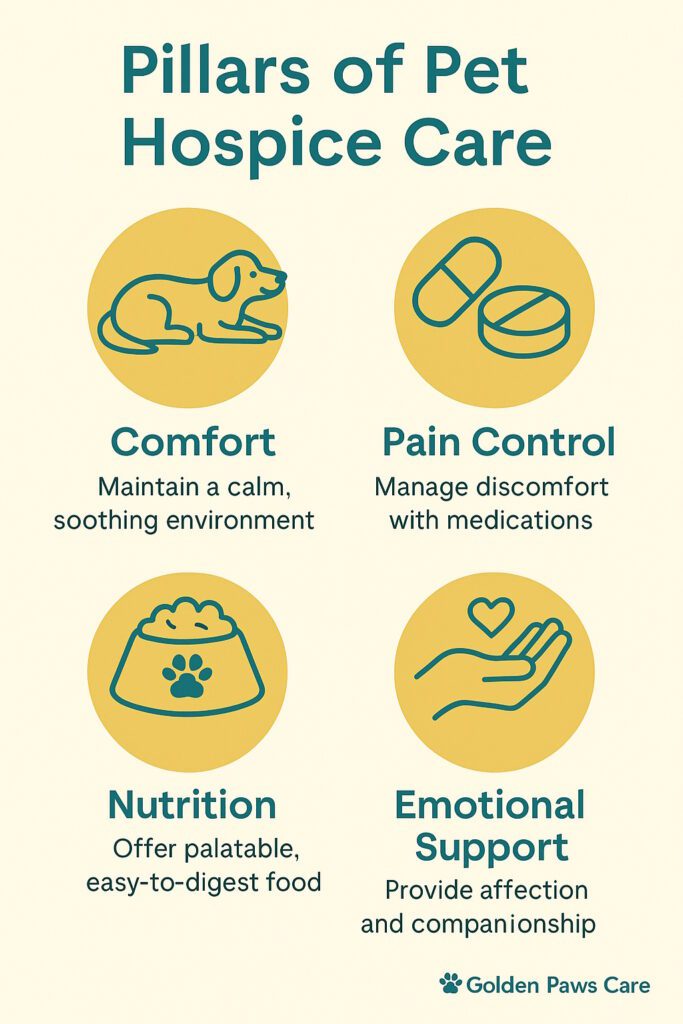
The core principle of pet hospice care is a fundamental shift in goals: we move away from trying to cure the disease and focus entirely on managing the symptoms to ensure the pet is comfortable, pain-free, and content. It’s about celebrating the life they have left and empowering you, their caregiver, to provide the best possible support during this tender time.
It’s crucial to understand that hospice is not the same as euthanasia. Hospice is the journey; euthanasia (a peaceful passing assisted by a veterinarian) is one possible end to that journey. The hospice period can last for weeks or even months, giving you and your family precious time to adjust, say your goodbyes, and shower your pet with affection.
📚 Reference:
Bishop G, et al. (2019). Animal hospice and palliative care: veterinarians’ emerging specialty.
J Vet Behav, 31: 72–79.
Outlines the rise of hospice and palliative medicine as recognized veterinary disciplines.
📊 How Long Does Pet Hospice Typically Last?
Hospice is a bridge between curative treatment and a peaceful death. For dogs, care often spans days to months, depending on diagnosis and goals.
- Mean duration ≈ 47 days (range 1–290 days) in a university pet hospice program cohort.
- Clinically, veterinarians describe hospice windows of days, weeks, or months based on disease trajectory and comfort response.
Sources: Colorado State Univ. Pet Hospice Program report (mean 46.7 days; range 1–290 days). :contentReference[oaicite:0]{index=0} Context on typical “days–months” hospice window in veterinary literature. :contentReference[oaicite:1]{index=1}
The Pillars of Pet Hospice: A Focus on Comfort
Pet hospice care is a multi-faceted approach that addresses the whole animal—their physical, mental, and emotional needs. A good hospice plan, often developed with your veterinarian, will center on these key areas:
- Pain Management: This is the cornerstone of hospice. Chronic pain from conditions like arthritis, cancer, or organ failure can dramatically reduce a pet’s quality of life. A hospice plan involves a robust pain management protocol, which might include oral medications, injectable drugs, therapeutic laser, acupuncture, or other modalities to keep them comfortable.
Hospice care is not about giving up—it’s about giving more. More comfort, more peace, and more time spent in love instead of fear.
— Dr. Robin Downing, DVM, MS, CCRP, Downing Center for Animal Pain Management
- Nutrition and Hydration: A sick or aging pet’s appetite can wane. Hospice care focuses on finding creative and gentle ways to encourage patients to eat and drink. This could mean offering highly palatable foods, hand-feeding, or using appetite stimulants. The goal isn’t weight gain, but rather enjoyment and maintaining energy.
- Hygiene and Cleanliness: Keeping a pet clean and dry is essential for their dignity and to prevent secondary issues, such as skin infections or sores, especially if they have limited mobility. This includes regular grooming, promptly cleaning up any accidents, and providing soft, clean bedding.
- Mobility Support: As pets weaken, they may struggle with mobility. Hospice care addresses this with practical solutions, such as non-slip rugs, ramps for stairs or cars, and supportive harnesses or slings to help them get up and move around for potty breaks or to change their scenery.
- Environmental Management: The focus is on adapting your home to your pet’s needs. This means ensuring their favorite resting spots are easily accessible, that food and water bowls are close by, and that the environment is calm and free from stressors. It’s about creating a safe, comfortable haven for them.
🐾 Comfort-Care Tools That Truly Help
If your veterinarian recommends comfort-care tools, here are trusted, vet-approved options that can make your dog’s hospice days calmer and safer.
Disclosure: As an Amazon Associate, GoldenPawsCare earns from qualifying purchases. We only feature products that meet veterinary quality standards.
Disclosure: GoldenPawsCare participates in the Amazon Services LLC Associates Program and other affiliate programs. This means we may earn a small commission if you purchase through our links — at no additional cost to you. We only recommend products that meet veterinary quality and safety standards.
- Emotional and Mental Well-being: Your pet’s emotional comfort is just as important as their physical state. Hospice is about continuing to enrich their lives in ways they can still enjoy. This might mean gentle petting, sitting with them in the sun, talking to them, or bringing their favorite toys close. It’s also about providing emotional support for you and your family as you navigate this journey.
📚 Reference:
American Animal Hospital Association. (2022). Palliative Care or Hospice?
2023 AAHA Senior Care Guidelines.
Defines best practices for hospice and palliative care, emphasizing comfort, nutrition, and owner support.
When Is It Time to Consider Pet Hospice Care?
Knowing when to transition from curative care to hospice care is a deeply personal decision, made with love and in consultation with your veterinarian. There is no single right answer, but here are some common scenarios where hospice becomes a compassionate and appropriate choice:
- A Terminal Diagnosis Has Been Made: When your pet is diagnosed with a life-limiting illness like advanced cancer, end-stage kidney or heart failure, or a degenerative neurological condition.
- Curative Treatments Are No Longer Working: If aggressive treatments like chemotherapy or surgery are no longer effective, or if the side effects are causing more suffering than the disease itself.
- The Risks of Treatment Outweigh the Benefits: For older or very frail pets, the stress of invasive procedures or aggressive therapies may be too much for their bodies to handle.
- You Want to Focus on Quality over Quantity: When your primary goal shifts from extending your pet’s life at any cost to ensuring the time they have left is as happy and comfortable as possible.
🧭 Quality-of-Life (QoL) Markers Families Can Track
The classic HHHHHMM framework helps caregivers evaluate comfort and dignity at home. Score each item 0–10 (10 = ideal) and review trends with your veterinarian.
Sources: Original HHHHHMM descriptions adapted from Villalobos et al.; example caregiver PDFs. :contentReference[oaicite:2]{index=2} AAHA notes that few animal QoL scales are formally validated; tracking good/bad days is recommended. :contentReference[oaicite:3]{index=3}
A helpful tool that many veterinarians and families use is a Quality of Life (QoL) Scale. These scales, such as the HHHHHMM Scale (Hurt, Hunger, Hydration, Hygiene, Happiness, Mobility, and More Good Days Than Bad), provide objective criteria to help you assess your pet’s condition. Regularly evaluating these factors can help you make an informed and compassionate decision and track their comfort over time.
📚 Reference:
Texas A&M College of Veterinary Medicine. (2022). Cognitive Decline in Aging Dogs: What to Know.
VetMed TAMU News.
Reports that 28 % of 11–12-year-old dogs and 68 % of 15–16-year-olds show signs of cognitive dysfunction.
Building Your Support Team
You are not alone in this. A successful hospice plan involves a team, with you at the center. Your team may include:
- Your Primary Veterinarian: They are your most important partner in managing medications and assessing your pet’s physical health.
- A Certified Hospice Veterinarian: Some veterinarians specialize in end-of-life care, providing in-home consultations, deep pain-management expertise, and guidance.
- Veterinary Technicians: Often, vet techs are instrumental in teaching you how to administer medications or provide supportive care at home.
- Family and Friends: Your emotional support network is vital. Don’t be afraid to lean on them.
📚 Reference:
Menchetti L, et al. (2023). The relationship between signs of medical conditions and cognitive dysfunction in older companion dogs.
Animals 13(13): 2203.
Shows how pain, sensory loss, and chronic disease often overlap with cognitive decline, supporting a holistic hospice approach.
Pet hospice care is a profound act of love. It’s a commitment to walking the final steps of a journey with a friend who has given you unconditional love. By shifting the focus from cure to comfort, you give them the ultimate gift: a peaceful, dignified, and cherished final chapter. It is not an easy path, but it is a beautiful and meaningful one, ensuring that the end of their life is as full of love as the beginning.