
Beyond the Rainbow Bridge
The moment a dog enters our lives, they become more than just a pet; they become a furry family member, a loyal confidant, and often, a child’s very first best friend. They’re there for scraped knees, silent cries, and countless joyful moments. So, when the time comes to say goodbye—whether through a sudden accident, a prolonged illness, or the gentle transition of old age—the grief can be profound for every member of the family, and especially for children.
As someone who has walked this path both personally and professionally, understanding the unique way children process such a significant loss is crucial. Their grief can look different from an adult’s, and navigating it requires patience, honesty, and immense compassion. This article is a heartfelt guide for parents, offering strategies and insights to help children cope with the loss of a family dog, transforming a moment of heartbreak into an opportunity for growth, understanding, and continued love.
In This Guide
Understanding Childhood Grief: It’s Not “Just a Pet”
For many adults, the loss of a pet is akin to losing a family member. For a child, especially a young one, it can be their very first encounter with death and an experience that shapes their understanding of loss, love, and life’s fragility. Dismissing their grief with phrases like “it was just a dog” or “you’ll get another one” can be incredibly damaging. It invalidates their feelings, teaches them that their emotions aren’t important, and can make them hesitant to express grief in the future.
Children’s grief isn’t a linear process; it can come in waves, manifesting differently depending on their age and developmental stage.
- Toddlers (1-3 years): May not fully grasp the permanence of death. They may experience changes in eating/sleeping habits, increased clinginess, or behavioral regressions. They primarily react to the adults’ emotions and changes in routine.
- Preschoolers (3-5 years): Begin to understand that death is final, but they might think it’s temporary or that the deceased will “wake up.” They may ask repetitive questions, feel responsible for the death, or express their feelings through play.
- School-Aged Children (6-10 years): Understand death’s finality but may fear it happening to others. They might intellectualize their grief, withdraw, act out, or develop physical symptoms like stomach aches.
- Pre-Teens/Teenagers (11+ years): Their grief often mirrors adult grief, experiencing sadness, anger, guilt, and depression. They may seek support from friends, withdraw, or express their feelings through creative outlets.
Regardless of age, remember that their bond was real, and their pain is real.
Honesty and Clarity: Setting the Foundation
One of the most challenging aspects for parents is what to say. My advice is always to be honest, gentle, and clear. Avoid euphemisms that can confuse or even frighten a child.
- Avoid “Went to sleep” or “Put to sleep”: While common for euthanasia, this can instill a fear of sleep or even cause confusion about why the dog isn’t waking up.
- Avoid phrases like “Went away” or “Got lost”: This can lead to anxiety, leaving the child constantly waiting for their dog to return or feeling abandoned.
- Use clear, simple language: “Buddy’s body stopped working,” “Buddy died,” or “Buddy’s heart stopped beating.”
- Introduce the concept of “never coming back”: This is often the hardest part, but it’s crucial for their understanding of permanence.
Prepare them if possible: If you know your dog’s time is limited, gentle preparation can be helpful. Discuss how the dog is aging or becoming ill, and that its body won’t function properly much longer. Answer their questions truthfully but reassuringly.
Involve them in the process (age-appropriately): If euthanasia is the decision, discuss it with them. Some children benefit from being present during the procedure (if you feel they are mature enough and you are emotionally stable enough to support them), or saying goodbye just before. Other children might prefer to say their goodbyes at home. Respect their wishes and comfort levels.
Creating a Safe Space for Grief: The Power of Expression
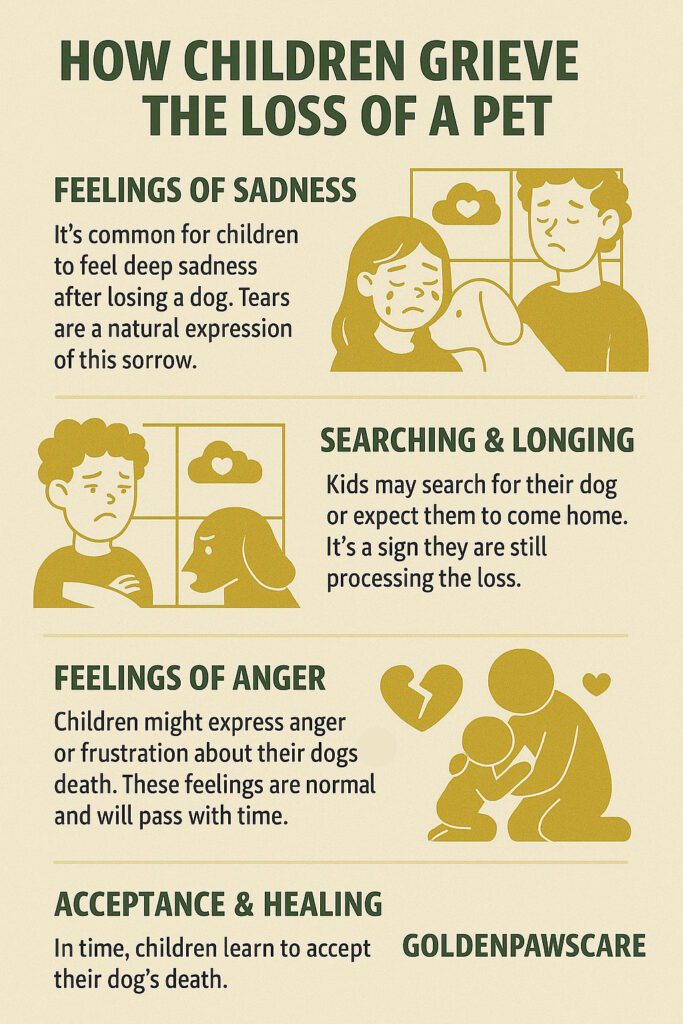
Children often express grief in different ways from adults. Instead of long conversations, they might communicate through play, art, or sudden bursts of emotion.
- Encourage Open Communication: Let them know it’s okay to be sad, angry, confused, or even relieved (especially if the dog was suffering). Please share your own sadness; it shows them that grief is a natural human emotion.
- Read Books Together: There are many wonderful children’s books about pet loss (e.g., Badger’s Parting Gifts, The Invisible Leash, When a Pet Dies). These can provide a narrative, validation, and a starting point for discussion.
- Creative Outlets: Encourage drawing, painting, or writing stories about their dog. Art can be a powerful way for children to express feelings they can’t articulate verbally.
- Memorialize and Remember:
- Memory Box: Decorate a box and fill it with the dog’s collar, favorite toy, photos, or a lock of fur.
- Plant a Tree/Flower: A living memorial can be a beautiful way to remember.
- Photo Album/Scrapbook: Create a special book to celebrate your dog’s life.
- Light a Candle: Establish a weekly ritual of lighting a candle at dinner to share memories.
- “Rainbow Bridge” Ritual: Some families find comfort in the idea of the Rainbow Bridge. You can have a small ceremony or even write a letter to their dog.
- Maintain Routine (as much as possible): While grief disrupts everything, maintaining consistent daily routines can provide a sense of security and normalcy for children.
- Physical Affection: Offer extra hugs, cuddles, and reassurance to show your affection. Physical comfort can be incredibly soothing during times of emotional distress.
Navigating Difficult Emotions and Questions
Children often grapple with complex emotions and difficult questions that require patient and empathetic responses.
- Guilt: “Did I do something wrong? Is it my fault?” Reassure them unequivocally that it is not their fault. Explain that death is a natural part of life and that the dog loved them very much.
- Anger: They might be angry at you, the vet, or even the dog for leaving. Acknowledge their anger and explain that it’s a normal part of the grieving process. Help them find constructive ways to express it.
- Bargaining: “If I were a better owner, would they still be here?” Again, gently bring them back to the reality that death is not a punishment or a consequence of their actions.
- Fear of Losing Others: “Are you going to die? Is my cat going to die?” Reassure them that while everyone dies eventually, you are healthy and will be there for them. Focus on the present.
- Religious/Spiritual Questions: If your family has religious or spiritual beliefs about an afterlife, share them in an age-appropriate way. If not, it’s okay to say, “We don’t know exactly what happens, but we know their love lives on in our hearts.”
When to Consider Professional Support
Most children, with loving support from their families, can navigate pet loss and emerge stronger. However, sometimes grief can become complicated. Consider professional help from a child therapist or grief counselor if you observe:
- Prolonged Withdrawal: A once outgoing child becomes persistently isolated.
- Significant Changes in Behavior: Aggression, extreme anxiety, persistent nightmares, or severe regression lasting more than a few weeks.
- Declining School Performance: A sudden and sustained drop in grades or refusal to attend school.
- Physical Symptoms: Ongoing headaches, stomach aches, or other physical complaints without a medical explanation.
- Discussion of Self-Harm or Excessive Guilt: Any mention of wanting to harm oneself or persistent self-blame requires immediate professional attention.
Many hospices and humane societies offer pet bereavement support groups or resources, sometimes specifically for children. Don’t hesitate to reach out.
Honoring the Bond: Moving Forward, Not Moving On
The death of a family dog is never truly “getting over it” but rather “moving forward” with the love and memories. It’s about integrating the loss into the fabric of your family story. This experience, while painful, can teach children invaluable lessons about empathy, resilience, the cycle of life, and the enduring power of love.
🐾 Children’s Pet-Loss FAQ
How can I help my child remember our dog?
Should I tell my child the full truth about what happened?
How long will it take for my child to stop crying?
When should I seek professional help for my child’s grief?
How can I talk about getting another pet?
By providing an environment of open communication, validation, and heartfelt remembrance, you empower your children to process their grief in a healthy, constructive way. You teach them that love, even when it ends in loss, is always worth the pain. Their furry friend may be gone from sight, but the paw prints they left on your child’s heart will remain forever.