Dog Dementia vs. Normal Aging
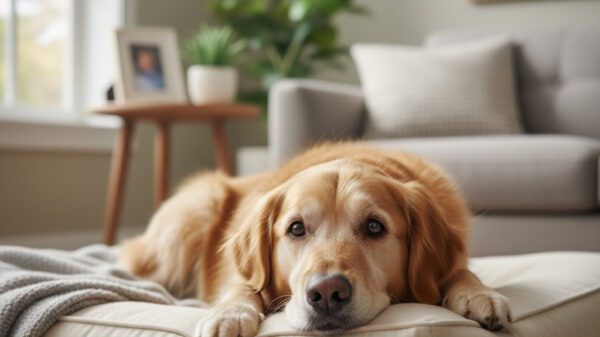
That gray muzzle. The slower, stiffer walk in the morning. The cloudy, wise eyes that have watched you for a dozen years. Loving a senior dog is a privilege, but it also comes with a quiet, persistent worry.
Every time my 13-year-old Lab, Buster, used to stand at the pantry door instead of the back door, a small knot would tighten in my stomach. Is he just tired? Or is this it? Is this the beginning of… something more?
As a husband to a veterinarian (and a long-time dog owner), this is the single most common fear I hear from people with senior pets: “How do I tell if my dog has dementia or is just getting old?”
It’s a heartbreaking question because the two look so similar on the surface. But here’s the most important thing I can tell you: normal aging is primarily physical, while dog dementia is primarily behavioral and cognitive.
Normal aging is a body slowing down. Canine Cognitive Dysfunction (CCD), or dog dementia, is a mind becoming confused.
The distinction matters. It matters for your peace of mind, for your veterinarian’s treatment plan, and for your dog’s quality of life. You can’t stop time, but you can manage dementia. First, you have to know what you’re looking for.
Let’s move past the clinical lists and talk about the real-world, in-your-living-room clues.
🧠 Key insight: Cognitive changes are common in older dogs, but progressive disorientation, disrupted sleep-wake cycles, new house-soiling, and loss of learned cues are red-flag patterns more consistent with canine cognitive dysfunction (CCD) than “normal aging.”
In This Guide
What “Normal Aging” Actually Looks Like
Before we pathologize every senior moment, let’s establish a baseline. What is a “normal” part of a dog’s golden years?
1. Physical Slowdown (The Obvious One) This is the hallmark of old age. Arthritis is incredibly common.
- Real-world clue: Your dog is hesitant to use the stairs or needs help getting onto the couch. Their once-frantic “welcome home” greeting is now a happy, thumping tail from their dog bed. They lag behind on walks and prefer a gentle stroll to a vigorous hike.
- The Key Difference: This is a “can’t,” not a “don’t know.” The desire is there; the physical ability is fading. They still get excited when you grab the leash, even if they can’t jump for it.
2. Sensory Decline Just like humans, dogs’ senses dull with age.
- Real-world clue (Hearing): You walk into a room and “startle” your sleeping dog. You call their name, and they don’t respond (often mistaken for stubbornness or confusion!).
- Real-world clue (Vision): Cataracts or nuclear sclerosis (a normal, cloudy-blue haze) can cause their vision to become fuzzy, especially in dim light. They might be more cautious at night or bump into a piece of furniture you just moved.
- The Key Difference: A dog with poor vision might bump into a new obstacle, but they still navigate their familiar home layout with confidence. A dog with hearing loss might not hear you approach, but they are overjoyed and present once they see you. Their mind is intact.
3. More Naps, Same Personality Senior dogs need more sleep. A lot more.
- Real-world clue: They spend most of the day snoozing, often deeply.
- The Key Difference: When they are awake, they are still themselves. They are still happy to see you, still have their funny little quirks, and still engage with the family. Their personality remains consistent.
In short, a normally aging dog is like a cherished old car: the engine isn’t as zippy, the shocks are a bit stiff, and the paint is faded, but the same reliable driver is behind the wheel.
The Real Clues: Spotting Canine Cognitive Dysfunction (CCD)
CCD is a medical diagnosis. It’s a progressive, neurodegenerative disease, much like Alzheimer’s in humans, that causes changes in the brain.
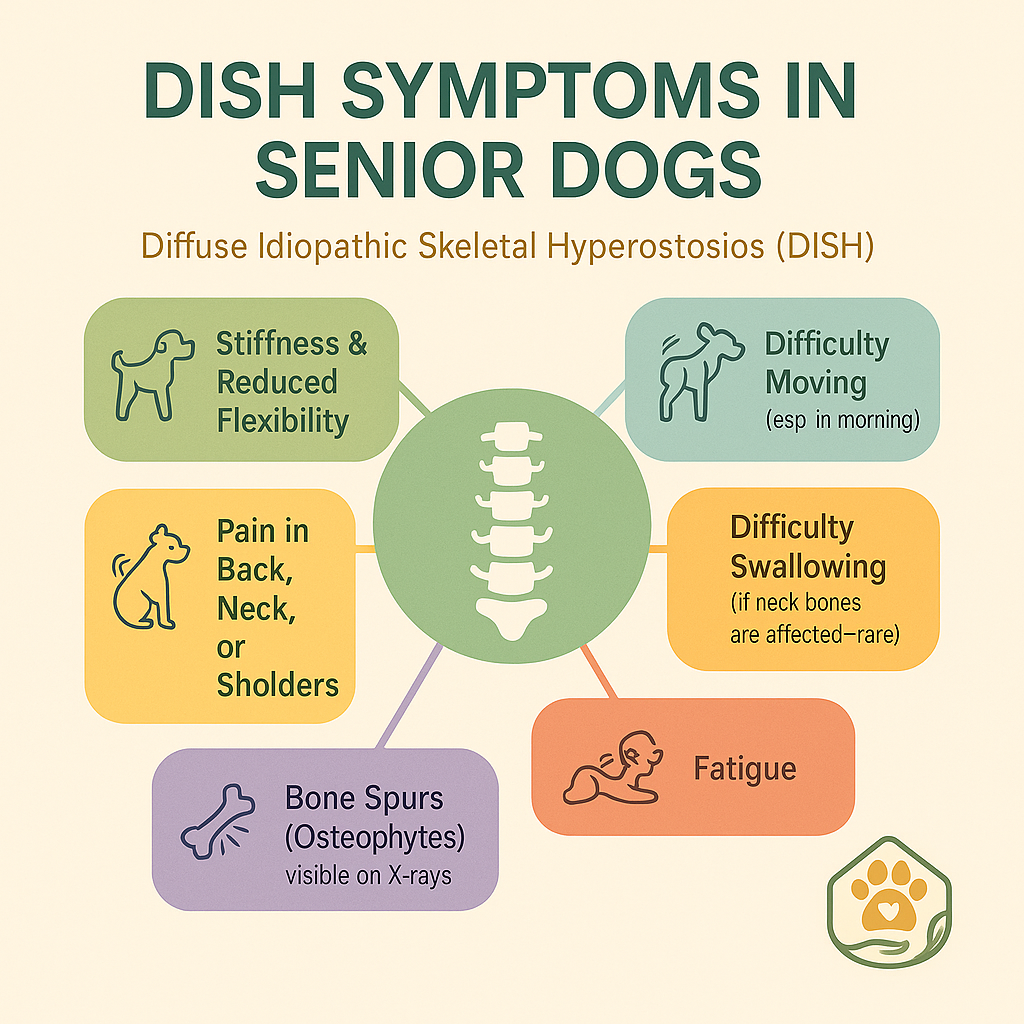
In the veterinary world, we often use the acronym DISHA to categorize the symptoms. I find it to be the most helpful tool for owners trying to organize their observations.
📚 Evidence—Prevalence & Risk: Epidemiologic and clinical studies report rising CCD prevalence with age in senior dogs, with behavior-based screening tools identifying a substantial subset of geriatric dogs meeting CCD criteria.
References (examples): Salvin et al., Appl Anim Behav Sci (2010); Landsberg et al., Vet Clin North Am Small Anim Pract (2012); Dewey, Prog Neuro-Psychopharmacol Biol Psychiatry (2019).
“D” is for DISORIENTATION
This is the most classic and jarring sign of dog dementia. It’s not just physical slowing; it’s genuine, observable confusion.
- Real-world clue: Getting “stuck” in corners or behind furniture. They walk into a corner and just… stand there, unable to figure out how to back up.
- Real-world clue: Staring blankly at walls, floors, or into space for long periods, as if they’re “offline.”
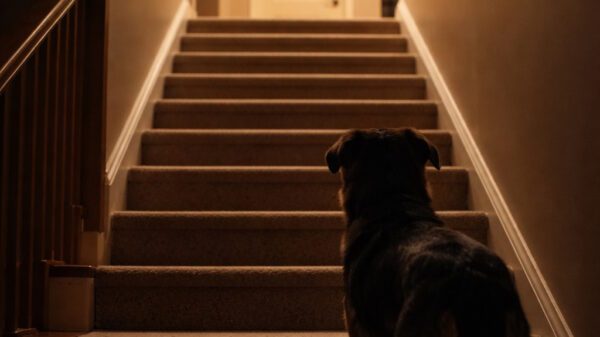
- Real-world clue: Forgetting where the door is. This is a big one. They might stand at the hinge side of the door, waiting for it to open, or go to the wrong door entirely (like a closet).
- Real-world clue: Getting lost in a familiar house or yard. They may wander from room to room as if they don’t recognize their own home.
Normal Aging vs. Dementia:
- Normal: Bumps into the coffee table because their vision is poor.
- Dementia: Stands in the middle of the living room, whining, because they seemingly forgot where they are.
“I” is for INTERACTIONS (Altered)
This one is heartbreaking. Your dog’s personality and social behaviors begin to change.
- Real-world clue: They stop greeting you at the door. This isn’t just being too tired to get up; this is a lack of recognition or interest.
- Real-world clue: Withdrawing from the family. They may sleep in a separate room or no longer seek out petting, cuddles, or affection.
- Real-world clue: The opposite can also happen: sudden, intense separation anxiety. They may become “velcro dogs,” following you relentlessly and panicking when you’re out of sight.
- Real-world clue: Uncharacteristic irritability or “grumpiness” with other pets or family members when they were previously social.
Normal Aging vs. Dementia:
- Normal: Wags their tail from their bed when you get home, but doesn’t get up.
- Dementia: Doesn’t seem to notice or care that you got home at all.
“S” is for SLEEP-WAKE Cycle Changes
This is often the symptom that finally drives exhausted owners to the vet. It’s not just “more naps.” It’s a complete reversal of their internal clock.
- Real-world clue: Sleeping soundly all day, only to be wide awake all night.
- Real-world clue: Pacing, panting, whining, or barking at nothing in the middle of the night. This is a hallmark of “sundowning.” They seem anxious, lost, and inconsolable.
- Real-world clue: They just can’t seem to “settle” at bedtime, wandering the dark house as if they’re looking for something.
Normal Aging vs. Dementia (CCD) — What Changes, What Doesn’t
| Domain | Normal Aging | Suggestive of Dementia (CCD) |
|---|---|---|
| Orientation | Occasional hesitation in new places | Gets “stuck,” stares at walls, lost in familiar rooms/yard |
| Social Interaction | Slightly less playful, naps more | Withdrawn from family or unusually clingy/anxious |
| Sleep–Wake | Earlier bedtime, deeper sleep | Night pacing, vocalizing, daytime sleepiness |
| Learning/Memory | Slower to learn new cues | Forgets familiar cues, routines, or housetraining |
| Activity/Anxiety | Shorter walks, more rest | Aimless wandering, restlessness, new anxiety |
Normal Aging vs. Dementia:
- Normal: Naps more during the day but still sleeps for a solid block at night (though may need one potty break).
- Dementia: Has their days and nights completely flipped, turning the household upside down.
“H” is for HOUSETRAINING & Learned Behaviors (Forgotten)
This is perhaps the most frustrating sign for owners. Your perfectly house-trained dog suddenly starts having accidents.
- Real-world clue: Urinating or defecating indoors, often in random, prominent places (like the middle of the kitchen floor).
- Real-world clue: The accidents seem to occur with no warning and without any sense of shame. The dog doesn’t even seem to realize what they did.
- Real-world clue: They “forget” to signal they need to go out. Or worse, they stand at the door, you let them out, and they stand on the grass, looking confused, then come right back inside and have an accident.
- Real-world clue: Forgetting basic commands like “sit” or “stay” that they’ve known their entire life.
Normal Aging vs. Dementia:
- Normal (Physical): An arthritic dog may have an accident because they physically couldn’t get up and make it to the door in time.
- Dementia (Cognitive): A dog with CCD may have an accident because it has forgotten the house rules or why it was outside.
“A” is for ACTIVITY (Altered)
This goes beyond a simple “slowdown.” Activity levels change in strange, often purposeless ways.
- Real-world clue: Aimless, repetitive pacing or circling. This is a huge red flag. They aren’t walking to anything; they are just… walking.
- Real-world clue: A dramatic decrease in activity. This isn’t just being tired; it’s a profound lack of interest in anything—walks, toys, treats, or yard sniffing.
- Real-world clue: An increase in activity, but it’s anxious and non-productive (see: pacing). They just can’t settle down.
📚 Evidence—DISHA-A Framework: The DISHA-A pattern (Disorientation, altered social Interactions, Sleep-wake changes, House-soiling, Activity changes/Anxiety) is widely used clinically to structure history-taking and distinguish CCD from normal aging.
References: Landsberg et al., Vet Clin North Am Small Anim Pract (2012); Fast et al., Can Vet J (2013).
Normal Aging vs. Dementia:
- Normal: Wants to go for a walk, but is happy to turn back after one block.
- Dementia: Paces in a figure-eight pattern in your hallway for an hour, panting and seeming distressed.
The “Gray Zone”: When Symptoms Aren’t Clear
Here is the expert’s secret: Many physical ailments mimic dementia symptoms.
This is why you must see your vet. Before we ever diagnose CCD, we must rule out treatable conditions. The biggest imposter is pain.
- A dog with chronic arthritis pain won’t sleep well at night (mimics ‘S’).
- They will be irritable and grumpy (mimics ‘I’).
- They will have accidents because posturing to poop or pee is painful (mimics ‘H’).
- They will seem withdrawn and inactive (mimics ‘A’).
A urinary tract infection (UTI) can cause sudden housetraining issues. A thyroid condition can cause listlessness. A brain tumor can cause seizures and disorientation. High blood pressure can cause nighttime anxiety.
📚 Evidence—Mimics of CCD: Pain, sensory loss (vision/hearing), endocrine disease, urinary infections, and neurologic disorders can produce CCD-like signs and should be excluded with exam, labs, and imaging as indicated.
References: Dewey, Prog Neuro-Psychopharmacol Biol Psychiatry (2019); Schütt et al., Tierarztl Prax (2015).
A comprehensive veterinary workup—including blood panels and a thorough pain assessment—is the only way to distinguish between these overlapping symptoms.
What to Do If You’re Worried
If this article is hitting too close to home, do not panic. Do this instead:
- Become a Detective. For the next three days, keep a journal. When did they pace? Where was the accident? What time did they wake up?
- Take Videos. A 30-second video of your dog staring at a wall or pacing aimlessly is worth a thousand words in the exam room.
- Schedule a Vet Visit. Go in armed with your notes and videos. Use the key phrase: “I am concerned about my dog’s cognitive health. I’ve noticed symptoms of DISHA.”
❓ Dementia vs. Normal Aging — FAQs
Can a dog have some “senior moments” and not have dementia?
Yes. Mild hesitation or extra sleep can be normal. Progressive disorientation, new house-soiling, disrupted sleep, and loss of learned cues suggest CCD.
How is CCD diagnosed?
By history and exam using patterns like DISHA-A, plus ruling out medical mimics (pain, sensory loss, endocrine, infections). Your vet may use screening questionnaires.
What actually helps?
Routine and sleep hygiene, night-lighting, cognitive enrichment, safe exercise, and nutrition (omega-3s, antioxidants). Your vet may add medications when appropriate.
Expert reviewed by Dr. Sarah Kent, DVM — Pet Nutrition & Senior Care
“Normal aging changes are gradual and context-dependent; CCD brings new, progressive patterns that disrupt a dog’s sense of place, time, and routine.”
A diagnosis of CCD is not an immediate end. It’s a new path. It’s a diagnosis that allows us to manage symptoms, to try specific diets, supplements, and medications that can improve brain function and reduce anxiety. It gives us a framework to modify their environment to keep them safe.
More than anything, it gives us the gift of understanding.
It allows us to replace our frustration with compassion. We can finally understand that our faithful companion isn’t being “bad” or “stubborn.” They are simply confused, and they need our help—and our patience—more than ever. They gave us their whole world for their entire lives. Our job now is to be their safe, loving, and patient guide through their twilight.