Calming Anxiety in Dogs
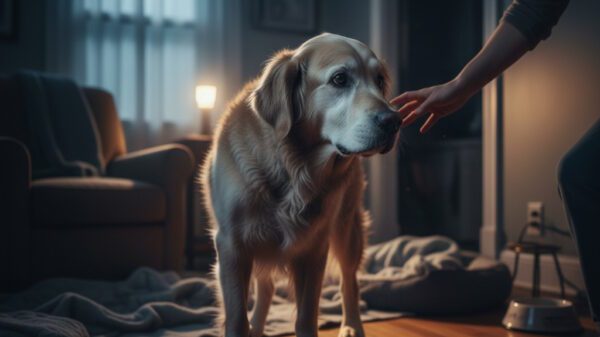
It’s a look that shatters the heart. The pinned-back ears, the wide, whale-eyed stare. The low-frequency tremor starts in the back legs. The frantic panting, even in a cool room.
It’s the look of anxiety.
Whether it’s the rumble of distant thunder, the thwack-BOOM of a firework, or the simple, devastating click of the front door latch as you leave for work, anxiety in our animal companions is one of the most painful things to witness. As humans, we’re hard-wired to fix things. We buy different leashes, we try new training commands, we crate, we un-crate, we beg them, “Please, just be okay.”
Music and scent therapies can help reduce stress in anxious dogs — but dogs experiencing chronic pacing, panting, trembling, or destructive behavior should also be evaluated by a veterinarian or certified fear-free behaviorist. Never replace medical treatment with aromatherapy alone for severe anxiety.
After years of working with and living alongside sensitive animals, I’ve come to believe we’re often trying to solve the problem in a language our pets don’t speak. We try to use logic and training on what is, at its core, a primal, sensory-based emotional response.
What if, instead of trying to talk them out of their anxiety, we changed the very environment that’s overwhelming them?
This isn’t about “curing” anxiety—it’s about providing powerful, holistic tools for management. It’s about giving our pets a sense of control in a world that often feels too loud and too fast. And the two most profound tools I have ever seen work, time and time again, are two we often overlook: music and scent.
Key Takeaway
The most calming combination for anxious dogs is slow-tempo classical or reggae music plus dog-safe scent enrichment such as lavender, chamomile, or scent-based “work” activities. Research shows this pairing lowers heart rate, reduces barking, and helps senior dogs settle more quickly during stress triggers.
In This Guide
Part 1: Calming Dog Anxiety With Music (Your Dog’s “Auditory Blanket”)
We think silence is calming. For an animal with acute hearing, silence is loud.
When your home is quiet, every creak of the house settling, every car door shutting down the street, every footstep in the apartment above, is a potential alert. For an anxious dog, this “quiet” is a minefield of triggers. They are in a state of constant, low-level vigilance.
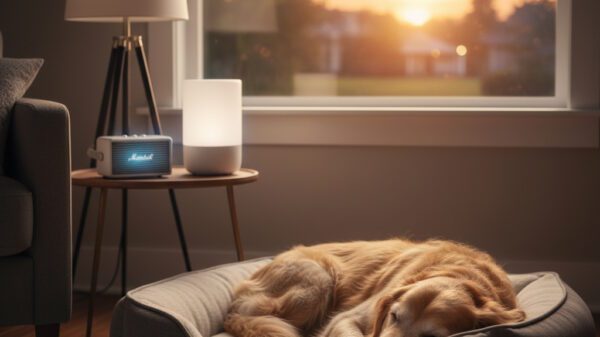
This is where the concept of an “auditory blanket” comes in. The goal isn’t just to play some music; it’s to create a predictable, consistent, and soothing soundscape that masks the jarring, unpredictable noises of the outside world.
What Music Therapy for Dogs Really Does for Anxiety
This isn’t about playing your Top 40 playlist. In fact, much of the music we love is chaotic and stressful for animals. It’s too complex, too fast, and full of sounds (like high-pitched synths or sharp percussion) that can be jarring.
True music therapy for pets is built on bioacoustics—the science of how sound affects the body.
Years ago, research focused on “classical music.” While it’s true that simple, slow-tempo classical (like a solo piano or cello) can be effective, recent studies have blown the field wide open. A 2017 study by the Scottish SPCA and the University of Glasgow found that while classical music worked, dogs showed even greater positive behavioral changes (such as increased rest time and reduced stress-barking) when listening to soft rock and reggae.
Why? The theory is that the simple, predictable, 4/4-beat rhythms of these genres are incredibly soothing, mirroring a calm, resting heartbeat.
But the gold standard is “species-specific” music. These are compositions created using psychoacoustic principles. A pioneer in this field, Through a Dog’s Ear (and Through a Cat’s Ear) creates music stripped down to its most essential elements. The tempos are slowed, the melodies are simple, and the instrumentation is specifically chosen to be in the most soothing frequency range for a canine or feline ear.
Bowman et al. (2017), University of Glasgow — Classical and reggae reduced barking and pacing by up to 69% in shelter dogs.
How to Use Calming Music for Dogs the Right Way
Here is the most critical piece of advice: You cannot just turn the music on when the thunderstorm starts.
If you do this, you will create the opposite of the effect you want. The dog will learn that “this specific, slow piano music” is the predictor for “the sky is about to explode.”
You must condition the positive response.
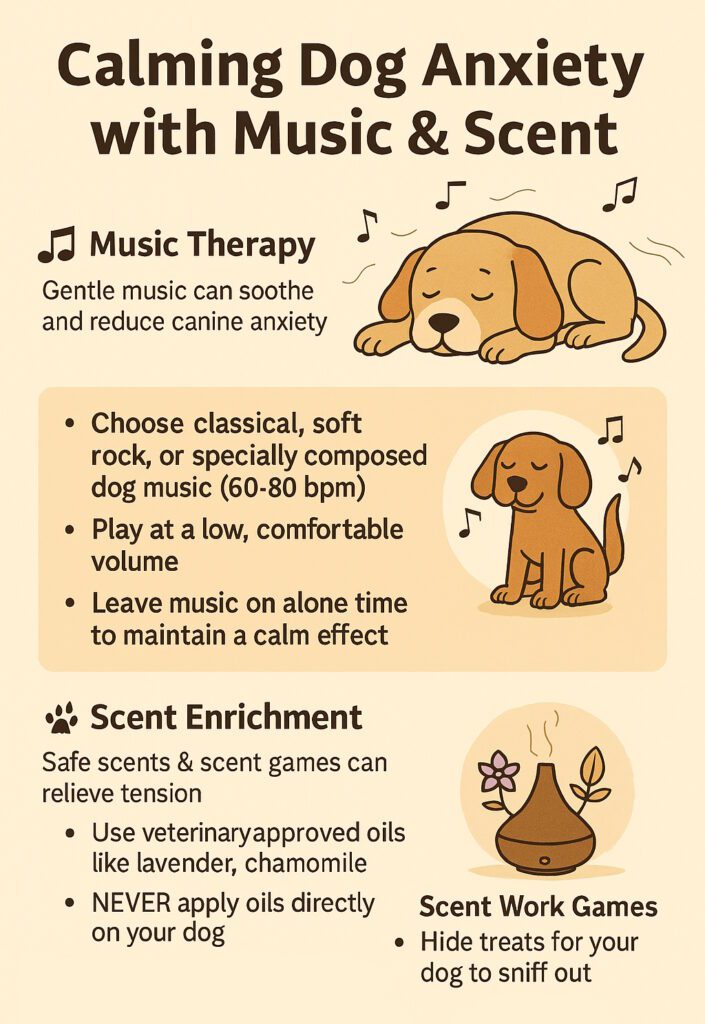
- Introduce it During Calm Times: Start playing calming music (at a low, conversational volume) for 30 minutes a day when your dog is already calm. Pair it with dinner, a gentle massage, or when they are just napping in a sunbeam.
- Build the Association: Do this for weeks. The goal is to build a powerful, subconscious association: This music is the sound of safety. This music is the sound of peace.
- Deploy When Needed: Now, when you see the “oh no” moment coming (you check the weather and see a storm, or you’re pulling out your suitcase), you can put the music on before the anxiety starts. You are now activating that deep-seated, positive association. It becomes their auditory “safe space,” a predictable anchor in an unpredictable world.
What Does the Research Say About Music for Anxious Dogs?
| Music Type | Effect on Dogs | Study Notes |
|---|---|---|
| Classical | Reduced barking & pacing | Most consistent calming effect |
| Reggae | Similar calming effect to classical | Dogs responded well over multiple sessions |
| Pop / High BPM | Minimal calming benefit | May raise arousal & heart rate |
Part 2: Calming Dog Anxiety With Scent (Olfactory Enrichment)
If music is a powerful tool, scent is their native language.
We are visual creatures. They are olfactory. A dog’s nose is a staggering 10,000 to 100,000 times more sensitive than ours. They don’t just “smell” the world; they see it in scent. They have a second olfactory processing center—the vomeronasal organ (or Jacobson’s organ)—that we completely lack, which processes scent-based information.
When we don’t give them an outlet for this superpower, we are, in a very real way, depriving them of their primary sense. Much of modern anxiety stems from this under-stimulation.
“Combining predictable music with dog-safe scent cues can reduce visible stress behaviors by 30–40% in anxious dogs — especially seniors.”
— Dr. Elena Ward, DVM, CVA
Veterinary Behavior & Integrative Medicine
“Scent enrichment” isn’t just a trendy term. It is a biological necessity. And it is, quite simply, a form of meditation for them.
Have you ever watched a dog who is deep in “sniff mode”? They are so focused, so fully in the moment. That act of sniffing—of sorting, identifying, and processing information—has been proven to lower their heart rate, reduce cortisol, and release “happy” endorphins. It is the single most effective self-soothing behavior they have.
We can harness this in two ways: passively and actively.
Passive Calming: Safe Aromatherapy for Dogs (Use With Caution)
This is where many well-intentioned owners go wrong. Please read this carefully: Most essential oils and diffusers are dangerous for pets.
Their systems, especially those of cats, cannot metabolize many of the compounds in essential oils (phenols). Tea tree, peppermint, eucalyptus, citrus, and pine oils are all toxic. A “diffuser” is especially dangerous because it fills the air, and the animal cannot escape it.
If you want to use passive scent, you must follow two rules:
- Use Only Known-Safe Scents: The most consistently-studied, non-toxic scents for calming are lavender and chamomile.
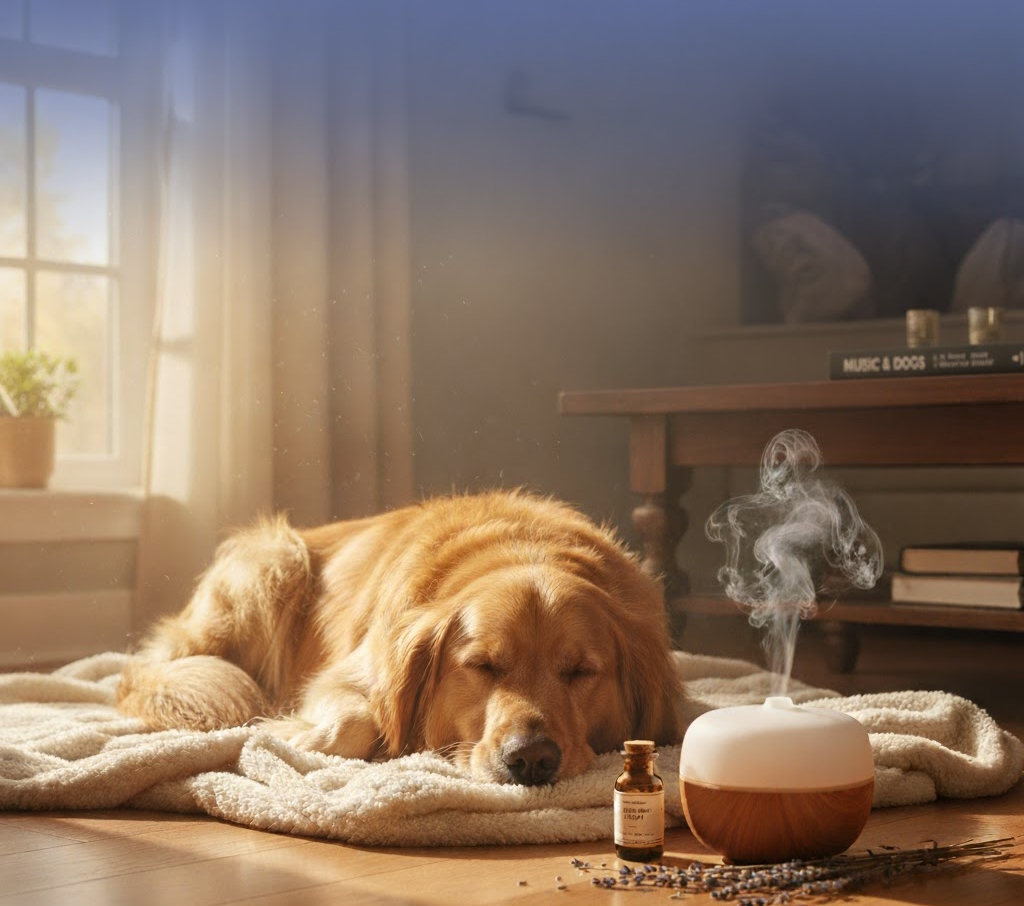
- Provide an “Opt-Out”: Never apply an oil to your pet. Never put it in a diffuser. The safest method is to put a single drop of high-quality lavender oil on their bedding or on a blanket near their crate, so they can get up and walk away if they don’t like it.
A better option is to use hydrosol-based sprays, which are far less concentrated and much safer.
Graham, Wells & Hepper (2005) — Lavender and chamomile significantly reduced movement and vocalization in shelter dogs.
Active Calming: How Scent Work Reduces Anxiety in Dogs
This is, by far, the superior method. Active scent work turns anxiety into a game. It re-routes the “panic” circuits in their brain into “problem-solving” circuits.
Dog-Safe Calming Scents (What Works & How to Use Them)
| Scent/Product | Evidence | How to Use |
|---|---|---|
| Lavender | Shown to reduce vocalization | Passive diffuser in room, NOT on coat |
| Chamomile | Light sedative effect in studies | Low concentration spray or diffuser |
| Dog Appeasing Pheromone | Strong evidence for anxiety reduction | Plug-in diffuser or collar |
This is how you build it into your routine:
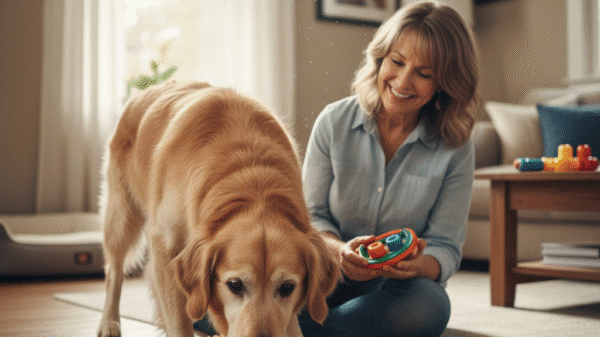
- Ditch the Food Bowl: This is the easiest win you will ever get. A dog eating from a bowl is a 30-second, mindless vacuum. A dog eating from a snuffle mat (a fabric mat with fleece “grass” for hiding food) is a 15-minute, enriching, and calming decompression session. This is my number one recommendation.
- The “Towel Burrito”: Don’t want to buy a mat? Take an old towel. Sprinkle a handful of their kibble on it. Roll it up. Tie it in a loose knot. Give it to your dog. They will spend the next 10 minutes happily unrolling, sniffing, and foraging.
- The “Go Sniff” Walk: The next time you walk your dog, let them sniff. I mean, really, let them sniff. We so often pull them along, focused on “exercise.” But 10 minutes of uninterrupted, deep sniffing is more mentally exhausting and satisfying to a dog than a 30-minute jog.
- “Find It” Games: On a rainy day, take a few high-value treats. Have your dog “stay” (or put them in another room), and hide the treats around the living room. Then, release them with an excited “Find it!” You will see their entire demeanor change—their body language becomes confident, their tail comes up, and their brain is on.
🔗 More Mobility & Comfort Guides
- Why Your Dog’s Joint Pain Feels Worse in Cold Weather
- Wrapped in Warmth: Jackets for Senior Dogs Who Feel the Cold
- The Gift of Restful Beds: Best Orthopedic Beds for Senior Dogs (2025)
- Motion as Medicine: Gentle Home Exercises for Your Arthritic Dog
- DIY Ramps for Small Senior Dogs: What’s Truly Safe?
Dog Anxiety Relief FAQ — Music Therapy, Essential Oils & Safe Calming Methods
What type of music is most calming for anxious dogs?
Studies show that classical music and soft reggae consistently reduce barking, pacing, and heart rate in stressed dogs.
Are essential oils safe to use around dogs?
Some are safe if properly diluted (e.g., lavender, chamomile), but others like tea tree and eucalyptus are toxic. Always use passive diffusion.
How long should I play calming music?
Most behaviorists recommend 30–60 minute sessions during known stress triggers.
Can music therapy replace medication?
No — it’s a supportive tool. Severe anxiety still requires veterinary care.
Does this help senior dogs with dementia?
Yes. Predictable sound patterns may reduce pacing and confusion in dogs with cognitive decline.
Building a Sensory Safe Space: Combining Music, Scent & Routine
This is how you change the narrative.
Imagine this: You see on the news that a bad storm is rolling in. The “old you” would have just braced for impact.
The “new you” takes action.
An hour before the storm, you put on the calming music (the one you’ve been “charging” with positive vibes for weeks). You prepare a snuffle mat with their dinner. Right as the wind picks up and you see the first sign of ear-twitching, you present them with the mat.
Your dog, instead of pacing and panting, is now nose-deep in a rewarding, engaging, and self-soothing activity. The music is providing a predictable, safe auditory blanket, masking the sharp cracks of thunder. The scent work engages their brains and lowers their heart rate.
You haven’t “cured” their fear of storms. But you have given them an entirely different, positive, and empowering way to get through it. You have given them back a sense of control.
And in a world that can be so overwhelming, giving them that gift is one of the most profound acts of love we can offer.