Senior Dog Eye and Ear Care
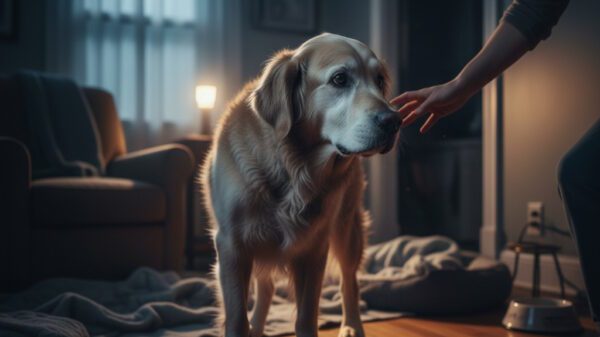
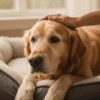
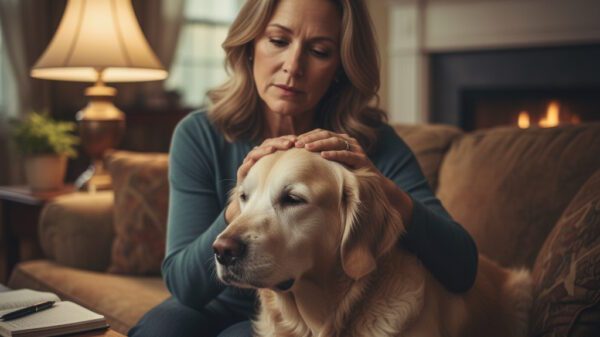
It’s a quiet moment. You’re petting your senior dog, and you see it.
A little, reddish-brown crust has built up in the corner of their eye. Or maybe you go to scratch their ears, and you catch a whiff of a new, funky, “yeasty” smell. Or you notice that the head-shaking, which you used to see once in a while, is now happening three or four times a day.
And in that moment, you’re hit with a wave of uncertainty.
Is this just “normal old age”? Is it serious? Am I a bad owner for not noticing it sooner?
If you’re like most of us, there’s another feeling, too: a little bit of fear. We’re terrified of “messing with” their eyes and ears. We’re scared we’ll poke them, or push the “gunk” in deeper, or just plain hurt them.
Source: Ear Infections (Otitis Externa) in Dogs. VCA Animal Hospitals.
Let’s get this out of the way: You are not a bad owner. And “messing with” these areas, gently and correctly, is not something to fear. In fact, it’s one of the most powerful, loving things you can do for your aging friend.
As a dog’s body ages, its systems become less efficient. The immune response isn’t as robust. The body’s “self-cleaning” mechanisms slow down. These two areas—the eyes and ears—are where we see the first and most obvious signs of this slowdown.
This isn’t about complex, scary medical procedures. This is about noticing. It’s about building a simple, two-minute “health check” into your daily cuddle routine. It’s about catching the tiny problems before they explode into painful, expensive, and joy-stealing infections.
In This Guide
Part 1: The Eyes — Windows to Their Comfort (and Health)
We obsess over our senior dogs’ eyes. We stare into them, looking for the “soul” we love, and we’re terrified when we see them change. But not all change is a five-alarm fire. The key is knowing the “normal” from the “call the vet right now.”
What’s “Normal Aging”?
- The “Sleepy” Crusts (Epiphora): That reddish-brown gunk that collects in the inner corner of the eye? This is incredibly common. As a dog ages, their tear ducts (the “drainage system”) can become a little less efficient. The tears spill over, and the moisture, when exposed to air, oxidizes and turns that familiar rusty color.
- The “Blue Haze” (Nuclear Sclerosis): This is the #1 thing that sends owners to the vet in a panic. You look at your dog in the sunlight and see a hazy, bluish-grey tint deep in their pupil. You immediately think: “Cataracts! He’s going blind!” For so many senior dogs, this is not a cataract. It’s a completely normal, harmless, and non-blinding part of aging called nuclear sclerosis (or lenticular sclerosis). It’s just the lens of the eye hardening and compacting over time. Dogs with this can still see perfectly well; it’s like them looking through a slightly smudged window.
What’s a “Red Flag”?
This is the part to commit to memory. These signs are not “wait and see.” They are “call the vet today.”
- The “White Opacity” (Cataracts): A true cataract is different from the blue haze. It’s a dense, milky, or white opacity in the lens. It does block light, and it will lead to blindness. You cannot tell the difference between this and nuclear sclerosis with 100% certainty. Your vet can do this in about 10 seconds with an ophthalmoscope.
- Green or Yellow Discharge: This is not “normal” eye gunk. This is pus. This is a sign of an active bacterial infection.
- Squinting, Pawing, or Blinking Rapidly: One word: Pain. This is a non-negotiable emergency. Your dog could have a scratch on their cornea (a corneal ulcer), a piece of debris, or a sudden, painful pressure change in the eye.
- Redness in the “White” of the Eye: This indicates inflammation. It could be a simple irritant, conjunctivitis (“pink eye”), allergies, or something more serious like glaucoma.
- Sudden, Acute Cloudiness: If the entire eye suddenly appears cloudy or blue within 24-48 hours, especially if it looks “swollen,” this is a medical emergency. It could be glaucoma (a rapid, painful, and blinding pressure increase) or severe uveitis.
Clean at Home vs. See the Vet
| Situation | Do This | Notes |
|---|---|---|
| Mild ear wax, no pain | Clean with vet-approved solution | Stop if redness, pain, or odor appears |
| Head tilt, strong odor, brown discharge | Vet visit | Likely infection—needs exam & meds |
| Mild eye goop on waking | Wipe with sterile saline/gauze | Use separate pad per eye |
| Red, squinting, light-sensitive eye | Vet visit | Urgent—rule out ulcer or glaucoma |
| Chronic tear staining or dryness | Vet consult | May need tear test (KCS) & prescription drops |
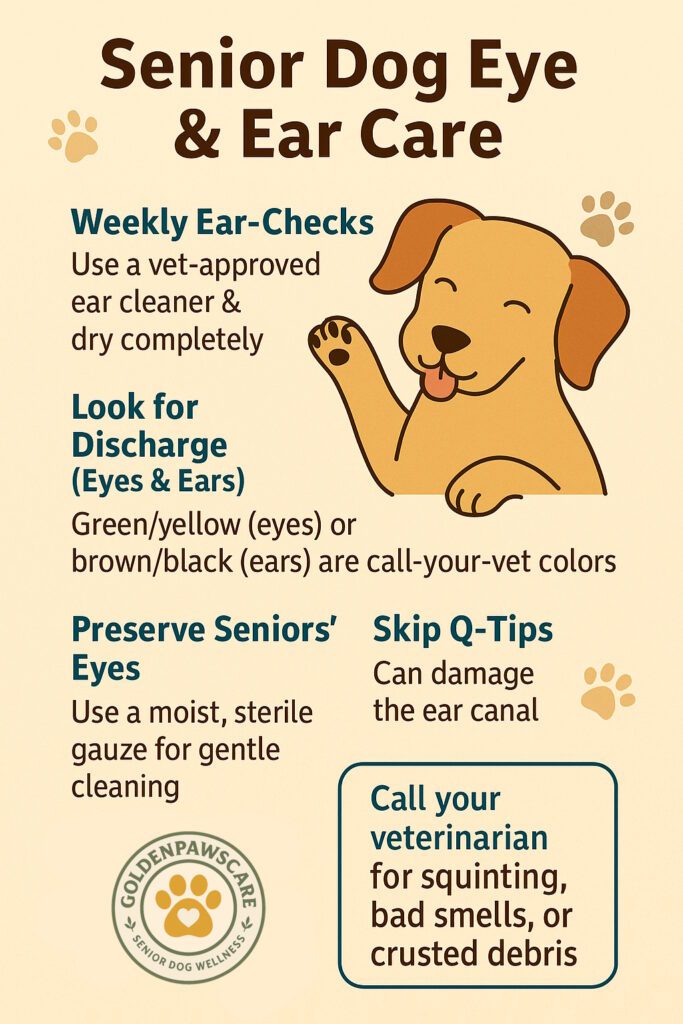
Your 60-Second Daily Eye Care Ritual
This is how you prevent the “normal” from becoming the “problem.”
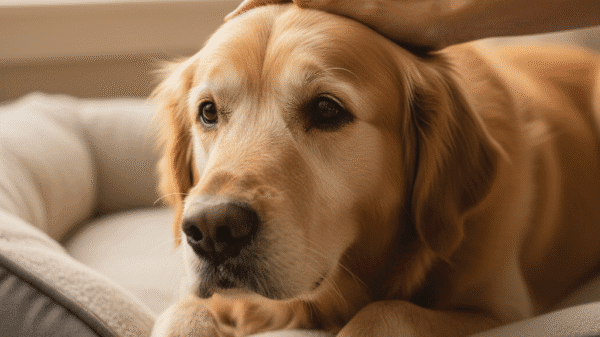
- Just Look. Every morning, in a well-lit room, just look at their eyes. Are they bright? Symmetrical? Is the white part “white”?
- The Warm Cloth Wipe: Take a soft, lint-free cloth (or a dedicated dog eye wipe) and dampen it with warm water. Gently wipe away from the inner corner of the eye—not toward it. One-and-done. Don’t “scrub.” This is a gentle swipe to remove the gunk before it builds up.
- The “Hairy-Faced” Check: For dogs like Poodles, Shih Tzus, and Doodles, this is a must. Hair will grow into their eyes, acting like a tiny wick that not only carries bacteria but also constantly pokes and irritates the cornea. Get them to a groomer, or learn to use a pair of (blunt-nosed) safety scissors to keep that hair away from the eyeball.
This simple ritual turns “cleaning” into an act of affection, and it guarantees you will be the first to know when a “red flag” pops up.
Source: Keratoconjunctivitis Sicca (Dry Eye) in Dogs. VCA Animal Hospitals.
Part 2: The Ears — The Hidden, Smelly, Painful Spot
If eyes are the windows, ears are the hidden trap. The warm, dark, and often moist ear canal of a dog is the perfect “petri dish” for yeast and bacteria. For seniors, this problem gets so much worse.
Why Are Senior Ears So Prone to This?
- Anatomy: Those lovely, long, floppy ears on a Basset or a Cocker Spaniel? They’re a disaster for air circulation. They trap moisture and create the perfect dark, damp, warm environment for gunk to fester.
- Weakened Immunity: An older dog’s immune system just doesn’t fight off low-level “invaders” (like normal skin yeast) as well as it used to.
- Underlying Allergies: This is the big one. The #1 cause of chronic ear infections is allergies (food or environmental). The ear canal is just an extension of their skin. If their skin is inflamed and allergic, their ear canals are, too.
- They Move Less: A young, active dog “airs out” their ears just by running around. A senior dog who spends 20 hours a day snoozing has no such advantage.
The “Red Flags” (It’s Often Your Nose That Knows)
- The Smell: This is your primary diagnostic tool. Trust your nose. A healthy dog’s ear smells like, well, nothing. A yeasty infection has a very distinct “corn chip” or “old beer” smell. A bacterial infection is often sharp, musty, and foul. If it smells “off,” it is off.
- The Head Shake: The #1 sign of irritation.
- Scratching/Pawing: They are miserable. They are trying to get at the itch and pain deep inside.
- The Head Tilt: This is a sign that the infection may be deep and affecting their balance.
- The “Ouch!”: They yelp when you pet their head, or suddenly become “head-shy.” This is a classic sign of pain.
Your Weekly Ear Care Ritual (And How to Clean Them Without Fear)
This is for maintenance, not for treating an active, painful infection. (If the ear is bright red and painful, go to the vet. Cleaning it will be agonizing.)
Your Tools:
- A high-quality, veterinarian-approved ear cleaning solution. Do not use water, vinegar, or hydrogen peroxide.
- Soft cotton balls or gauze pads. NEVER, EVER, EVER USE Q-TIPS.
Veterinary Note: Use only vet-approved ear cleaners and never insert cotton swabs into the canal. For eyes, avoid “redness-relief” drops unless prescribed—some worsen dryness or mask disease. AVMA.
Supplies & Suggested Schedule
| Item | Use | Typical Frequency | Link |
|---|---|---|---|
| Vet-approved Ear Cleaner | Routine wax & debris flush | Weekly to biweekly | Check Price |
| Sterile Saline & Gauze | Wipe eye corners / discharge | As needed | Check Price |
| Warm Compress Cloth | Loosen crusting before wiping | As needed | Check Price |
| Treats / Calm Mat | Reduce stress during cleaning | Each session | Check Price |
| Pet Towel (dedicated) | Dry ears after bath / walks in rain | As needed | Check Price |
Some links may be affiliate links. We may earn a small commission at no extra cost to you.
The Method (It’s All About the “Squelch”):
- Gently lift the ear flap to straighten out the “L-shaped” ear canal.
- Generously squirt the cleaning solution directly into the ear canal. You want to fill it up. It will feel wrong, but it’s right.
- This is the magic part: Massage the base of the ear (the part down by their jaw) for 20-30 seconds. You are looking for a “squelching” or “swooshing” sound. This is the sound of the solution breaking up the wax and debris deep in the canal. This is the only part that actually cleans the ear.
- Stand back and let them SHAKE! This is what brings all the dissolved gunk up from the canal. (Yes, you will get splattered. It’s a badge of honor.)
- Wipe the “Outer” Parts: Take your cotton ball or gauze and wipe out all the gunk from the outer flap and the parts of the canal you can see. Do not go “digging.” You’re just the clean-up crew for what the “shake” brought up.
- Reward. Reward. Reward. Make this the best, highest-value treat-fest of the week.
Senior Care — Related Reads
Daily Care & Comfort
Health & Prevention
🐾 Senior Dog Eye & Ear Care — FAQ
How often should I clean my senior dog’s ears?
What ear or eye discharge means “call the vet”?
Are “redness-relief” or whitening eye drops safe?
Can I use Q-tips to clean the ear canal?
What’s a safe at-home routine for eye cleaning?
Expert reviewed by Dr. Sarah Kent, DVM — Senior Canine Health
“If you see squinting, redness, or a sudden head shake, stop home care and call your veterinarian—eyes and ears can worsen fast in seniors.”
— Dr. Sarah Kent, DVM • Senior Canine Health | context
The Conclusion: It’s Not a Chore, It’s a Conversation
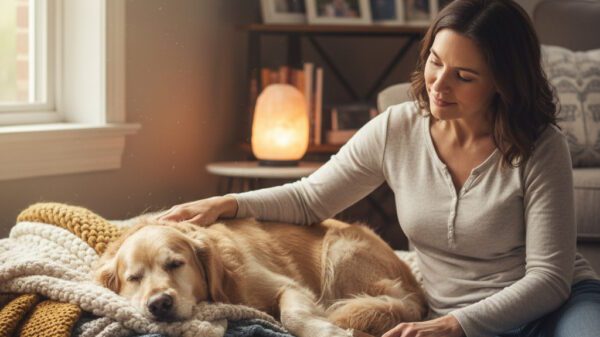
This entire “guide” boils down to one simple, genuine truth: This is not a chore. It is a conversation.
A 60-second eye-wipe in the morning is you saying, “I see you, and I want you to see the world clearly.” A 5-minute ear-sniff and massage on a Sunday is you saying, “I’m listening, and I want to make sure you are comfortable.”
This is the work of loving a senior dog. It’s not in the grand gestures. It’s in the small, consistent, gentle acts of noticing. It’s in the warm cloth. It’s in the “good squelch” and the treat you give after. This is how you protect their comfort and, in the process, tell them, in a language they can feel, that they are safe, they are seen, and they are so very loved.