It usually happens at night.
You’re sitting on the couch like you always do. Your dog walks over, looks up at you, maybe even wags their tail—and then stops. No hop. No scramble. No familiar thump of paws landing beside you. Just a pause. Sometimes they turn away. Sometimes they try once, hesitate, and sit back down.
Quick answer: should you be worried?
If your senior dog suddenly won’t jump on the couch, it usually means they’re avoiding a movement that feels uncomfortable, uncertain, or no longer worth the risk.
This isn’t panic-worthy—but it is information.
And the thought hits you: My senior dog suddenly won’t jump on the couch. Should I be worried?
That question doesn’t come from nowhere. It comes from knowing your dog’s habits so well that a small break in the pattern feels loud.
This isn’t about panic. It’s about paying attention.
What follows is not a diagnosis, and it’s not a checklist from a clinic. It’s an experience-driven look at why this specific change matters, what it usually indicates in older dogs, what it doesn’t automatically mean, and how to think clearly about what to watch next—without spiraling.
Why this moment matters: Caregivers tend to notice this change long before it ever shows up in a vet visit—because it happens during quiet, everyday routines. Couch time is familiar. When that routine breaks, it stands out.
In This Article
Why this change catches owners off guard
Most people don’t notice their dog aging in big, dramatic steps. It happens quietly. The face gets whiter. Walks get shorter. Naps get longer.
But jumping on the couch is different.
It’s one of those everyday behaviors that stays the same for years—until it doesn’t. And because it’s voluntary, familiar, and repeated daily, owners notice the change immediately.
This is why caregivers often spot this before anyone else does. Not because they’re anxious. Because they have a mental highlight reel of what “normal” looks like for their dog.
When a senior dog suddenly stops jumping on furniture, it stands out because:
- The couch hasn’t changed
- The routine hasn’t changed
- The dog’s desire to be near you usually hasn’t changed
- Only the movement has.
That contrast is what triggers the question.
Common Pattern Owners Describe
The dog still wants to be close. The couch hasn’t changed. The routine hasn’t changed. Only the movement has. That contrast is usually what triggers concern.
What “won’t jump on the couch anymore” usually points to
In older dogs, refusing a jump they’ve done for years is rarely about stubbornness or laziness. It’s more often about calculation.
Senior dogs become selective when something starts to feel uncomfortable, uncertain, or risky. Jumping requires a quick combination of strength, balance, timing, and confidence. When any one of those feels off, dogs often choose not to try.
What owners commonly observe in this situation:
- The dog still wants to be on the couch
- They may paw at it, stare, or wait for help
- They may jump onto lower surfaces but avoid higher ones
- They hesitate, reposition, or abort the jump mid-attempt
This pattern suggests not a loss of interest—but a reassessment.
Older dogs don’t announce discomfort. They adjust behavior instead.
This is often about: hesitation, calculation, or avoiding an uncomfortable movement.
This is usually not about: disobedience, laziness, or sudden personality change.
Why this isn’t always about pain—but often about anticipation
One of the most misunderstood parts of this change is timing.
Owners sometimes assume, “If my dog were hurting, I’d see it all the time.” But jumping isn’t constant—it’s a single moment that compresses effort into a burst.
Dogs are excellent at remembering what didn’t feel good last time.
So even if your dog looks fine walking, eating, and sleeping, they may still avoid a movement that previously caused discomfort or instability. This is especially true if:
- The refusal started after a slip or awkward landing
- The dog tried once, failed, and hasn’t tried again
- The behavior is consistent with one specific height
This is not overthinking. It’s pattern recognition.
If this is happening tonight, do this before bed
- Watch the approach: confidence until the jump matters.
- Note hesitation: one attempt followed by stopping is meaningful.
- Check traction: slick floors change the calculation.
- Notice height selection: lower surfaces vs the couch.
What this change does not automatically mean
This is important, especially late at night when worries tend to spiral.
A senior dog refusing to jump on the couch does not automatically mean:
- Something catastrophic is happening
- Your dog is “giving up”
- You missed the obvious signs earlier
- Immediate intervention is required
It also doesn’t mean the dog is being dramatic, manipulative, or “testing” you.
Dogs don’t negotiate with furniture. They make decisions based on feedback from their bodies.
One change, in one behavior, is information—not a verdict.
Pattern decoder: what this behavior usually means
| What you notice | What it usually points to |
|---|---|
| Looks at couch, then at you | Desire hasn’t changed—access has |
| Tries once and stops | Past discomfort or unstable landing remembered |
| Jumps down but not up | Going up requires more push and confidence |
| Only hesitant at night | Fatigue, stiffness, and low light combine |
Why timing and repetition matter more than the jump itself
The most useful question isn’t “Why won’t my dog jump?”
It’s “How consistent is this change, and when does it show up?”
Patterns give clarity.
Notice things like:
- Is the hesitation worse at night than in the morning?
- Does it happen every time, or only when the dog is tired?
- Is the refusal specific to the couch, or also beds and cars?
- Does your dog jump down easily but hesitate jumping up?
A senior dog not jumping on furniture occasionally is different from one who has stopped entirely. Consistency tells you whether this is a passing adjustment or a new baseline.
What matters most: Consistency over time. A pattern that repeats calmly tells you more than a single failed jump.
Common owner misinterpretations that muddy the picture
Because this change feels emotional, it’s easy to misread it. A few interpretations that often lead owners astray:
“They’re just being lazy.”
Senior dogs conserve energy, but they don’t usually refuse something they enjoy without a reason.
“They’re waiting for attention.”
If your dog stares at the couch and then at you, it’s not a game. It’s communication.
“They’ll jump if they really want to.”
Older dogs don’t push through discomfort the way younger dogs do. Avoidance is their version of self-protection.
Reframing these moments as communication—not attitude—changes how you respond.
Important reassurance: A single behavior change is information—not a verdict. It deserves attention, not panic.
Common misreads that confuse owners
“They’re being stubborn.” Older dogs don’t negotiate with furniture.
“They’re just lazy.” They still want closeness—movement cost changed.
“If it were serious, I’d see more signs.” Jumps concentrate effort into one moment.
Why environment can suddenly tip the balance
Sometimes nothing about your dog changes—but the environment does.
Small factors can turn a manageable jump into one that feels risky:
- A slick floor near the couch
- A slightly higher cushion or new furniture
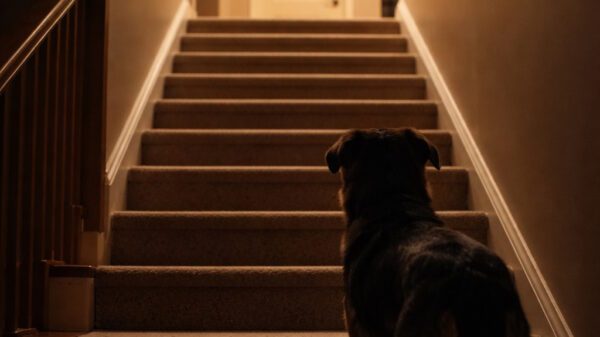
- Dim lighting at night
- Fatigue after a longer day
For a younger dog, these are irrelevant. For a senior dog already compensating, they matter.
This is why the refusal can seem sudden, even though the underlying reason has been building quietly.
Small home changes that often shift this behavior
- Traction at takeoff: rugs matter more than you think.
- Stable landing: sliding cushions reduce confidence.
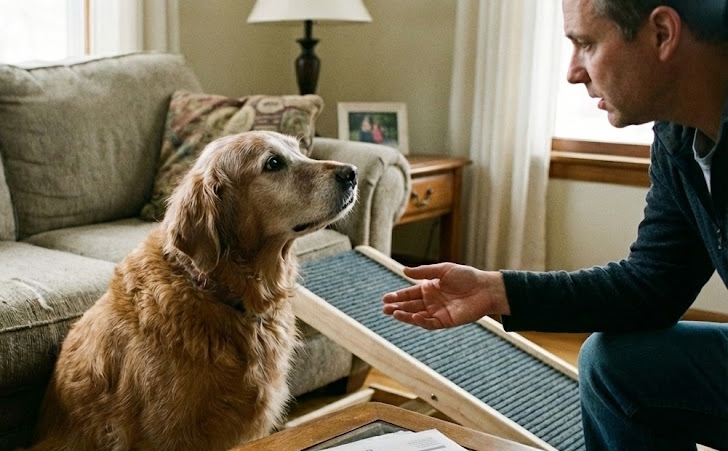
- A middle step: ottomans often become preferred.
- Better lighting: night hesitation is common.
What often changes next if nothing is adjusted
This is not a warning—just a realistic observation.
When dogs stop jumping up, they often start:
- Waiting longer before settling
- Choosing floor spots closer to you
- Asking for help in subtle ways
- Avoiding other elevated surfaces
Some dogs adapt seamlessly. Others become frustrated or withdrawn—not because they’re declining rapidly, but because access has changed.
The emotional side matters. For many dogs, the couch isn’t furniture. It’s closeness.
What to quietly monitor without turning it into a project
You don’t need charts or apps to be observant. Just notice a few things over the next days or weeks.
Pay attention to:
- How your dog moves before attempting a jump
- Whether they reposition their back legs differently
- Any change in confidence when landing after jumping down
- Whether assistance changes their willingness
One-off moments are less important than trends. A pattern that repeats calmly is more informative than a single failed attempt.
You’re not tracking symptoms. You’re noticing habits. Small shifts in confidence, timing, or hesitation tend to matter more than isolated moments.
When it makes sense to bring this up to a vet—without urgency
You don’t need an emergency visit for a dog who won’t jump on the couch. But it is reasonable to mention it when:
- The change is consistent and lasting
- Your dog seems frustrated or unsettled by it
- Other movements are starting to look cautious
- You want guidance on comfort and safety going forward
Framing it as an observation—not a crisis—helps the conversation stay grounded.
“I’ve noticed my senior dog no longer jumps on the couch, but still wants to be up there,” is clear, specific, and useful.
A simple way to describe it: “My senior dog no longer jumps on the couch, but still wants to be up there.” Clear, specific observations help keep the conversation grounded.
If you mention this later, say it like this
“My senior dog no longer jumps on the couch, but still wants to be up there.”
Then note when it happens most and whether a lower step changes things.
Why noticing this early is a good thing
This matters more than most people realize.
Dogs who adjust their behavior early are telling you something before they’re forced to stop doing things altogether. That gives you options—environmental, practical, and supportive.
Ignoring the change doesn’t make it go away. Acknowledging it doesn’t make you anxious. It makes you responsive.
The question “My senior dog suddenly won’t jump on the couch—should I be worried?” isn’t a sign of panic.
It’s a sign of attentiveness.
And attentiveness is one of the most powerful tools a caregiver has.
FAQ: When a Senior Dog Stops Jumping on the Couch
Quick, real-life answers for the exact situation most owners search at night.
It’s reasonable to pay attention, because this is often one of the first “everyday decisions” older dogs change. Most of the time it means the jump now feels uncomfortable, unstable, or simply not worth the risk.
One behavior change is information—not a verdict. What matters most is whether the pattern repeats and whether access changes (like a step or traction) immediately improve things.
Because jumping compresses strength, balance, and confidence into one moment. Walking can look normal while a jump feels “too expensive.”
Couch time is also routine—so owners notice the change immediately.
Going up usually requires more push and confidence than coming down. Many older dogs can step down (or slide down) without feeling the same “launch” effort they need to jump up.
That up-vs-down difference is one of the most common owner-observed patterns.
Yes—small environment changes can tip the balance for a senior dog. Slick flooring near the launch spot, cushions that shift, a slightly higher seat, or low light at night can turn a “fine” jump into a “nope.”
A simple test is whether traction or a middle step changes the behavior immediately.
Consistency. One-off moments happen. What matters is whether your dog repeats the same hesitation in the same context—same couch, same time of day, same floor surface.
- Does your dog approach confidently, then pause only at the jump?
- Do they try once and stop (instead of experimenting)?
- Does a lower step immediately restore confidence?
If the change is consistent and lasting, or if your dog seems frustrated by losing access, it’s reasonable to mention it at your next visit or check-in.
A simple way to say it: “My senior dog no longer jumps on the couch, but still wants to be up there.” Then add when it happens most and whether a step changes things.
Closing thought
If you’re reading this because your dog stood at the couch tonight and hesitated, you’re not overreacting. You’re noticing.
That pause—the look, the calculation, the decision not to jump—is information. Not fear-worthy information. Useful information.
Most senior dogs aren’t trying to tell us something is wrong. They’re telling us something has changed.
And when we notice early, we get to respond with calm, clarity, and care—rather than regret.
That’s not worry. That’s responsibility.
Noticing early isn’t anxious. It’s responsible caregiving. Most meaningful changes in senior dogs start quietly—and being observant gives you more options, not fewer.
Key takeaway
Noticing this early isn’t anxious. It’s responsible caregiving. Senior dogs often stop doing things quietly before they stop wanting them.