Senior Dog Nutrition Guide
That 8-pound bag of “adult formula” dog food used to last exactly four weeks. Now, your 10-year-old Lab seems to gain a pound just by looking at it, and the bag lasts five weeks, maybe six.
Or perhaps it’s the opposite. Your once food-obsessed terrier now just… sniffs. He walks up to his bowl, gives it a cursory nudge with his nose, and wanders off, leaving you in a quiet panic.
As the spouse of a very informative veterinarian, I can tell you that the food bowl is ground zero for a senior dog’s health. And the single biggest mistake loving owners make is assuming the routine that worked for their dog at five years old should still work at ten or twelve.
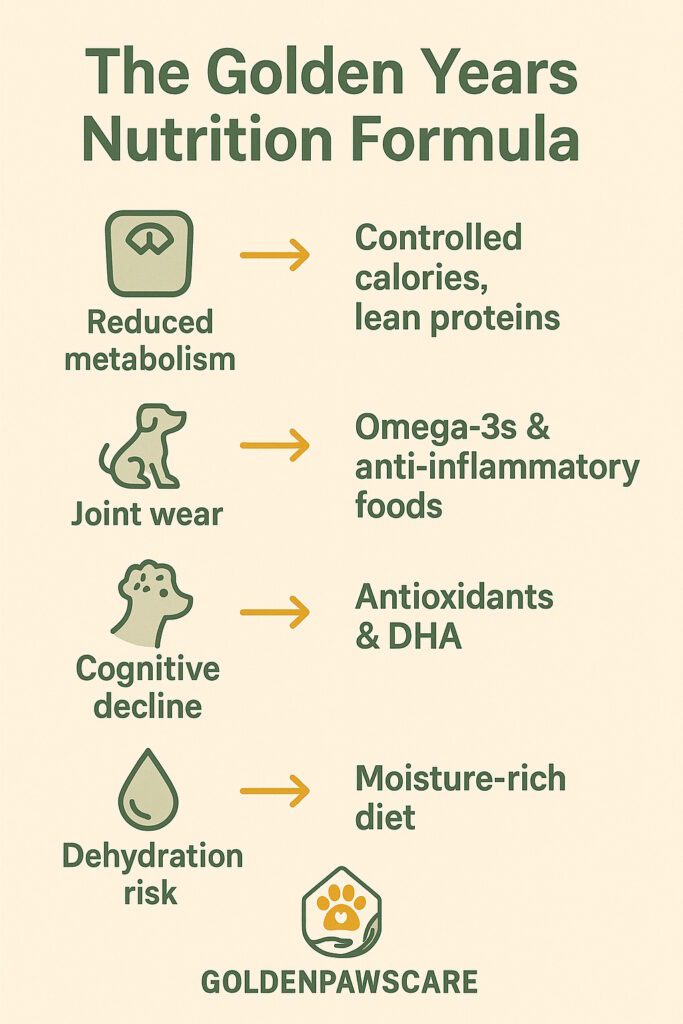
A dog’s golden years require a profound shift in thinking: we must move from maintenance to active management. Their bodies are changing—their metabolism is slowing, their muscles are dwindling, and their thirst drive is fading.
But here’s the good news: you can radically improve your senior dog’s comfort and health by mastering three simple, powerful pillars: Portioning, Timing, and Hydration.
This isn’t about miracle foods. This is the real, in-the-trenches senior dog nutrition guide that makes a difference.
🥣 Key insight: Aging dogs experience metabolic shifts and gradual lean-mass loss. Maintaining
adequate protein (≈25–30% DM) and moisture supports muscle and hydration while calories are adjusted to prevent weight gain.
Sources: NRC (2006); WSAVA Global Nutrition Guidelines (2021); Laflamme (2005/2008).
In This Guide
Part 1: Perfect Portioning (The “How Much”)
This is, without question, the most important part of a senior dog nutrition guide. If you get this wrong, nothing else matters as much.
The Senior Dog’s Metabolic Truth
As your dog ages, their engine idles lower. Their metabolism slows, and they move less. That spunky five-year-old who did “zoomies” around the yard is now a distinguished ten-year-old who prefers a stroll.
Because of this, most senior dogs need 20-30% fewer calories than they did in their prime just to maintain the same weight.
📚 Evidence—Energy Needs Change with Age: Senior dogs frequently require caloric adjustment due to lower activity and metabolic change; diet should be individualized with regular BCS/MCS checks.
References: WSAVA Global Nutrition Toolkit (2021); NRC (2006).
And this is the trap. We feed them the same amount out of love and habit, and we slowly but surely contribute to the single worst, most preventable disease in senior dogs: obesity.
Extra weight on an old frame is devastating. It’s gasoline on the fire of arthritis. It strains their heart and lungs. It makes every single movement—getting up, lying down, going to the potty—more difficult and more painful.
Our number one job is to get portioning right.
How to Do It (The Real-World Method)
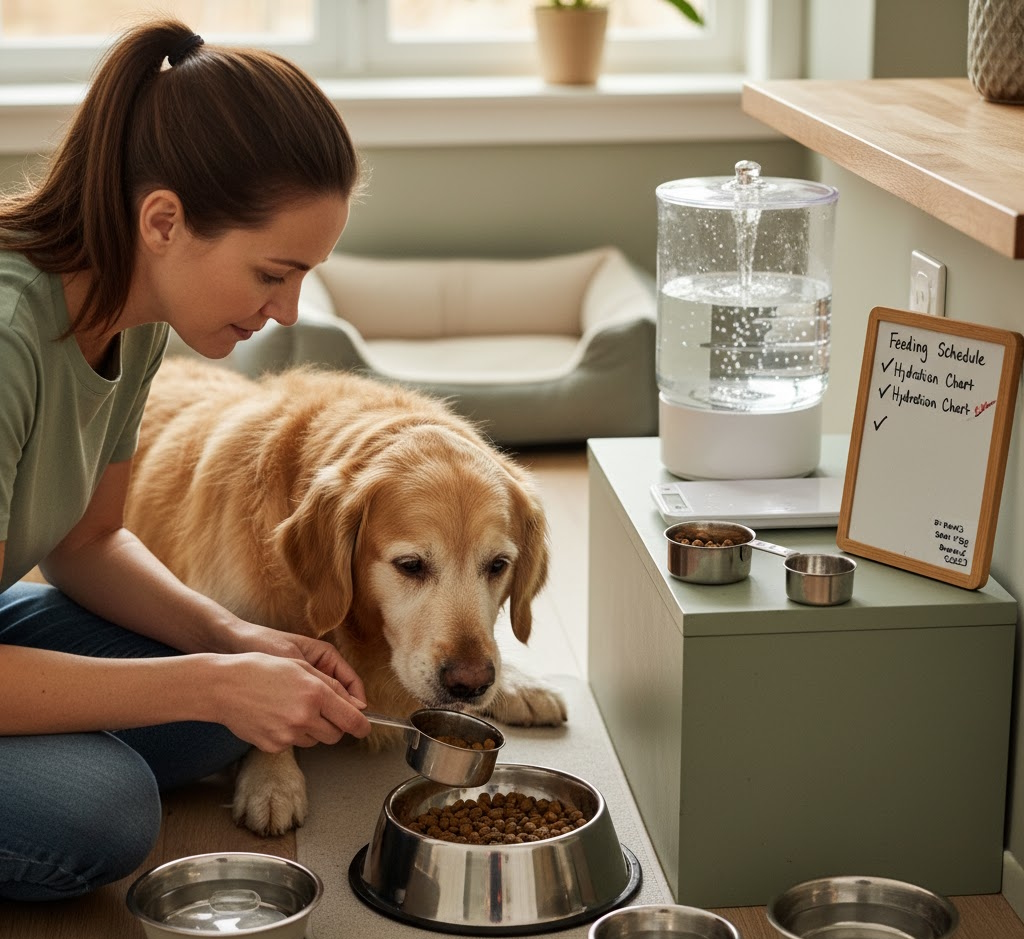
- Ditch the Scoop. My number one piece of advice. Those plastic scoops that come in the food bag? Throw them out. They are wildly inaccurate. A “heaping” scoop one day and a “level” scoop the next can make a 20% difference in calories. Go to your kitchen right now and get a proper, 1-cup metal or plastic measuring cup. Use that. Every single time.
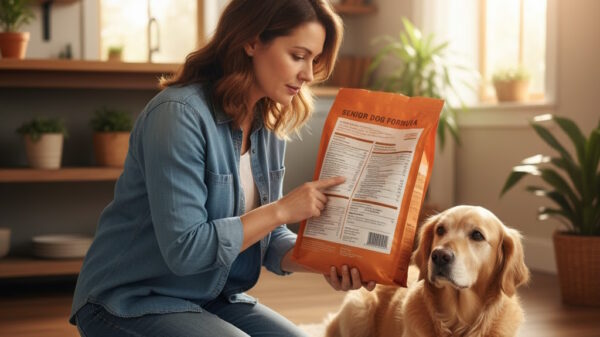
- The Bag is a Lie (Sort of). The feeding guidelines on the back of the bag are a starting point, and that’s it. They are often calculated for active adult dogs, not sedentary seniors. Use it as a ceiling, not a target. Your dog’s body is the only guide that matters.
- Learn the “Body Condition Score” (BCS). This is what we use in the clinic, and you can do it at home right now.
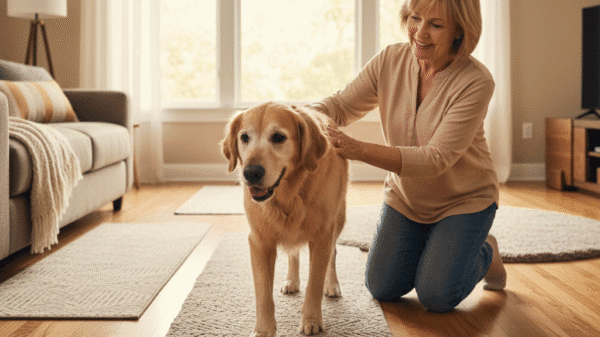
- The Rib Test: Gently run your hands along your dog’s sides. You should be able to feel their ribs easily, with just a very thin, velvety layer of padding. If you can’t find their ribs, they are overweight. If their ribs feel sharp, like the teeth of a comb, they may be underweight.
- The Waist Test: Look at your dog from above. They should have a visible “waist” or indentation between their ribs and their hips—an hourglass shape.
- The Tummy Tuck: Look at them from the side. Their belly should tuck up from their rib cage, not hang down.
- Create a “Treat Budget”. This is where the best intentions go wrong. You portion their kibble perfectly, but then you add a dental chew (150 calories), a few training treats (50 calories), and a dollop of peanut butter (100 calories). You just added 300 calories, which could be an entire meal.
- The 10% Rule: Treats should make up no more than 10% of your dog’s total daily calorie intake. If you feed high-calorie treats, you must reduce the amount of kibble you feed. My pro-tip? Use their own kibble as treats. Or switch to low-cal options like green beans or baby carrots.
Senior Nutrition at a Glance — Macros • Timing • Hydration
| Focus | Senior Target | Good Sources / How To |
|---|---|---|
| Protein | ≈ 25–30% DM (individualize) | Chicken, turkey, fish; high-quality kibbles; vet diets; add cooked lean meats |
| Fats | Adequate fat; include EPA/DHA | Fish oil (EPA/DHA), salmon; consider joint/skin benefits |
| Carbs & Fiber | Moderate carbs; functional fiber for gut health | Pumpkin, beet pulp, oats; look for prebiotic fibers |
| Hydration | Boost moisture daily | Wet food toppers, bone broth (low-sodium), add water to meals, pet fountain |
| Feeding Timing | 2–3 meals/day; light dinner | Breakfast → early afternoon snack → smaller evening meal |
| Monitoring | Monthly BCS & MCS checks | Adjust calories ±5–10% based on body condition & activity |
🍽️ Recommended Tools for Senior Nutrition & Hydration
Elevated bowls, moisture-boosting toppers, and senior-formulated foods our team trusts for everyday comfort.
See Our PicksPart 2: Strategic Timing (The “When”)
Once you know how much to feed, feeding becomes the next tool for improving their health.
📚 Evidence—Protein & Lean Mass: Senior dogs often require protein at or above adult levels to preserve lean body mass; inadequate protein accelerates sarcopenia.
References: National Research Council. Nutrient Requirements of Dogs and Cats (2006); Laflamme D.P. “Nutrition for aging cats and dogs,” Vet Clin Small Anim (2005/2008).
| Time of Day | Feeding Focus | Sample Action |
|---|---|---|
| 7:00 AM | Morning meal | High-protein breakfast, light supplements |
| Noon | Midday snack | Hydrating topper or wet-food mix |
| 6:00 PM | Dinner | Balanced, smaller portion to prevent overnight indigestion |
| Evening | Final hydration | Offer water or broth before bed |
Why “One Big Meal” is a Bad Idea
Many owners feed their dogs one large meal a day for convenience. For a senior dog, this is a terrible idea.
First, it increases the risk of bloat (GDV), a life-threatening condition. Second, it “slugs” their aging digestive system, which is now less efficient. They get gassy, uncomfortable, and bloated. Finally, it means they are starving and begging by 5 PM, which just makes you feel guilty.
The “Two-to-Three Meal” Solution
The expert solution is simple: Take their total daily portion (which you’ve now perfectly measured) and split it into two, or even three, smaller meals.
- Breakfast (e.g., 7 AM)
- Dinner (e.g., 5 PM)
- Optional “Snack” (e.g., 9 PM): For some dogs, especially smaller ones prone to hypoglycemia or those who get “hunger pukes” (bilious vomiting) overnight, a tiny handful of kibble or a simple treat right before bed can be a game-changer.
The Benefits:
- Better Digestion: Smaller, more manageable meals are easier on their system.
- Stable Blood Sugar: Crucial for all dogs and vital for diabetics.
- Less Begging: They feel satiated more often and aren’t “starving” for 23 hours a day.
A Special Note: The “Picky” Senior Dog
What if your problem is a dog who won’t eat?
First, I need you to hear this: A senior dog who suddenly stops eating is not being “picky” or “stubborn.” They are trying to tell you something is wrong.
Do not ignore this. The number one cause is, by far, dental pain. Their mouth hurts. They are hungry, but they know that chewing will be agonizing. Other causes include nausea (kidney disease, pancreatitis) or other systemic illnesses.
If your dog skips more than one meal, call your vet.
Once pain and nausea are ruled out, you can try these “expert hacks” to entice them:
- Add a few tablespoons of warm, low-sodium chicken or beef broth to their kibble.
- Add a dollop of plain canned pumpkin (not pie filling!) or plain yogurt.
- Warm their (wet) food in the microwave for 10 seconds to release the aromas.
Part 3: Hydration Cues (The Unsung Hero)
This is the most overlooked—and, frankly, most dangerous—part of senior dog nutrition. Senior dogs are chronically mildly dehydrated.
Why?
- Their thirst drive diminishes. They just don’t “feel” thirsty as often.
- It’s an effort. If the water bowl is in the kitchen and they’re napping in the living room, it can be a painful, arthritic journey to get up and get a drink.
- Their kidneys are less efficient at conserving water.
Dehydration makes them feel lethargic, worsens kidney issues, and is a major cause of disorientation (mistaken for dementia).
📚 Evidence—Moisture Intake: Increasing dietary moisture (wet foods, toppers, broths) raises voluntary water intake and supports hydration in adult/senior dogs.
Reference: Zanghi B.M. “The effects of increasing dietary moisture on water intake,” Front Vet Sci (2016).
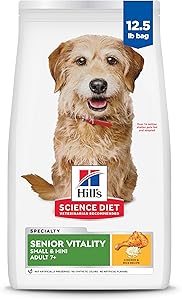
Editor’s Pick: Hill’s Science Diet Senior Vitality
- Designed for dogs 7+ with antioxidants for brain & energy
- Balanced protein and digestibility for daily comfort
- Vet-trusted brand with senior-specific formulations
How to Check for Dehydration at Home
- The Gum Test (Easiest): Gently lift their jowl. Their gums should be slick, slimy, and wet. If they feel tacky or dry to the touch, your dog is dehydrated.
- The Skin Tenting Test: Gently pinch the skin on their back, between their shoulder blades. Lift it, and let it go. It should snap back into place instantly. If it “tents” (stays up for a second) or sinks back slowly, they are dehydrated.
How to Encourage Hydration (Proactive Tips)
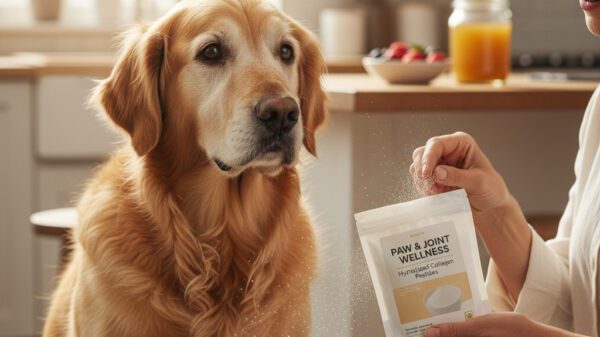
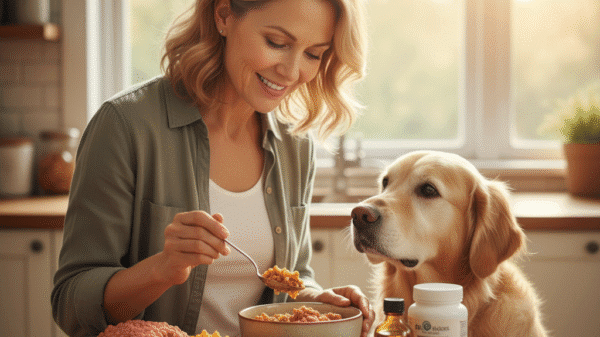
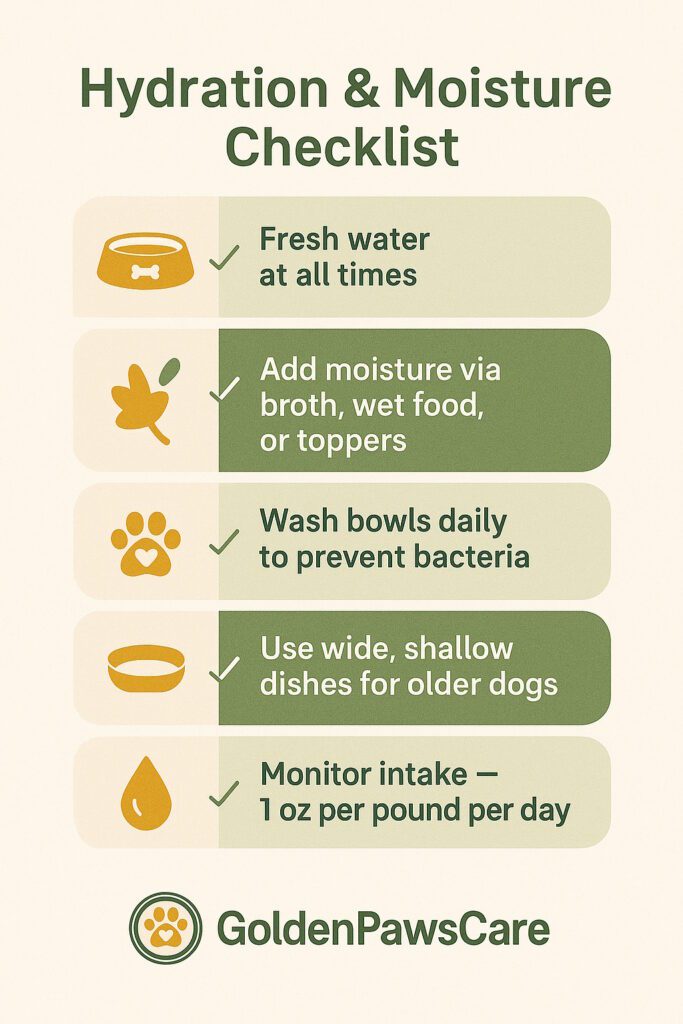
- “Water Their Kibble”: This is my favorite tip. Add a half-cup of warm water or low-sodium broth to their dry kibble. It forces them to consume liquid with their meal and makes the food more appealing.
- Multiple, Low-Barrier Bowls: Have more than one water bowl. Put one right next to their favorite dog bed. Put one in the living room. Put one on the porch. Make it so they only have to take two steps to get a drink.
- Get a Water Fountain: The sound and movement of a circulating water fountain attract many dogs and cats, encouraging them to drink more.
- Clean the Bowl: A slimy, dirty bowl is a major turn-off. Wash it with soap and water daily.
❓ Senior Nutrition FAQs
Is higher protein safe for seniors?
Yes for most dogs with normal kidney function. Aim for ~25–30% DM, individualized by your vet.
Is wet food better for hydration?
Higher moisture diets increase water intake. Mix wet with dry or add water/broth to meals.
How many meals per day?
Two to three feedings help digestion and energy; keep the evening meal lighter.
How often should I adjust calories?
Re-assess monthly using BCS/MCS; adjust by ~5–10% based on condition and activity.
Expert reviewed by Dr. Sarah Kent, DVM — Pet Nutrition Specialist
“For most senior dogs, the winning formula is simple: adequate protein to protect muscle, steady moisture to support hydration, and small, predictable meals.”
The Real Goal: A Nutrition of Observation
This guide isn’t a set of rigid rules. It’s a new way of seeing your senior dog.
Your job is no longer to just fill the bowl. Your job is to be an observer. To watch their waistline. To feel their ribs. To touch their gums. To notice if the water level in the bowl has been the same all day.
Adjusting their portions, splitting their meals, and “watering” their food are not small things. These are the daily, tangible acts of love that will keep them comfortable, healthy, and by your side for as long as possible. You are their advocate and their chef—and by paying this much attention, you are doing a magnificent job.
- Randle McMurphy – Senior Dog Advocate
- Dr. Sarah Kent, DVM – Veterinary Reviewer
- Laura James, RVT – Mobility Rehab Specialist